

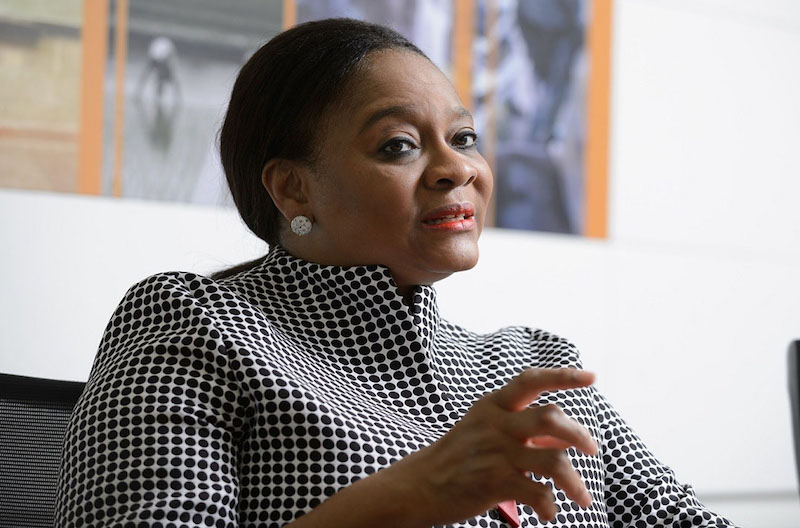
At a time when Nigeria faces mounting fiscal pressures and an urgent need for economic diversification, experts are calling for decisive reforms to unlock the nation’s vast potential. Speaking recently at the Oxford Global Think Tank Leadership Conference in Abuja, Madame Arunma Oteh, former Securities and Exchange Commission (SEC) Director-General (DG)/World Bank Vice President, urged both government and private stakeholders to mobilise long-term capital, ramp up infrastructure investment, and decentralise the management of mineral resources to stimulate sustainable growth.
Oteh, now the Founder of the Oxford Global Think Tank, said that Nigeria’s economy would not reach its potential until the country attracts “reasonably priced, long-term, patient capital” to power development across sectors. She lamented that Nigeria currently invests only 4 – 5 percent of its gross domestic product (GDP) in infrastructure, far below the 12 percent minimum required to close its infrastructure deficit.
“If we want to bridge our infrastructure gap, we must increase that investment to at least 12 percent of GDP,” she said, referencing China’s 24 percent infrastructure investment ratio as a global benchmark.
While she acknowledged government efforts to support growth, Oteh said that Nigeria must scale up capital mobilisation and strengthen access to affordable financing for small businesses. She emphasised that infrastructure, particularly in power, roads, and logistics, remains the foundation for competitiveness and inclusive growth.
Untapped Minerals, Missed Opportunities
Oteh highlighted the country’s underutilised mineral potential, revealing that Nigeria has at least 40 commercially viable minerals still lying dormant. She called for a decentralised approach to resource management that allows states to develop and benefit from their own natural assets.
“Why are minerals still on the exclusive legislative list?” she asked. “If states can manage their resources, we can expand revenue, create jobs, and boost exports. It’s time to unlock that potential.”
Her remarks align with the Oxford Global Project’s forthcoming report titled “Reforming Africa’s Mineral Sector to Prosper Africa,” which aims to reposition the continent as a hub for responsible resource management and sustainable industrialisation.
Leadership Built on Values
Beyond policy and economics, Oteh reflected on the need for a moral and values-driven leadership culture. She urged the next generation to embody character, compassion, competence, and courage in both public service and business.
“Leadership is about doing the right thing even when it’s hard. That’s how nations rise,” she said, urging collective responsibility from citizens, businesses, and government alike.
Government’s Reform Agenda: A Response from the Finance Minister
Honourable Minister of Finance and Coordinating Minister of the Economy, Mr. Wale Edun, reaffirmed the government’s commitment to easing economic hardship while pushing ahead with critical reforms.
He disclosed that a transparent digital payment system now channels direct cash transfers to 15 million households, ensuring accountability and real-time monitoring. “Each beneficiary is identified by name and NIN, and payments go directly to their bank accounts or mobile wallets,” he said.
Edun also revealed that a ward-based development programme is underway, designed to take resources and funding directly to Nigeria’s 8,809 wards. The initiative targets small businesses, cottage industries, and local entrepreneurs – linking reform with grassroots empowerment.
“Our goal is not just to stabilise the economy but to ensure that reforms reach the lowest levels of society,” he noted, describing the reforms as pro-poor and inclusive.
Sanusi: The High Cost of Delay
Also speaking at the event, former Central Bank Governor and current Emir of Kano, Sanusi Lamido Sanusi, provided a sharp reflection on Nigeria’s current economic challenges. He attributed today’s hardship to policy delays – especially the failure to remove fuel subsidies a decade ago.
“What Nigeria called a subsidy was, in reality, a hedge that exposed the country to unlimited financial risks,” Sanusi said. “We were borrowing money not only to pay subsidies but also to service the interest on those loans. That was bankruptcy by policy.”
He warned that avoiding tough decisions in the past has amplified today’s economic pain, noting that had the subsidy been removed in 2012, inflation would have stabilised at 13 percent instead of exceeding 30 per cent today.
Sanusi, however, commended the current CBN Governor, Mr. Olayemi Cardoso, for restoring monetary stability and professionalism. “The central bank’s role is to create an environment conducive to growth, not to print prosperity – and I believe the current leadership is on that path,” he said.
Across the discussions, one message resonated clearly: Nigeria’s path to economic renewal lies in collaboration. From long-term infrastructure investment to transparent fiscal reforms and decentralised resource management, experts agreed that sustained growth demands shared responsibility and visionary leadership.
As Oteh put it, “We all need to put our hands on deck – government, business, and citizens – to invest in our nation and create opportunities for everyone.”
Discover more from StakeBridge Media
Subscribe to get the latest posts sent to your email.