

The federal government’s push toward global-standard sustainability reporting has entered a decisive stage. The Financial Reporting Council of Nigeria (FRC) has told corporate leaders that the era of vague claims and glossy sustainability brochures is ending.
According to FRC, Directors will soon carry full responsibility for the accuracy and quality of climate and sustainability disclosures once the rules become compulsory.
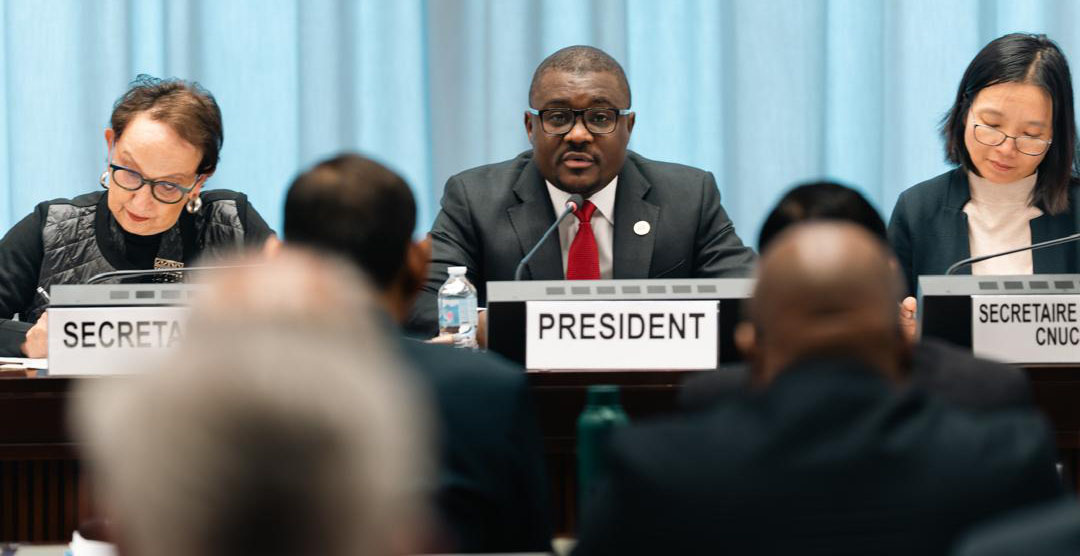
The warning came from the Executive Secretary/Chief Executive Officer (CEO) of the FRC, Dr Rabiu Olowo. He addressed board members recently at the Directors’ Engagement Series. The session, organised by the FRC and the Climate Governance Initiative (CGI) Nigeria, focused on what directors need to know about IFRS S1 and S2. These standards are the first global sustainability disclosure benchmarks issued by the International Sustainability Standards Board (ISSB) in 2023.
Nigeria is the first African country to adopt the standards. For now, companies are in the voluntary phase. Mandatory reporting begins in 2028 for the 2027 financial year. That gentle runway, Dr. Olowo said, does not give room for shortcuts, poor data or selective reporting.
He stated that boardrooms must now treat sustainability governance as seriously as financial governance. “Boards are accountable for sustainability and climate governance. The CGI has partnered with us to deepen this conversation in the boardroom, where governance responsibility truly resides. What we are doing today will significantly support the future of sustainability and climate standards adoption in Nigeria,” he said.
Dr. Olowo reminded stakeholders that Nigeria announced the adoption of the ISSB standards at COP27 in Egypt. To show commitment, the FRC set up the Adoption Readiness Working Group. It included the Central Bank, the Securities and Exchange Commission (SEC), Nigerian Exchange (NGX), professional accounting bodies, assurance firms, real estate firms and sustainability experts. After eight months of work, the group delivered the national roadmap for IFRS sustainability reporting. That roadmap is now recognised globally for its structure and regional significance.
The FRC has since driven a wide campaign across sectors. More than 32 training events, workshops and webinars have been held. Over 168 organisations and 1,800 individuals have received guidance at no cost. Nigeria was also featured in the ISSB global jurisdictional profile. The FRC went on to win the UNCTAD ISAR Award for Sustainability Leadership.
Alongside these milestones, early adopters have emerged. MTN Nigeria, Seplat Energy, Fidelity Bank and Access Bank have begun aligning their reporting with IFRS S1 and S2. The FRC boss said these pioneers provide a model for companies preparing ahead of the 2028 deadline.
Still, preparation requires more than enthusiasm. It demands investment in systems, capacity and data. Dr. Olowo emphasised that many companies still treat sustainability like a marketing exercise. He cautioned boards against presenting feel-good claims that lack depth or evidence. “Climate and sustainability governance is a core fiduciary responsibility. Directors are accountable. You must ensure your sustainability disclosures are decision-useful, verifiable, comparable and integrated with financial information,” he said.
He explained that directors would need stronger internal processes, better data quality, improved management capacity and risk frameworks that capture climate-related threats.
Dr. Olowo also highlighted a link many companies overlook: investor confidence. He said that investors are now paying close attention to sustainability alignment when making decisions. After years of global shifts in capital trends, ESG performance has become a decisive factor. “I would personally invest in a company aligned with sustainability over one that is not, even if the latter posts higher profits. Sustainability alignment signals long-term viability,” he said.
He urged boards to view IFRS S1 and S2 as strategic tools. They help firms identify risks early, protect capital, build trust and compete in global markets. “The future of business is sustainable, transparent, responsible and data-driven. Your leadership will determine how well your organisations adapt and succeed,” he added.
Experts at the event echoed the same concern. Many Nigerian directors still think sustainability is an optional exercise. Some see it as a trend rather than a core governance issue. Others are not convinced that climate risks affect their operations.
Partner and Head of Enterprise Risk and ESG Services at KPMG Nigeria, Tomi Adepoju, challenged that mindset. She said that climate risks are not abstract for Nigerian businesses. They affect supply chains, operating costs, food security, energy, and national development. She noted that businesses fall into three groups: sceptics, box-tickers and true believers. The goal, she said, is to move firms toward meaningful action.
Adepoju spoke on geopolitical trends shaping sustainability reporting. She explained that global power relations are changing because climate issues now influence trade rules, investment flows, and diplomatic alliances. Directors who ignore these shifts expose their companies to regulatory and competitive disadvantages.
She called on boards to understand these global trends, track new regulations and build strong reporting systems. Investments in sustainability teams, ESG tools and assurance processes, she said, help companies earn investor trust and maintain access to capital.
Adepoju outlined key questions boards must address. They include oversight structures, internal controls, alignment with business strategy, readiness for new reporting standards and consistency in disclosures. She stressed that boards must also integrate geopolitical risks into their sustainability planning.
Her message was simple: resilience does not happen by accident. Boards must demand accountability and push for stronger systems.
Some organisations have already embraced this view. Non-executive director at FirstBank, Mrs Remi Odunlami, said that the bank has created a dedicated ESG unit to drive its work. She noted that every organisation needs a sustainability champion. That role does not have to fall on the CEO, but leadership must be willing to invest in the process and commit resources. “It is not cheap,” she said, “but it is necessary.”
Another speaker, Chairman of the Nigerian Integrated Reporting Committee, Dr Innocent Okwuosa, said that boards must stop seeing sustainability through the narrow lens of risk. He encouraged directors to explore the opportunities emerging around sustainability adoption. These opportunities include product innovation, market expansion and competitive advantage.
Okwuosa said that many sustainability champions within companies struggle to convince boards because they lack access or influence. He pointed out that boards want clarity on what sustainability means for profitability and long-term value. Without well-structured communication, the message often does not land. Programmes like the engagement series, he stated, help take the message directly to those with the power to authorise resources.
He stressed that awareness remains low at board level. Without a clear understanding, companies cannot implement effective reporting. “Without the buy-in of the board, nothing happens,” he said. “For you to do IFRS S1, the board must come on board. Without that, it is not possible.”
He also highlighted shifts in consumer behaviour. More customers are embracing low-carbon products. Companies that ignore these shifts risk becoming irrelevant. Such changes, he said, create opportunities for innovation. Organisations can save costs by reducing emissions and improving efficiency. Banks have begun issuing climate-focused loans, especially in areas like solar energy, showing how financial products are adapting to new demand patterns.
The session closed with a clear message: sustainability is no longer a charitable add-on. It is now a core business strategy. Boards that fail to treat it as such may struggle to meet investor expectations, regulatory demands or consumer preferences.
Nigeria’s early entry into the global reporting space gives it a head start. Yet the success of the transition will depend on how seriously directors take their roles. The FRC has given a signal that the era of soft enforcement is drawing to a close. Companies that begin the transition early will have an advantage when the mandatory phase arrives.
Discover more from StakeBridge Media
Subscribe to get the latest posts sent to your email.