

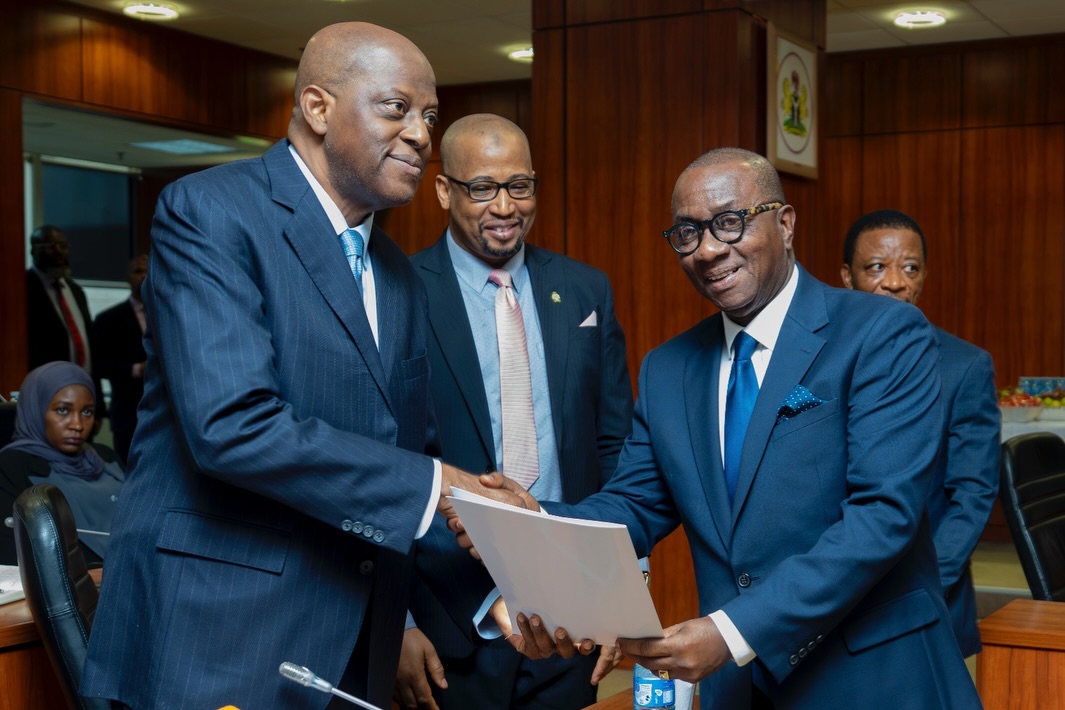
Nigeria’s smallholder farms have long lacked reliable access to affordable credit, leaving output and rural incomes weaker than they should be. At the inauguration of a new board for the Agricultural Credit Guarantee Scheme Fund (ACGSF), Mr. Olayemi Cardoso, Governor of CBN, said that must change. He wants a modern, inclusive and technology-led approach that opens finance to women, youth and small farmers.
What happened
The Central Bank governor formally inaugurated the newly constituted ACGSF board in Abuja. Dr. Olusegun Oshin will chair the board. Other members are Prof. Murtala Sabo Sagagi, Dr. Nneka Onyeali-Ikpe, Engr. Frank Satumari Kudla, Ms. Olusola Sowemimo, Ms. Adetoun Abbi-Olaniyan and Mr. Wondi Philip Ndanusa.
Mr. Cardoso used the event to underline a policy shift. He said the ACGSF must move beyond routine guarantee processing and actively expand affordable lending to agriculture. The governor also reaffirmed that the CBN would not return to direct intervention financing.
Who benefits
Smallholder farmers are first in line. Better guarantees and new lending models should lower the cost of credit and make loans easier to access. Women and young farmers stand to gain more because the board will prioritise inclusion. Microfinance banks, cooperatives and fintech firms may also benefit as partners in last-mile delivery. The wider economy could gain from higher productivity and stronger rural incomes.
Who loses
Actors who profit from high-cost, informal credit face pressure. Lenders that stick to old underwriting rules and demand heavy collateral will find it harder to compete. Weak oversight and low-impact programmes will no longer pass for agricultural development.
What it means
The ACGSF is being recast as a catalyst for more lending rather than a back-office guarantor. Mr. Cardoso reminded the audience that agriculture supplies more than a fifth of gross domestic product (GDP) and employs nearly two thirds of the workforce, but gets less than five per cent of bank credit. He said that gap is unacceptable. The Fund’s guarantee of up to 75 percent of loan value and its larger capital base give it the leverage to change lending behaviour.
The governance and modernisation logic
The governor pointed to the 2019 reform that raised the Fund’s capital from N3 billion to N50 billion and broadened its mandate. The new board includes farmer representation to make decision making more responsive. Mr. Cardoso urged partnerships with microfinance institutions, cooperatives and fintechs, and the use of group lending, mobile money and agent banking to reach remote farmers. He also asked the board to strengthen oversight with satellite imagery, digital dashboards and real time analytics so every naira guaranteed delivers measurable value.
What to expect
Expect new guarantee products aimed at smallholder groups and value chains. The board will likely pilot partnerships with tech firms and expand monitoring systems. Banks may start designing lower cost loans backed by ACGSF cover. The CBN will push for clearer impact metrics and faster response on claims and monitoring. These steps should boost confidence among private lenders and investors in agriculture.
The inauguration marks a shift from patchy credit schemes to a focused effort to unlock finance for farming. By prioritising inclusion, technology, and strong oversight, the new board of the ACGSF could help close Nigeria’s long-standing credit gap and boost productivity in the rural economy.
Discover more from StakeBridge Media
Subscribe to get the latest posts sent to your email.