

By Enam Obiosio
I have spent years listening to official explanations about Nigeria’s electricity crisis. Every administration promises reform, every regulator announces enforcement, every distribution company speaks about losses, and every citizen buys another generator. Now the most symbolic building in the country has taken a different decision. The Presidential Villa is preparing to leave the national grid.
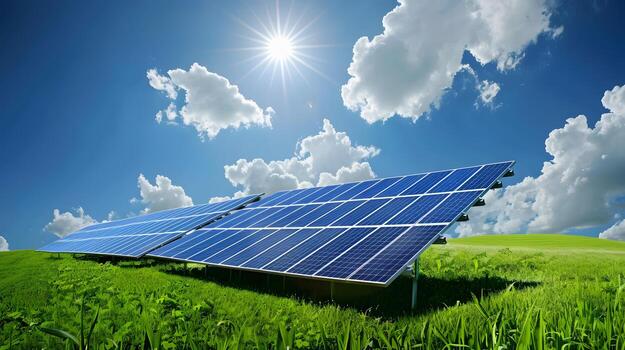
The State House Permanent Secretary, Temitope Fashedemi, disclosed that Aso Rock will fully disconnect from public electricity by March 2026 after completing its solar power project. The installation, finished late 2025 and undergoing testing since December, is expected to replace grid supply almost entirely. He cited the State House Medical Centre, which has reportedly operated for months without generator use and has drawn only minimal power from the Abuja distribution company.
I do not consider this merely a procurement update. I consider it a policy statement, even if unintended.
Governments communicate priorities not only through speeches but through survival choices. When the seat of power chooses energy independence instead of grid dependence, it acknowledges a hierarchy of trust. The state trusts solar technology more than it trusts its own electricity system.
Officials argue the decision is financial. The Energy Commission said the Villa’s electricity bill was estimated at tens of billions of naira annually. Debt records had also shown hundreds of millions owed to the distribution company before reconciliation and settlement. From an accounting standpoint, installing solar is rational. From a governance standpoint, it is revealing.
The central paradox is this. For decades citizens were told the grid would improve if they were patient. Today, the state itself has chosen not to wait.
I understand the technical logic. Distributed energy systems are efficient for high security facilities. Batteries remove outage risk. Solar reduces diesel dependence. Ageing generators become unnecessary. The Permanent Secretary even reported overbilling during testing, transformers charging for power not delivered. Anyone familiar with Nigeria’s electricity billing disputes recognises this immediately. What households complain about daily has now been documented inside the most protected compound in the country.
Yet symbolism matters in public policy. The Presidential Villa is not just another consumer. It is the ultimate reference point for national confidence. When it exits the grid, the message travels farther than any official press release.
I am aware defenders compare the move to the White House using solar. The comparison misses context. In the United States, solar supplements a functioning grid. In Nigeria, solar replaces a failing one. The distinction defines the policy meaning.
For years, Nigeria has pursued centralised generation expansion, transmission upgrades and distribution reform. The theory assumed scale would solve reliability. In practice, reliability has migrated toward private self-generation. Homes buy inverters, estates install mini grids, companies operate captive plants, and now the presidency installs its own independent system.
Energy reform has therefore evolved from national infrastructure to personal infrastructure. Each consumer builds a private solution while the public network weakens further from declining demand confidence. The Villa’s departure accelerates that psychological shift. If the presidency cannot rely on the grid, why should industry?
I do not blame the decision makers. I blame the structure that made the decision inevitable.
The electricity market has remained trapped between politics and economics. Tariffs rarely match cost. Subsidies appear without funding clarity. Distribution companies cannot recover investments. Transmission expansion lags demand growth. Consumers distrust meters and billing. Regulators mediate disputes rather than enforce discipline. The system survives, but it does not perform. Solar then enters not as innovation but as escape.
The government allocated billions of naira across two budgets for the Villa’s solar mini grid. Critics call this an admission of failure. I consider it an admission of realism. Leadership compounds cannot operate on national optimism. They operate on operational certainty. Security facilities cannot experience outages. Hospitals cannot rely on load shedding schedules. At some point engineering outruns policy promises.
The deeper issue is equity. When elites exit public systems, reform urgency declines. I worry less about the Villa having electricity and more about the grid losing its most powerful stakeholder. Institutions improve when those with influence depend on them. Once they no longer do, deterioration becomes politically tolerable.
Nigeria has lived this pattern before. Public schools declined after private schools became widespread among decision makers. Public healthcare weakened after medical tourism expanded among officials. Infrastructure accountability weakens when leaders have alternatives.
Energy risks following the same trajectory. A country where the governing centre is powered by a private mini grid may gradually accept a future where national electricity becomes optional rather than foundational.
I also note the discovery of overbilling during the testing phase. This is perhaps the most instructive part of the entire episode. For years, citizens accused distribution companies of estimated billing abuse. The debate often became emotional, framed as consumer frustration versus technical explanation. Now a federal installation has reported charging for electricity not supplied. That changes the credibility equation. It confirms the market’s core trust deficit.
Electricity systems function on confidence as much as engineering. Consumers must believe meters reflect usage, utilities must believe tariffs will be paid, and investors must believe contracts will hold. Nigeria’s power sector suffers from simultaneous distrust across all participants. Solar independence becomes rational behaviour under distrust conditions.
I do not see the Villa’s solarisation as the end of the grid. I see it as evidence of its transformation. The future Nigerian electricity market will likely be hybrid, decentralised, layered. National transmission will matter for industry and regional trade, but urban reliability will increasingly come from embedded generation and storage.
The danger is not decentralisation. The danger is abandonment.
If policymakers interpret this moment merely as cost savings for a government facility, they will miss its structural significance. The presidency has unintentionally conducted a pilot project in energy autonomy. Citizens will replicate it as technology prices fall. Businesses will finance it as outage costs rise. Utilities will face declining high value customers. The grid will carry mainly those who cannot afford alternatives.
That outcome would redefine electricity from a public service into a residual service.
I therefore read this development as a warning rather than a scandal. The lesson is not that solar is bad. The lesson is that reliability determines legitimacy. People do not remain loyal to infrastructure that does not serve them. They route around it.
By March 2026, when Aso Rock disconnects, Nigeria will cross a psychological threshold. The debate will no longer be how to fix the grid for citizens. It will become whether the grid remains central to national life at all.
I believe that question is far more consequential than the installation of panels on any rooftop, even the most powerful one.
Discover more from StakeBridge Media
Subscribe to get the latest posts sent to your email.