

By Enam Obiosio
Nigeria has launched the Nigeria Beyond Oil and Gas Alliance (BOGA) Fund Programme, a two-year policy framework designed to shift economic planning away from hydrocarbon dependence toward structured diversification tied to climate obligations.
The programme is led by the National Council on Climate Change (NCCC) and implemented with research support, positioning diversification as a coordinated policy process rather than a sectoral reform effort. Nigeria also becomes the fifth country globally to adopt the BOGA structure.
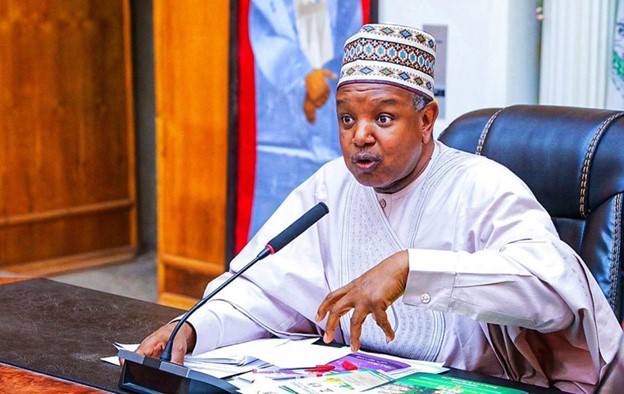
Minister of Budget and Economic Planning, Abubakar Bagudu, framed the rationale directly: Nigeria must “prioritise its own assets and leverage the appropriate technology and expertise to promote sustainable growth,” anchored in a climate conscious economic plan.
DECISION HIGHLIGHT
Government has moved diversification from economic aspiration to climate compliance instrument.
DECISION MEMO
For decades Nigeria’s diversification narrative has been cyclical, triggered by oil price downturns and suspended during oil booms. The BOGA framework attempts to institutionalise diversification by embedding it inside climate governance architecture.
The policy logic is deliberate. Climate obligations are harder to politically reverse than economic reform promises. By linking diversification to Nationally Determined Contributions, authorities are converting an economic choice into an international commitment mechanism.
Omotenioye Majekodunmi, Director-General (DG) of NCCC, clarified the positioning: “Nigeria’s journey beyond oil is not a retreat from our status as an energy powerhouse, but an evolution into a green energy giant.”
The distinction matters. The programme does not abandon hydrocarbons; it attempts to manage their declining global relevance. That framing reduces political resistance domestically while signalling compliance internationally.
External partners also interpret the initiative as preparation rather than transition. BOGA secretariat head Sian Bradley stated the programme supports countries “at an early stage of planning for a just, orderly and equitable transition away from oil and gas.”
Research institutions have been inserted into policy design to prevent the historical problem of declarative diversification without execution architecture. APRI Executive Director Olumide Abimbola explained the goal is to “identify credible pathways for economic diversification beyond oil and gas and the kinds of policies and enabling conditions needed to unlock new opportunities and drive competitiveness.”
This shifts diversification from slogan to conditional policy sequencing. It implies sector replacement must be evidence backed and competitiveness based, not politically allocated.
The most revealing interpretation came from the Society for Planet and Prosperity. Representing the DG, Timothy Ogenyi, noted Nigeria’s task is “not simply to transition away from fossil fuels but to strategically manage the risks and opportunities of a changing global energy system.”
That statement reframes diversification as risk management. The policy is less about abandoning oil and more about preventing fiscal instability when oil loses dominance.
In practical terms, BOGA converts diversification into macroeconomic insurance.
DATA BOX
Programme Structure
Duration: 2 years
Lead institution: National Council on Climate Change
Implementation partner: Africa Policy Research Institute
Policy anchor: Nigeria’s Nationally Determined Contributions
Policy Objective
Evidence based diversification
Decarbonisation and methane reduction alignment
Managed transition framework
Global Position
Nigeria becomes 5th BOGA country
WHO WINS / WHO LOSES
Winners
Future non oil sectors, policy backed emergence
Climate finance aligned industries
Research driven policy institutions
Export diversification planners
Losers
Unstructured subsidy dependent sectors
Short term rent seeking industrial policy actors
Fiscal planning tied exclusively to oil cycles
POLICY SIGNALS
Diversification is now an international obligation, not just domestic ambition.
Climate compliance is being used as fiscal stabilisation strategy.
Economic planning is shifting from revenue substitution to risk hedging.
INVESTOR SIGNAL
Government is preparing for declining hydrocarbon centrality, not immediate exit.
Green and transition finance sectors gain policy visibility.
Long term capital allocation may gradually shift toward climate compliant industries.
RISK RADAR
Implementation risk remains high if coordination becomes bureaucratic rather than operational.
Political cycle risk persists if diversification threatens entrenched oil revenue structures.
Global energy demand shocks could delay execution urgency.
The programme reduces narrative uncertainty but not execution uncertainty. The market will judge credibility only when non oil revenue materially replaces oil exposure.
Discover more from StakeBridge Media
Subscribe to get the latest posts sent to your email.