

By Enam Obiosio
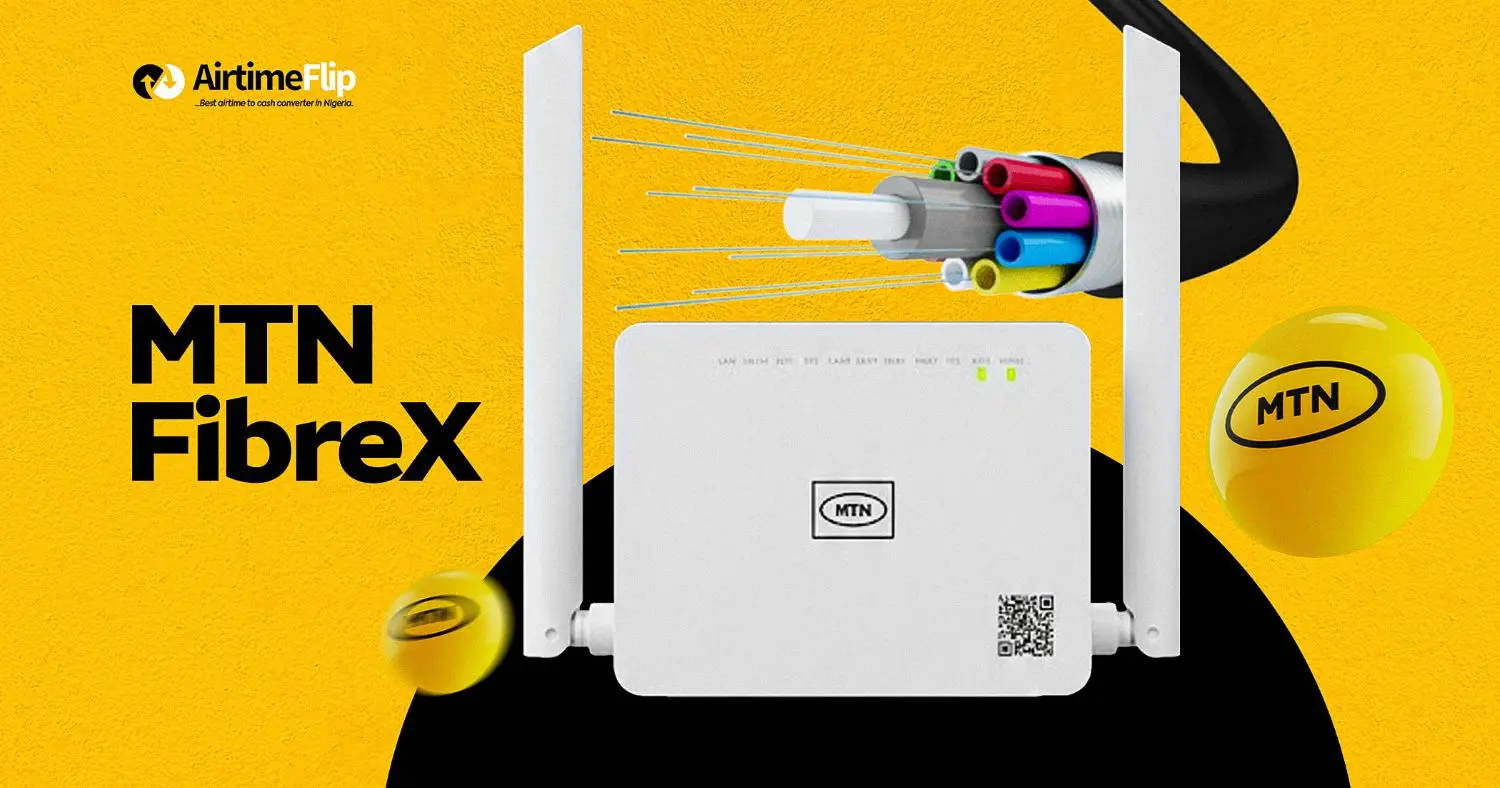
I do not see the recent surge in MTN’s FibreX subscribers as just another telecom success story. I see it as something more uncomfortable, more revealing, and frankly, more consequential. It is a silent referendum on how Nigerians actually want to connect, and a quiet indictment of how the system has failed to anticipate that demand.
When a product grows from 11,794 users to 89,441 in one year, a 658 percent increase, the instinct is to celebrate. I do not celebrate too quickly. Numbers of that magnitude are rarely just about product-market fit. They are signals. They tell you where the market is moving, and more importantly, where policy, infrastructure, and strategy have lagged behind reality. What I see is not just adoption. I see correction.
For years, Nigeria’s digital expansion has leaned heavily on mobile broadband. It was convenient, scalable, and politically attractive. Roll out towers, expand 4G, talk about 5G, and the narrative writes itself. Coverage becomes the metric. Penetration becomes the headline. Progress becomes something that can be easily quantified and reported. But coverage is not capacity.
The uncomfortable truth is that mobile networks, for all their reach, were never designed to carry the weight of a digital economy. They were designed for access, not intensity. And now, as Nigeria’s digital behaviour evolves, streaming, remote work, gaming, cloud computing, content creation, the cracks are no longer subtle. They are structural. This is where FibreX becomes instructive.
Egerton Idehen, Chief Broadband Officer of MTN Nigeria, put it plainly: “Wireless will take Nigeria into the future, but fibre ensures that future is fast, stable, and limitless.” I agree with the first half. I interrogate the second.
Wireless will take Nigeria into the future, yes, but it will not sustain that future. Fibre is not a complement. It is the backbone. And what we are witnessing is not the rise of fibre as an alternative, but its emergence as a necessity that has been delayed for too long. The growth of FibreX is not accidental. It is demand catching up with suppressed need.
Look at the user profile. These are not casual internet users. These are high-intensity consumers, remote workers, developers, creators, streamers, people whose economic productivity is tied directly to bandwidth reliability. For them, mobile data is no longer sufficient. It is unpredictable, often throttled, and increasingly expensive relative to value delivered.
FibreX’s proposition is simple but disruptive in the Nigerian context: unlimited data, no fair usage policy, and speeds that can reach up to 1Gbps. In a market conditioned to ration data and manage consumption, that is not just a product feature. It is a behavioural shift.
At ₦25,000 monthly for 50mbps, it also sits in a strategic price band. It is expensive enough to target the emerging middle class, yet significantly cheaper than alternatives like Starlink, which demands up to ₦150,000 monthly and hardware costs running into millions. FibreX is not competing at the bottom of the market. It is redefining the middle. And that middle is expanding.
The addition of nearly 78,000 subscribers in one year is not just a growth metric. It is evidence of willingness to pay for quality. Nigerians are often described as price-sensitive, but that framing is incomplete. Nigerians are value-sensitive. When the service works, when it is reliable, when it supports productivity, people will pay. This is where the market is ahead of policy.
The Nigerian Communications Commission projects that 5G coverage will reach 50 percent by 2030 and that internet users will approach 200 million. These are ambitious targets. But they are incomplete if they continue to prioritise coverage over capacity.
You cannot build a digital economy on mobile bandwidth alone. You cannot power a generation of creators, developers, and remote professionals on networks designed for intermittent use. And you certainly cannot compete globally if your infrastructure is fundamentally unstable. FibreX’s growth is exposing this gap.
But it is also exposing something else, the inefficiencies and contradictions within Nigeria’s infrastructure environment.
Despite the momentum, the constraints are almost predictable. Fibre cuts. Vandalism. Right-of-way bottlenecks. Community resistance. Regulatory fragmentation. These are not new problems. They are recurring failures of coordination and enforcement.
In 2025 alone, MTN recorded over 9,200 fibre cuts and more than 200 vandalised sites. That is not an operational issue. That is systemic fragility.
When critical infrastructure can be disrupted at that scale, the conversation should move beyond telecom operators and into governance. Telecommunications infrastructure has already been classified as Critical National Information Infrastructure. Yet, enforcement remains weak, inconsistent, and largely reactive.
Idehen’s call for stronger infrastructure protection laws is not new. It is overdue. But laws alone will not solve the problem. What is required is alignment across federal, state, and local levels. Right-of-way charges must be standardised. Access processes must be simplified. Community engagement must be structured, not negotiated ad hoc at every deployment point.
The current system is inefficient by design. Every new fibre rollout becomes a negotiation, a risk, and in many cases, a delay. And yet, despite these constraints, the market is moving.
That is what makes this moment significant. Growth is happening in spite of the system, not because of it.
MTN’s ambition to connect 8 million homes by 2028 is aggressive. It is also revealing. It signals that operators are willing to invest ahead of policy certainty. But ambition without enabling conditions will eventually hit limits. Expansion requires not just capital, but coordination.
The Federal Government’s Project Bridge, which aims to expand fibre infrastructure from 35,000 kilometres to 125,000 kilometres, is a step in the right direction. But execution will determine relevance. Nigeria does not lack plans. It struggles with delivery. The deeper issue, however, is strategic clarity.
Is Nigeria building a broadband economy or a connectivity economy? The two are not the same.
A connectivity economy focuses on access, number of users, coverage percentages, and headline statistics. A broadband economy focuses on speed, reliability, latency, and capacity to support economic activity. One is about inclusion. The other is about productivity. For too long, Nigeria has optimised for the former.
FibreX’s growth is forcing a shift toward the latter. It is also forcing competition.
As fibre adoption increases, other operators will respond. Fixed broadband will no longer be a niche product. It will become a competitive battleground. Pricing models will evolve. Service quality will be scrutinised. Customer expectations will rise. That is how markets mature.
But maturity will also expose weaknesses. Service complaints are already visible across social platforms. Installation delays, downtime, inconsistent speeds. These are early indicators of scaling pressure. Growth is one challenge. Sustaining quality at scale is another.
If FibreX fails to maintain reliability, the narrative will shift quickly. Trust, once lost, is difficult to rebuild in a market where alternatives are emerging. So, I do not see FibreX’s growth as a victory lap. I see it as a stress test.
A test of whether Nigerian telecom operators can transition from access providers to infrastructure providers. A test of whether government can move from policy announcements to enforcement. A test of whether the market can sustain quality as demand intensifies.
Most importantly, it is a test of whether Nigeria is ready to take its digital economy seriously. Because this is what is really at stake.
Broadband is not just about faster internet. It is about enabling economic activity. It is about productivity, innovation, and competitiveness. It is about whether a Nigerian developer can work seamlessly with a global team, whether a content creator can upload without interruption, whether a business can operate without network uncertainty.
These are not luxuries. They are prerequisites for participation in the modern economy. The silent revolution is not the 658 percent growth. That is just the data point.
The real revolution is behavioural. Nigerians are moving from consumption to production, from casual usage to dependency, from managing data to demanding performance. And the system is scrambling to catch up. I am not surprised by FibreX’s growth. I am surprised it did not happen earlier.
What happens next will determine whether this moment becomes a turning point or just another spike in a market that struggles to sustain momentum.
If the infrastructure holds, if policy aligns, if operators deliver, Nigeria could finally transition from a connectivity narrative to a broadband reality.
If not, this surge will remain what it currently is, a glimpse of what is possible, constrained by what is still broken.
Discover more from StakeBridge Media
Subscribe to get the latest posts sent to your email.