

By Jennete Ugo Anya
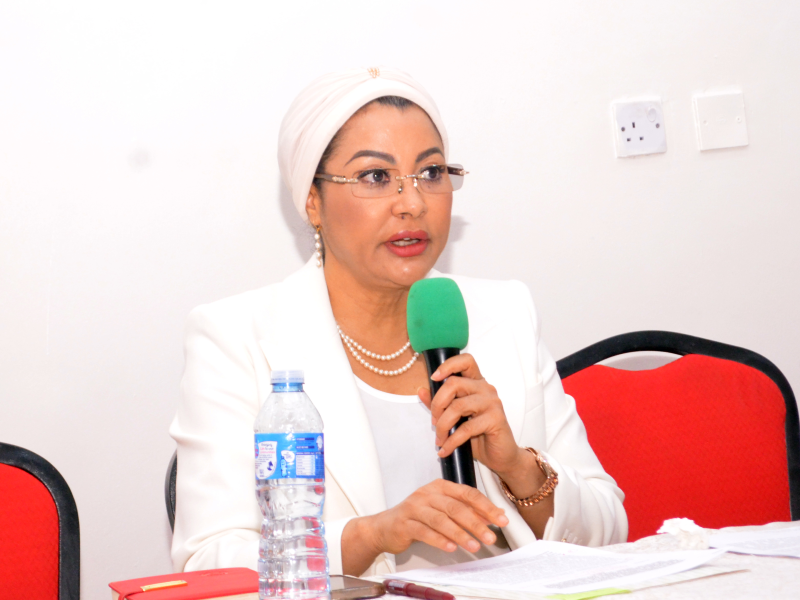
Dr. Doris Nkiruka Uzoka-Anite, Honourable Minister of State for Budget and Economic Planning, announced new financial facilities at the 10th Nigeria-European Union (EU) Business Forum 2026 in Lagos, describing them as integral to Nigeria’s forthcoming National Development Plan 2026-2030 rather than standalone interventions. Uzoka-Anite said that the facilities reflect the European Union’s confidence in the economic reforms of President Bola Ahmed Tinubu, adding that public spending would remain performance-driven. “The new financial facilities announced are not isolated initiatives. They are integral to our upcoming National Development Plan 2026-2030 and serve as a direct reflection of the EU’s confidence in the reforms being executed under the leadership of President Bola Ahmed Tinubu.” She further stated: “Every naira will continue to be evaluated against its return to drive high-impact results across our national priorities.”
DECISION HIGHLIGHT
The government has positioned new EU-backed financial facilities within a medium-term national planning framework, linking external development finance to measurable economic priorities, including digital transformation, healthcare, climate-smart agriculture and enterprise growth, while reinforcing results-based public expenditure.
DECISION MEMO
The announcement signals an evolution in Nigeria’s development financing strategy from project-specific interventions towards programme-based financing anchored in national planning. By embedding the facilities within the National Development Plan 2026-2030, the government is seeking greater policy continuity, resource alignment and measurable economic outcomes.
Equally significant is the government’s emphasis on return-based public expenditure. The commitment to evaluate “every naira” against measurable outcomes reflects an attempt to strengthen expenditure efficiency and improve accountability in development finance, particularly as fiscal resources remain constrained.
The EU’s participation also extends beyond financial support. By publicly linking the facilities to Nigeria’s ongoing reforms, the partnership serves as an external validation of the government’s policy direction, potentially strengthening confidence among multilateral institutions and private investors assessing Nigeria’s reform trajectory.
The selected investment priorities suggest that government policy is concentrating on productivity-enhancing sectors capable of generating broader economic spillovers. Digital inclusion, healthcare value chains, climate-smart agriculture and enterprise financing each address structural constraints affecting long-term economic competitiveness rather than short-term consumption.
DATA BOX
Platform
- 10th Nigeria-European Union Business Forum 2026, Lagos.
Policy Framework
- National Development Plan 2026-2030.
Priority Investment Areas
- Digital transformation and financial access.
- Healthcare and local productive capacity.
- Climate-smart agriculture.
- Enterprise growth and access to finance.
Key Policy Themes
- Results-based public expenditure.
- Development finance alignment.
- Investment-led partnership.
- Public-private and multilateral collaboration.
Key Quotes
- “The new financial facilities announced are not isolated initiatives.”
- “Every naira will continue to be evaluated against its return to drive high-impact results across our national priorities.”
WHO WINS / WHO LOSES
Winners
- Businesses seeking improved access to development finance.
- Digital economy participants.
- Healthcare manufacturers and value-chain operators.
- Agricultural producers adopting climate-smart practices.
- Development finance institutions partnering with Nigeria.
Potential Losers
- Projects unable to demonstrate measurable economic returns.
- Sectors outside current national investment priorities.
- Public programmes with weak implementation or accountability frameworks.
POLICY SIGNALS
- Development finance is being integrated into medium-term national planning.
- Government is reinforcing performance-based allocation of public resources.
- External partnerships are increasingly structured around investment mobilisation rather than aid.
- Productive sectors remain central to Nigeria’s economic diversification strategy.
INVESTOR SIGNAL
The announcement strengthens policy visibility around Nigeria’s medium-term investment priorities. Alignment between government planning and EU financing may improve investor confidence by reducing policy fragmentation and signalling sustained support for infrastructure, digital services, healthcare, agribusiness and enterprise financing. Actual investment sentiment, however, will depend on implementation quality, project execution and measurable economic outcomes.
RISK RADAR
- Delays in implementing the National Development Plan 2026-2030.
- Weak coordination between development partners and implementing institutions.
- Fiscal constraints affecting counterpart funding and project execution.
- Governance or procurement inefficiencies reducing investment impact.
- Performance measurement frameworks failing to translate into effective expenditure discipline.
Discover more from StakeBridge Media
Subscribe to get the latest posts sent to your email.