

The Bank of Industry (BOI) has spotlighted two major hurdles threatening the sustainability ambitions of Nigeria’s micro, small, and medium enterprises (MSMEs): limited access to funding and weak technical capacity.
This revelation came as the bank unveiled its new report, ‘Environmental, Social and Governance (ESG) Adoption by Nigerian Micro, Small and Medium Enterprises,’ during its inaugural ESG conference in Lagos. Themed ‘Advancing ESG Adoption,’ the event gathered key stakeholders from finance, industry, and development sectors to discuss how Nigerian businesses can transition toward greener, fairer, and more responsible operations.
According to the BOI, 78 percent of surveyed enterprises cited financial constraints as their top challenge, while 65 percent pointed to a lack of technical expertise as a major barrier. The report, which collated over 300 valid responses from MSMEs across Nigeria’s six geopolitical zones, cut across sectors such as agro-processing, ICT, manufacturing, creative industries, healthcare, and construction.
Beyond capital and capacity, the survey revealed that 65 percent of MSMEs struggle with inadequate ESG-oriented incentives, 45 percent lack knowledge of ESG frameworks, and 20 percent see little or no customer demand driving change. These figures, the bank said, signal that market forces alone cannot push businesses toward sustainable transformation.
To address the gaps, the report proposed a suite of interventions: creating ESG-compliant financial products with targeted loan features, building capacity through regional technical hubs, and offering women-focused credit windows to narrow the gender adoption gap. It also called for blended financing mechanisms and incentive-linked policies to encourage ESG-aligned practices among small enterprises.
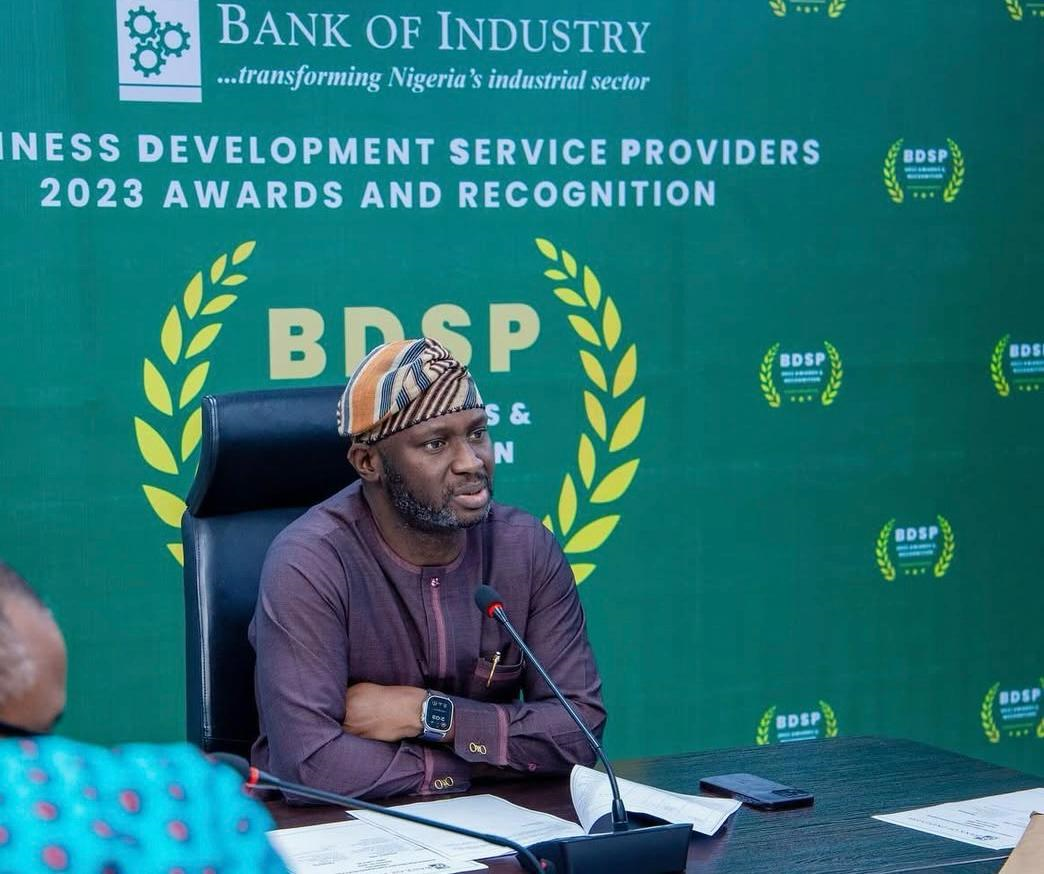
Speaking at the event, BOI’s Managing Director, Dr. Olasupo Olusi, underscored the urgency of empowering MSMEs to operate sustainably. He noted that while MSMEs represent more than 80 percent of Nigeria’s businesses and contribute nearly half of its GDP, most remain unaware of how to integrate ESG principles into their operations.
“Many enterprises still face barriers in understanding what ESG means in practice and how to embed its principles into their daily operations,” Dr. Olusi said. “These barriers make them more vulnerable, less competitive, and less future-ready. BOI’s goal is to bridge this gap and equip MSMEs to grow sustainably and profitably.”
Dr. Olusi added that the report aligns with Nigeria’s national commitments under the Paris Agreement, the Nationally Determined Contributions, and the Energy Transition Plan—particularly the goal of cutting emissions by 47 percent by 2030. He maintained that ESG adoption would not only enhance access to finance but also attract global investors and strengthen Nigeria’s position in sustainable trade.
“ESG principles will help us align our industrial ambitions with national and global climate goals, while enabling us to attract green capital, spur innovation, and build industries that can compete globally,” he said.
Delivering the keynote address, Director-General of the National Council on Climate Change, Tenioye Majekodunmi, described ESG adoption as a strategic necessity for Nigeria’s competitiveness. She noted that climate realities, shifting investor expectations, and fast-evolving technologies are already redefining how economies grow.
“Global investors are redirecting trillions toward sustainable assets,” she said. “For Nigerian SMEs, this transition presents both risks and opportunities. Those who adapt early by embedding ESG principles will become preferred partners for global trade and finance.”
Majekodunmi welcomed BOI’s ESG framework for MSMEs as “a national blueprint” for directing finance towards inclusive, responsible, and sustainable industrial growth.
In his remarks, Mahamadou Diarra, Deputy Country Director of Agence Française de Développement (AFD), commended BOI’s forward-thinking approach to sustainability. He said the bank’s efforts position it as a credible partner for international financiers committed to harmonising ESG frameworks globally.
Diarra reaffirmed AFD’s commitment to supporting BOI in strengthening its ESG systems and mobilising climate-linked investments in Nigeria.
The Bank of Industry, Nigeria’s leading development finance institution, continues to play a pivotal role in advancing industrialisation through long-term financing, advisory services, and strategic interventions. With the release of its ESG report, the bank has once again signalled that sustainable growth and responsible business practices are no longer optional – they are the new foundation for Nigeria’s industrial future.
Discover more from StakeBridge Media
Subscribe to get the latest posts sent to your email.