

By Olumide Johnson
Abia State Government is moving to formalise a $200 million investment agreement with Presco Plc to develop a 14,000-hectare oil palm plantation and processing hub. The transaction, advised by Afrinvest (West Africa) Limited, is positioned as a revival of large-scale plantation agriculture anchored on public-private partnership structuring.
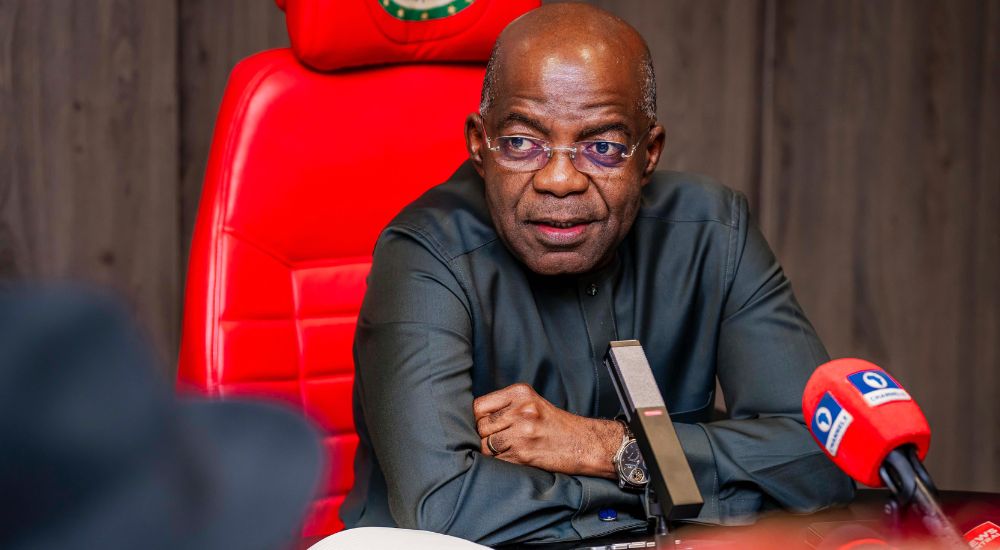
Dr. Alex Chioma Otti, Governor of Abia State, confirmed that an agreement in principle has been reached, with a Memorandum of Understanding (MoU) expected ahead of project flag-off. Olakanmi Rasheed Sarumi, Chairman of Presco Plc, disclosed the firm’s readiness to deploy capital into plantation development, processing infrastructure, and downstream integration.
DECISION HIGHLIGHT
The state is prioritising land-backed agro-industrialisation, committing to facilitate land acquisition and provide security guarantees, while Presco Plc assumes capital deployment and operational execution. The scale, 14,000 hectares at entry, signals a phased expansion model rather than a one-off estate buildout.
DECISION MEMO
This is less a greenfield agricultural investment than a policy attempt to reconstruct a dismantled regional comparative advantage. The explicit reference to Michael Iheonukara Okpara’s farm settlement era is not rhetorical, it is a signal that Abia is reverting to plantation economics as an industrial policy tool.
However, the structure reveals a familiar Nigerian constraint. Land access and security remain sovereign risks, not operational variables. Otti’s commitment to “facilitate the land acquisition… and provide the necessary security support” is effectively the state underwriting the two most binding constraints to agricultural capital formation.
Sarumi frames the investment as catalytic, “a major oil palm processing hub… to serve the Southeast region,” but this assumes functional midstream and downstream absorption capacity. Without parallel industrial offtake, refining, consumer goods, oleochemicals, the risk is upstream oversupply with limited value capture.
Afrinvest’s advisory role suggests financial structuring discipline, yet the transaction still leans heavily on execution credibility rather than institutional guarantees. Dr. Ike Chioke, Group Managing Director of Afrinvest (West Africa) Limited, noted that the deal followed first-quarter 2025 engagements under a Public-Private Partnership (PPP) framework, indicating some process integrity, but not necessarily delivery assurance.
The underlying thesis is straightforward, scale production, rebuild value chains, and internalise import substitution. The weakness is equally clear, Nigeria’s historical inability to sustain plantation-scale agriculture beyond political cycles.
DATA BOX
- Investment size, $200 million
- Land allocation, 14,000 hectares (initial phase)
- Job creation, over 5,000 direct and indirect roles
- Projected GDP impact, multi-billion naira annually
- Locations identified, Bende, Arochukwu, Umuahia North
WHO WINS / WHO LOSES
Winners
Presco Plc secures land scale and regional processing dominance
Abia State Government gains fiscal upside and political capital
Local small and medium entreprises (SMEs) and logistics operators benefit from value chain expansion
Conditional winners
Host communities, dependent on compensation, inclusion, and land governance transparency
Losers
Smallholder farmers, if land aggregation displaces informal holdings without integration models
Competing regional producers, if Presco achieves processing scale advantages
POLICY SIGNALS
The state is signalling a shift from fragmented SME agriculture to coordinated agro-industrial clusters. Land is being repositioned as an economic asset class, not merely a social resource. The PPP route indicates a preference for private capital-led development, with government acting as enabler rather than operator.
There is also an implicit import substitution agenda, palm oil remains a strategic commodity where Nigeria underperforms relative to historical capacity.
INVESTOR SIGNAL
The transaction indicates renewed subnational competition for agribusiness capital. Abia is attempting to differentiate through land availability, policy alignment, and historical narrative positioning.
For investors, the signal is cautiously positive, structured advisory involvement and defined scale improve bankability. However, the investment case remains exposed to execution risk in land titling, security, and infrastructure linkage.
RISK RADAR
Land acquisition disputes remain the primary flashpoint, especially across multiple host communities
Security guarantees are policy statements, not enforceable instruments
Infrastructure gaps, roads, power, evacuation logistics, could erode processing efficiency
Commodity price volatility may affect long-term returns
Policy continuity risk if political leadership changes before project maturity
In narrow terms, the deal is attractive. In structural terms, it is a test of whether Nigeria can operationalise large-scale agricultural capital without reverting to the cycle of stalled ambition.
Discover more from StakeBridge Media
Subscribe to get the latest posts sent to your email.