

- Africa’s aid fatigue masks a deeper flaw: weak capital discipline, poor incentives, and fragile systems for deploying long-term investment at scale
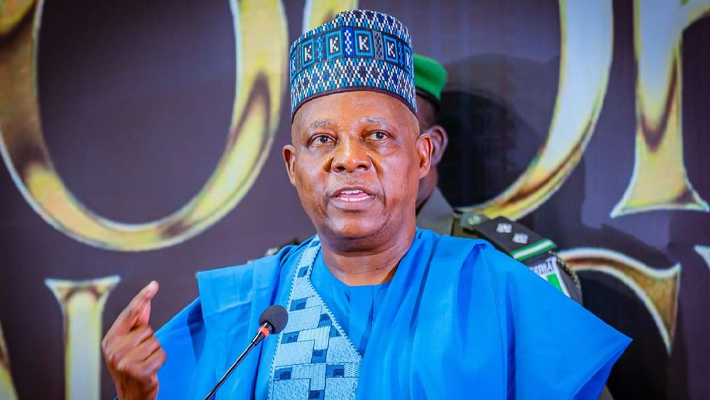
Vice President Kashim Shettima issued a blunt critique of Africa’s long-standing dependence on aid and concessional loans, arguing instead for what he termed ‘strategic capitalism’ as the continent’s viable development pathway. The position was articulated at the Africa Social Impact Summit (ASIS) in Abuja, a platform convened by the Vice President’s office in partnership with the Sterling One Foundation and United Nations Nigeria. Shettima was represented by Hajia Hauwa Liman, his Technical Adviser on Women, Youth Engagement, and Impact.
DECISION HIGHLIGHT
Decision type: Development financing doctrine shift
Decision owner: Nigerian Vice Presidency
Platform: Africa Social Impact Summit (ASIS)
Core proposition: Strategic capitalism over aid and loans
Instruments emphasized: Patient capital, catalytic capital, blended finance
Target outcomes: Human capital, infrastructure, inclusive markets
Time horizon: Pre-2030 SDG window
Headline implication: Africa’s development failure is framed as a capital deployment problem, not a funding scarcity problem
DECISION MEMO
Shettima’s intervention cuts against decades of Africa’s development orthodoxy. Rather than pleading for more aid, debt relief, or concessional inflows, the Vice President framed Africa’s central challenge as one of capital structure, incentives, and execution discipline.
“The future of this continent will not be financed by aid and loans,” Shettima said. “It will be financed by patient capital, catalytic capital, blended finance, and private enterprise deployed at scale, and guided by impact.”
In positioning “strategic capitalism” as the alternative, the Vice President effectively recast impact investing as a governance tool, not a philanthropic gesture. He defined it as capital that builds educated workforces, productive systems, resilient infrastructure, and sustainable markets, rather than perpetuating dependency.
“Government as a whole cannot solve Africa’s development challenges,” he said. “Our responsibility today is to reframe development as an investment, in human capital, productive systems, climate resilience, infrastructure, and inclusive markets.”
The choice of venue was deliberate. ASIS, now in its fourth edition, has evolved into a convening platform explicitly designed to bridge policy intent and capital execution. Shettima described it as a space to “listen with humility, reason with honesty, and act with purpose,” arguing that Africa’s leadership crisis is less about ideas and more about the courage to choose and sustain workable solutions.
His remarks were also a subtle indictment of donor-driven development architecture. “We are building national resource architectures, not to impress donors, but to serve citizens,” he said, welcoming ASIS as a hub for “co-investment, co-design, and co-delivery.”
This framing aligns with Nigeria’s ongoing reform narrative under President Bola Tinubu, which Shettima said spans education, health, financial inclusion, and digital infrastructure. The emphasis is on systems-building rather than programme proliferation, a departure from aid-funded fragmentation that has historically weakened accountability.
The urgency of this shift was reinforced by global context. With just five years to the 2030 Sustainable Development Goals (SDGs) deadline, Amina Mohammed, Deputy Secretary-General of the United Nations, warned in a virtual address that global progress has “faltered and, in many instances, regressed.”
“Today, 3 billion people reside in countries that allocate more resources to interest payments than to vital sectors like health and education,” Mohammed said, describing the situation as “untenable,” particularly as climate impacts disproportionately affect countries that contributed least to the crisis.
She outlined three global imperatives, catalysing large-scale sustainable investment, addressing climate debt, and reforming the international financial architecture to better serve vulnerable nations. Her message implicitly validated Shettima’s argument, aid and debt-heavy models are structurally misaligned with Africa’s development realities.
From the private sector and philanthropy lens, Olapeju Ibekwe, Chief Executive Officer of Sterling One Foundation, echoed the execution gap critique.
“We must move beyond ideas to execution,” Ibekwe said, describing ASIS as a platform that deliberately unites public leadership, private capital, civil society, and social innovators around implementation rather than rhetoric.
She cited concrete outcomes, blended finance frameworks in education and health, financial inclusion platforms reaching millions of women and youth, and climate resilience partnerships mobilising adaptation capital. “This has been made possible because of partnership,” she said, acknowledging the UN system, financial institutions, corporates, and NGOs.
The summit also marked the launch of the Business Coalition for Innovation and the Women and Financial and Economic Inclusion Platform (WIFI), an African Union-backed initiative debuting in Nigeria, reinforcing ASIS’s shift from dialogue to infrastructure for capital deployment.
Even the humanitarian lens converged on the same conclusion. A representative of the United Nations High Commissioner for Refugees (UNHCR) highlighted Nigeria’s escalating internal displacement crisis driven by conflict, flooding, and insurgency, but rejected handouts as a solution.
“What we want are jobs,” he said. “Give us a way to earn a living so that we can take care of ourselves and our families. Handouts are unsustainable.”
Across policy, finance, philanthropy, and humanitarian response, the consensus was unmistakable. Africa’s development bottleneck is not compassion, it is capital design and institutional delivery.
DATA BOX
Summit: Africa Social Impact Summit (ASIS), 4th edition
Development horizon: 5 years to SDGs 2030
Key capital tools referenced: Patient capital, blended finance, catalytic capital
Platforms launched: Business Coalition for Innovation; Women and Financial and Economic Inclusion Platform (WIFI)
Debt pressure metric: 3 billion people in countries spending more on interest than health and education
WHO WINS / WHO LOSES
Winners: Private capital with long-term mandates, impact investors, reform-oriented governments, productive youth and women-led enterprises.
Losers: Aid-dependent institutions, rent-seeking intermediaries, fragmented donor programmes, unsustainable debt-financed budgets.
POLICY SIGNALS
Nigeria’s framing signals a strategic pivot from donor alignment to capital alignment, prioritising investment-grade development structures over project-based aid consumption.
INVESTOR SIGNAL
Africa is being repositioned, at least rhetorically, as a blended-finance and patient-capital destination rather than a grant-reliant frontier. Investors should watch for regulatory stability, pipeline credibility, and execution discipline to validate this shift.
RISK RADAR
Key risks include policy inconsistency, weak institutions, politicisation of impact platforms, capital flight due to insecurity, and failure to convert rhetoric into bankable pipelines. Without institutional discipline, “strategic capitalism” risks becoming another slogan rather than a financing doctrine.
Discover more from StakeBridge Media
Subscribe to get the latest posts sent to your email.