

By Hannah Yemisi
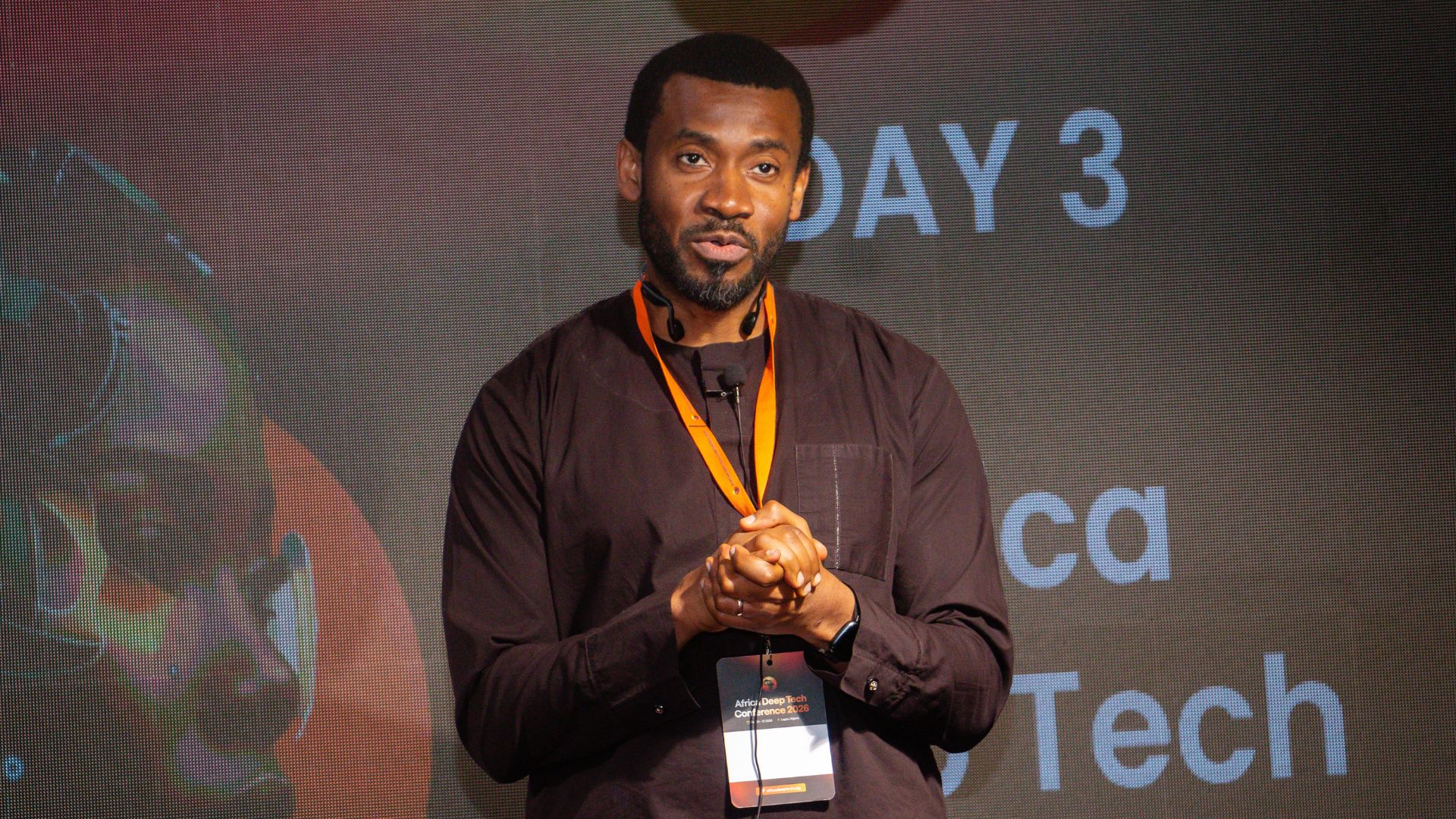
Chukwuemeka Afigbo, convener of the Africa Deep Tech Foundation, is advancing an institutional approach to address what he describes as Africa’s structural deficit in deep technology development.
The foundation, which has operated for nearly three years as a network of African technologists, researchers, investors and policymakers, publicly expanded its activities with the first Africa Deep Tech Conference held in Lagos in February 2026.
The initiative is built on a central argument that Africa’s technology ecosystem is constrained less by ideas than by the absence of structured pathways capable of sustaining long-horizon research and engineering work.
Chukwuemeka Afigbo, former developer programs leader at Google and Meta, argued that the continent’s challenge lies in the systems supporting advanced innovation.
“The least you can do is give them a community,” Afigbo said.
The Foundation initially operated as a closed network of about 180 to 190 members across Africa and the diaspora focused on advancing deep technology sectors such as artificial intelligence, robotics and advanced engineering.
DECISION HIGHLIGHT
The Africa Deep Tech Foundation has moved from a private knowledge network into a more visible institutional platform supporting early-stage deep technology builders.
Its strategy focuses on connecting engineers, researchers, founders and regulators while providing mentorship and early-stage support for prototype development.
The organisation’s innovation challenge attracted over 2,000 participants from 14 African countries, ultimately selecting four winning projects.
DECISION MEMO
The Africa Deep Tech Foundation represents an attempt to correct a structural imbalance within Africa’s technology ecosystem.
For more than a decade, venture capital on the continent has concentrated largely on fintech and consumer internet platforms where revenue models are easier to validate.
Deep technology sectors, including artificial intelligence, advanced materials, semiconductors and biotechnology, require longer research timelines, specialised infrastructure and patient capital.
These conditions have historically been scarce within African innovation systems.
Afigbo argues that the problem is not intellectual capacity but institutional scaffolding.
According to TechCabal Insight estimates, artificial intelligence alone could contribute roughly $1 trillion to Africa’s gross domestic product by 2035. Yet only about five percent of African artificial intelligence practitioners currently have access to the high-performance computing infrastructure required for advanced research.
This mismatch between human capital and research infrastructure forms the basis of the Foundation’s intervention strategy.
Afigbo described the underlying philosophy as building pathways that allow technically ambitious builders to remain in deep technology fields long enough to reach early validation.
“The reaction here is often: how will this make money next month?” Afigbo said.
The Foundation’s programmes therefore prioritise what he describes as “survival capital” during the earliest stage of technical development, the period when prototypes struggle to evolve into viable products.
This model reflects lessons from mature innovation ecosystems where research institutions, venture capital and developer communities collectively sustain long-cycle innovation.
However, the African context differs significantly because infrastructure gaps, financing constraints and regulatory fragmentation remain persistent obstacles.
DATA BOX
Estimated African artificial intelligence economic potential by 2035: $1 trillion
African artificial intelligence practitioners with access to advanced computing infrastructure: about 5 percent
Young Nigerians entering labour market annually: about 3.5 million
Share of workforce with advanced digital skills: about 11 percent
Africa Deep Tech Foundation innovation challenge
Participants: over 2,000
Countries represented: 14
Prize pool: $20,000
WHO WINS / WHO LOSES
Early-stage engineers, researchers and technical founders benefit from institutional support networks capable of extending project lifecycles beyond the prototype stage.
Universities and research communities may gain stronger integration with entrepreneurial ecosystems.
However, venture investors focused on short-term revenue models may remain cautious toward deep technology sectors requiring longer development timelines.
POLICY SIGNALS
The initiative reflects growing recognition that Africa’s innovation challenge lies not only in startup funding but in research infrastructure, technical training and institutional collaboration.
It also highlights the need for stronger links between regulators, universities and private technology builders.
INVESTOR SIGNAL
Deep technology sectors in Africa remain largely underdeveloped but potentially high impact if infrastructure constraints are addressed.
Investors may gradually explore opportunities in artificial intelligence, robotics and advanced manufacturing as institutional ecosystems mature.
RISK RADAR
Deep technology ventures require substantial computing infrastructure, specialised expertise and patient capital, all of which remain limited across many African markets.
Without sustained institutional support, early-stage builders may migrate into more commercially immediate sectors such as fintech or software services.
The long timelines associated with deep technology development also expose projects to policy uncertainty and capital shortages before commercial viability is achieved.
Discover more from StakeBridge Media
Subscribe to get the latest posts sent to your email.