

By Ovio Peters
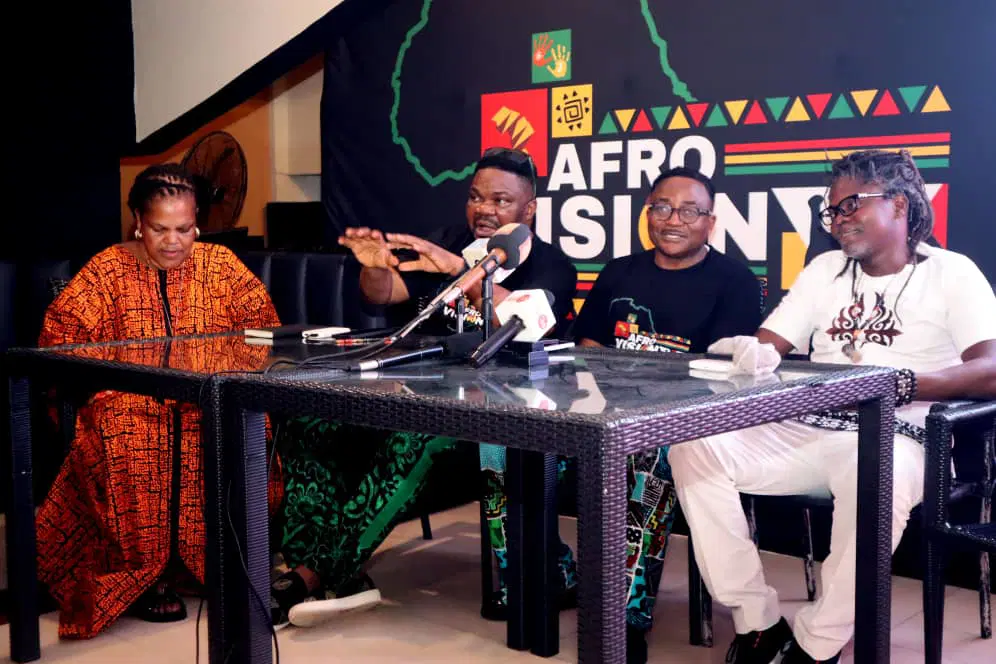
The Nigerian activation of AfroVision X 2026 has formally commenced, positioning the country as the strategic anchor for a month-long global festival scheduled for June 1 to June 30, 2026 across Toronto, Brampton, and Mississauga in Canada.
The recent Lagos media meeting convened stakeholders from business, policy, culture, and the arts, signalling an attempt to shift Nigeria’s cultural dominance from soft power symbolism into structured economic conversion. At the centre of the messaging was the effort to formalise what has historically been an informal export of Nigerian creativity.
DECISION HIGHLIGHT
David Bebiem, Convener of AfroVision X and Chief Executive Officer of Grandieu, framed the initiative as a deliberate market architecture rather than a celebratory cultural showcase.
“Nigeria is the heartbeat of modern African creativity,” Bebiem said. “From music and film to fashion and digital arts, this nation shapes global culture. AfroVision X 2026 is intentionally designed as a structured marketplace, a convergence point for creatives, investors, brands, and diaspora networks to generate measurable economic impact.”
Ayoola Sadare, Founder and Chief Executive Officer of Inspiro Productions, reinforced the structural ambition.
“Nigeria already exports culture organically,” Sadare said. “AfroVision X provides the infrastructure to transform that influence into capital access, diaspora engagement, and institutional growth. This is about positioning our creatives within formal global economic systems.”
DECISION MEMO
What is unfolding around AfroVision X is less about cultural celebration and more about an overdue monetisation experiment. Nigeria’s creative sector has long enjoyed global cultural relevance, yet the value capture has remained fragmented, informal, and weakly institutionalised.
The organisers’ language around “structured marketplace” and “formal global economic systems” signals a recognition of this gap. However, the initiative’s real test will not be in programming density but in financial intermediation depth. Without enforceable deal pipelines, rights management frameworks, and capital matching mechanisms, the risk is that AfroVision X becomes another visibility platform that amplifies influence without materially improving creator balance sheets.
The presence of the Lagos Chamber of Commerce and Industry indicates policy level acknowledgement of the creative economy’s macro potential. Yet the absence, at least from the disclosed material, of explicit financing vehicles, export credit structures, or measurable trade targets suggests the commercial plumbing is still evolving.
Prince Adeyemi-Doro, Founder of the Adeyemi-Doro Group, introduced the technology scaling argument, noting that “the intersection of Artificial Intelligence, digital infrastructure, and the creative economy is where talent converts into scalable value.” The statement is directionally correct but operationally incomplete. Artificial Intelligence can expand distribution efficiency and content productivity, but without intellectual property enforcement and monetisation rails, scale may still outpace earnings.
Oluwatoyin Shogbesan of the Asa Heritage Foundation’s emphasis on narrative ownership adds an important but often underpriced dimension. Control of story and rights typically precedes durable revenue capture in global creative markets. Whether AfroVision X embeds this into its commercial design remains unclear.
In sum, AfroVision X is attempting to reposition Nigeria’s cultural exports from influence theatre to structured trade. The intent is coherent. Execution risk remains material.
DATA BOX
Festival duration: June 1 to June 30, 2026
Host cities: Toronto, Brampton, Mississauga
Festival length: One month
Core sectors featured: Fashion, film, music, theatre, exhibitions, industry roundtables
WHO WINS / WHO LOSES
Who wins:
• Nigerian creatives with export ready catalogues and diaspora networks
• Event driven service providers and cultural aggregators
• Brands seeking Afrocentric global positioning
• Diaspora distribution platforms
Who loses:
• Informal operators unable to meet structured market standards
• Local intermediaries dependent on opaque value chains
• Creatives without rights protection or scalable digital presence
POLICY SIGNALS
The strong endorsement from the Lagos Chamber of Commerce and Industry indicates growing institutional acceptance of the creative economy as a tradeable sector rather than purely cultural diplomacy. However, policy backing will only become credible when matched with export financing tools, intellectual property enforcement, and cross border payment facilitation.
INVESTOR SIGNAL
AfroVision X is positioning itself as a convening infrastructure play within the African creative value chain. For investors, the opportunity is not the festival itself but the pipelines it could unlock, including content rights, touring circuits, digital distribution, and brand partnerships.
The key diligence question remains whether the platform can produce repeatable deal flow rather than episodic cultural visibility.
RISK RADAR
Primary risks include:
• Eventisation risk, high visibility but low monetisation
• Weak intellectual property enforcement across jurisdictions
• Currency and cross border payment friction
• Overreliance on diaspora sentiment without institutional capital backing
• Execution fragmentation between Nigerian and Canadian market actors
AfroVision X has correctly diagnosed the monetisation gap in Nigeria’s creative economy. Whether it can close it will depend less on stage programming and more on the financial and legal infrastructure that follows.
Discover more from StakeBridge Media
Subscribe to get the latest posts sent to your email.