

By Olumide Johnson
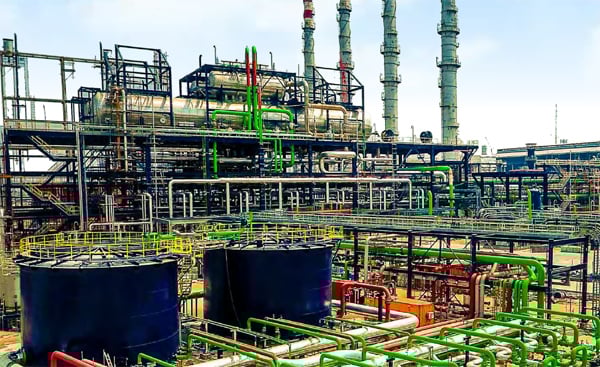
Dangote Refinery has resumed sales of Premium Motor Spirit (pms) under a revised distribution structure that prioritises major marketers and depot owners, effectively excluding independent marketers from direct product lifting.
The model, endorsed by the Nigerian Midstream and Downstream Petroleum Regulatory Authority (NMDPRA), marks a return to a more controlled supply architecture within Nigeria’s fully deregulated downstream market.
DECISION HIGHLIGHT
- Distribution restricted to major marketers and depot owners
- Independent marketers now source via depots
- Gantry price unchanged at N774 per litre
- Lagos pricing signal: around N800 per litre
- Warri, Port Harcourt, Abuja: about N820 per litre
- Supply channels: coastal vessels, ship-based trades, gantry loading
- Policy backdrop: full deregulation environment
DECISION MEMO
Dangote Refinery’s revised marketing framework represents a decisive structural intervention in Nigeria’s downstream fuel market, one that shifts pricing power and supply control toward larger, infrastructure-backed players.
Under the new model, the refinery will no longer supply independent petroleum marketers directly. Instead, as pricing analyst, Olajide Jeremiah, explained: “only depot owners with established storage facilities and approved major marketers will be eligible to lift products.” The implication is a deliberate consolidation of primary market access.
Jeremiah confirmed the pricing baseline remains intact, noting, “While the gantry price remains at N774 per litre, Dangote Refinery will no longer sell directly to independent petroleum marketers who typically purchase in smaller volumes.” This suggests the policy objective is less about price adjustment and more about distribution discipline.
The strategic logic is clear. By concentrating supply through entities with verified storage and logistics capacity, the refinery and regulator appear to be pursuing tighter market coordination, reduced arbitrage volatility, and more predictable price transmission across the value chain.
Industry feedback indicates the move is partly defensive. One operator noted the intention is to allow major marketers and depot owners “to moderate supply flows and influence market pricing more effectively,” while another source described the goal as creating balance so that depot infrastructure remains commercially viable.
Supportive voices have emerged. Colman Obasi, President of Oil and Gas Services Providers Association of Nigeria (OGSPAN), described the framework as positive, stating, “This is a good arrangement and we hope that while deregulation remains in place, the government and operators will work toward sourcing more petroleum products locally from the refinery.”
However, the restructuring also introduces competitive redistribution within the downstream ecosystem. Independent marketers, including Independent Petroleum Marketers Association of Nigeria (IPMAN) and Petroleum Products Retail Outlets Owners Association of Nigeria (PETROAN) members, now face an additional supply layer that could compress margins and reduce direct price negotiation leverage.
The regulator’s parallel engagement with wholesale suppliers underscores the coordinated nature of the shift. NMDPRA’s consultations on supply sufficiency, pricing transparency, and market stability suggest authorities are attempting to stabilise the post-subsidy downstream architecture through controlled market structure rather than direct price intervention.
The key test will be whether the new model improves supply predictability without entrenching concentration risk or widening retail price spreads.
DATA BOX
Distribution and Pricing Metrics
- Gantry price: N774 per litre
- Lagos projected retail benchmark: ~N800 per litre
- Warri/PH/Abuja trend: ~N820 per litre
- Eligible direct buyers: major marketers and depot owners
- Excluded from direct lifting: independent marketers
- Distribution channels: vessel shipments, ship trades, gantry
- Regulatory backing: NMDPRA endorsement
WHO WINS / WHO LOSES
Who Wins
- Major marketers with approved status
- Depot owners with storage infrastructure
- Integrated downstream logistics players
- Refinery supply coordination objectives
- Regulators seeking market order
Who Loses
- Independent marketers losing direct access
- Smaller retail operators facing margin pressure
- Price arbitrage traders
- Thinly capitalised depot competitors
POLICY SIGNALS
- Downstream deregulation is entering a structured coordination phase.
- Infrastructure capacity is becoming the gatekeeper for market access.
- Regulators are favouring supply chain formalisation over open access.
- Price formation power is shifting upstream in the value chain.
- Market stability is being prioritised over distribution breadth.
INVESTOR SIGNAL
For investors, the new framework signals increasing institutionalisation of Nigeria’s downstream fuel market. Larger, well-capitalised marketers and logistics operators are likely to capture greater value share under the revised structure.
However, concentration risk will be closely watched. Markets that narrow primary access points can improve efficiency but may also introduce pricing power concerns if competitive discipline weakens.
Investors in depot infrastructure, coastal logistics, and large-scale marketing operations appear structurally better positioned in the current configuration.
RISK RADAR
- Margin compression for independent marketers
- Potential retail price pass-through pressure
- Market concentration risk
- Depot capacity bottlenecks
- Regulatory consistency risk
- Supply coordination failures
- Regional price dispersion
Bottom line: Dangote Refinery’s controlled distribution pivot is a calculated attempt to stabilise Nigeria’s deregulated fuel market, but its long-term success will depend on whether tighter supply discipline enhances efficiency without narrowing competition or amplifying downstream price pressures.
Discover more from StakeBridge Media
Subscribe to get the latest posts sent to your email.