

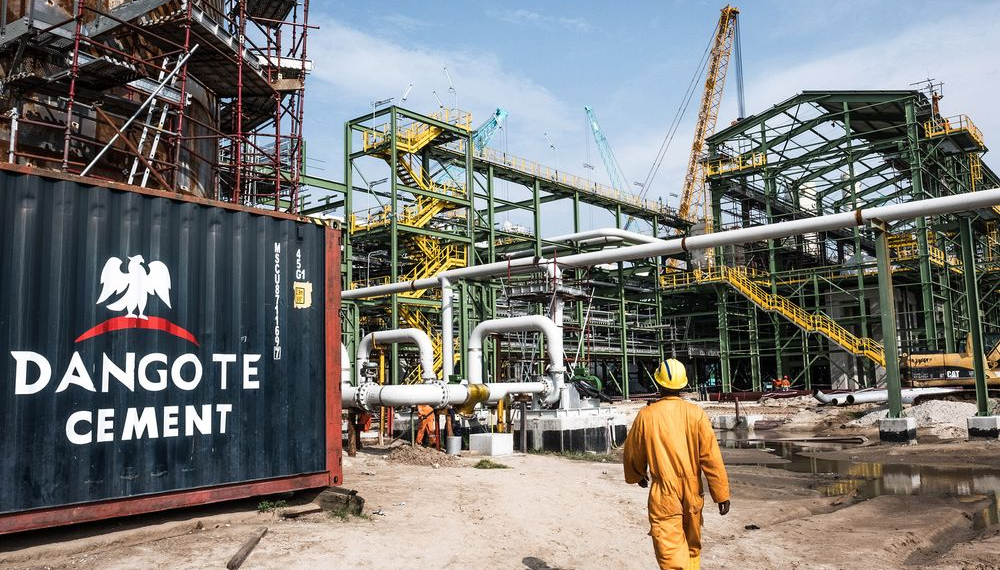
Nigerian Exchange Limited (NGX) admitted Dangote Cement Plc’s Series 1 and Series 2 Commercial Papers to trading, marking the first Commercial Paper (CP) listing on the exchange under a N500 billion programme. The combined value stood at N119.87 billion, listed on 18 February 2026.
Series 1, worth N19.95 billion, carries a 181-day tenor and matures 20 May 2026. Series 2, worth N99.92 billion, runs 265 days and matures 12 August 2026. Both were issued at discount and redeemed at par with implied yields of 17.50 percent and 19 percent.
David Adonri, Vice Chairman of Highcap Securities Limited, stated: “Dangote Cement’s Commercial Paper listing on NGX signals growing sophistication in Nigeria’s short-term debt market. The attractive yields of these instruments highlight strong investor appetite for high-quality, short-tenor corporate debt, and provide a benchmark for future issuances.”
DECISION HIGHLIGHT
NGX converted a previously over-the-counter corporate funding instrument into an exchange-traded security. The decision shifts Commercial Papers from private liquidity arrangements into transparent market pricing infrastructure.
DECISION MEMO
The listing is not merely a corporate funding event but a market structure reform. Nigerian corporates historically relied on bank overdrafts or opaque dealer-broker CP placements. That structure concentrated pricing power within banks and limited secondary market discovery.
By migrating CPs onto a public trading venue, the exchange is attempting to standardise short-term credit risk pricing. Transparency forces credit differentiation. Strong issuers borrow cheaper, weaker issuers pay a premium or stay excluded.
Dangote Cement’s participation serves as anchor collateral for the reform. A top-tier issuer reduces adoption risk for institutional investors who require liquidity assurance before allocating to a new market segment.
Adonri’s reference to “a benchmark for future issuances” reflects the real policy intention. The transaction is less about Dangote funding working capital and more about creating a sovereign domestic yield curve below one year maturity. Nigeria’s debt market has long had a missing middle between treasury bills and corporate bonds. This listing attempts to fill that maturity gap.
The deeper implication is banking disintermediation. Once corporates can roll short-term paper transparently, treasury desks compete directly with lenders for working capital financing. The exchange becomes a credit allocation platform rather than purely an equity venue.
DATA BOX
Programme size: N500bn
Listed amount: N119.87bn
Series 1: N19.95bn, 181 days, 17.50% yield
Series 2: N99.92bn, 265 days, 19% yield
Listing date: 18 Feb 2026
Redemption value: N1,000 per unit
WHO WINS / WHO LOSES
Winners:
Large corporates accessing cheaper short-term funding
Institutional investors seeking yield above treasury bills
The exchange gaining fixed-income relevance
Losers:
Banks dependent on short-term corporate lending margins
Weaker corporates unable to meet disclosure standards
Private placement dealers losing pricing opacity advantage
POLICY SIGNALS
Authorities are prioritising domestic capital market intermediation over bank balance-sheet dominance. Expect similar migration of other money-market instruments into exchange-visible structures.
INVESTOR SIGNAL
The emergence of tradable CP benchmarks introduces a private sector risk curve, improving asset allocation models for pension funds and asset managers. Investors now price corporate liquidity risk separately from sovereign risk.
RISK RADAR
Liquidity risk remains if secondary trading volumes stay thin.
Credit concentration risk emerges if issuance is dominated by top conglomerates.
Market confidence could weaken if the first default occurs before diversification develops.
The reform’s success depends less on this issuance and more on whether mid-tier corporates can eventually access the platform without destabilising trust.
Discover more from StakeBridge Media
Subscribe to get the latest posts sent to your email.