

By Kingsley Ani
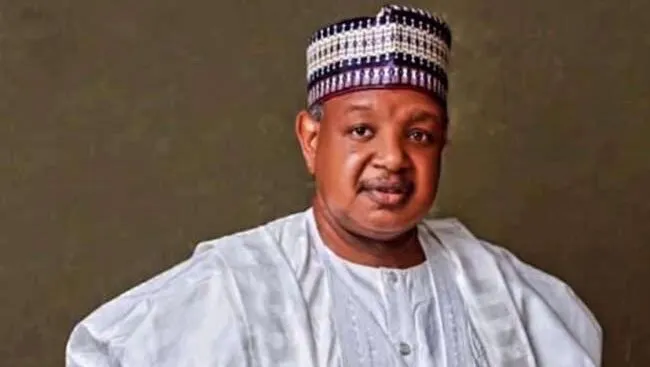
The Honourable Minister of Budget and Economic Planning, Sen. Atiku Bagudu, has recently reaffirmed the federal government’s commitment to developing Nigeria’s cassava bioethanol value chain during a stakeholder capacity building workshop in Abeokuta.
The initiative is positioned as part of the administration’s broader effort to convert agricultural strength into industrial output under President Bola Tinubu’s Renewed Hope Agenda.
Bagudu stated that the workshop is intended to advance the Cassava Bioethanol Value Chain Development Project across the South West zone.
DECISION HIGHLIGHT
The government is again signalling intent to industrialise cassava through bioethanol production. However, the announcement provides limited operational detail on financing structure, project pipeline, private sector participation, or implementation timelines.
The policy direction is clear. The delivery architecture remains under specified.
DECISION MEMO
Atiku Bagudu’s latest intervention reinforces a familiar but still unfulfilled ambition in Nigeria’s agro industrial strategy: converting cassava abundance into scalable bioethanol output.
The minister framed the initiative within the administration’s economic agenda, noting the programme seeks to transform “Nigeria’s agricultural strengths into industrial and economic gains.”
The strategic logic is sound. Nigeria remains one of the world’s largest cassava producers, and bioethanol development offers potential linkages across energy security, import substitution, rural incomes, and industrial feedstock supply.
Yet the credibility challenge is not conceptual. It is executional.
Nigeria has historically announced multiple biofuel and agro processing initiatives that struggled to achieve commercial scale. Against that backdrop, investors will focus less on workshop signalling and more on bankable project formation.
What is currently missing from the policy communication is material.
There is no disclosed:
- National bioethanol blending mandate update
- Feedstock aggregation framework
- Pricing regime for ethanol off take
- Fiscal incentives for private investors
- Infrastructure readiness for large scale distillation
- Financing envelope for the value chain rollout
Without these, the initiative risks remaining programme driven rather than market anchored.
The workshop format itself suggests the government is still in ecosystem mobilisation mode rather than investment execution phase. Capacity building is necessary, but it is typically an early-stage instrument.
From a value chain perspective, the biggest structural constraint remains feedstock logistics and price competitiveness. Cassava based ethanol must compete with imported alternatives and other domestic fuel economics.
Unless productivity, aggregation, and processing efficiencies are simultaneously addressed, scale economics may remain fragile.
There is also limited clarity on inter-ministerial coordination. Bioethanol development intersects agriculture, energy, industry, and trade policy. The current communication centres on planning alignment but does not yet demonstrate a whole of government implementation framework.
INVESTOR RELATIONS IMPLICATION
For investors and industrial partners, the announcement is directionally positive but insufficiently investable at this stage.
Institutional capital typically requires:
- Clear policy certainty on ethanol blending mandates
- Guaranteed off take structures
- Defined fiscal incentives
- Bankable project pipelines
- Transparent regulatory framework
Until these elements are articulated, investor engagement will likely remain exploratory rather than capital committing.
For listed agro processors and energy players, the development is a medium term thematic signal rather than an immediate earnings catalyst.
DATA BOX
Policy Focus: Cassava Bioethanol Value Chain
Event: South West stakeholder capacity workshop
Policy Anchor: Renewed Hope Agenda
Lead Ministry: Budget and Economic Planning
Strategic Objective: Industrial expansion and economic stability
WHO WINS / WHO LOSES
Who Wins
- Cassava farmers if aggregation systems materialise
- Agro processing firms positioned for ethanol conversion
- Rural economies in potential feedstock corridors
- Policy advocates for biofuel substitution
Who Loses
- Import dependent ethanol traders if local scale succeeds
- Investors seeking near term project bankability
- Processors without access to feedstock clusters
- Stakeholders expecting rapid industrial rollout
POLICY SIGNALS
First, the federal government is re elevating bioethanol within its agro industrial policy mix.
Second, the framing under the Renewed Hope Agenda suggests alignment with broader import substitution and energy diversification goals.
Third, the reliance on stakeholder workshops indicates the programme is still in mobilisation rather than execution phase.
Fourth, the absence of firm mandates or incentives suggests policy caution, likely reflecting past biofuel implementation challenges.
INVESTOR SIGNAL
For the market, the signal is early stage and conditional.
Investors should monitor for:
- Formal ethanol blending policy updates
- Public private partnership announcements
- Dedicated financing vehicles
- Large scale distillery project approvals
- Feedstock pricing frameworks
If these emerge, the cassava ethanol story could become structurally investable. Until then, it remains policy intent.
RISK RADAR
Execution Risk
Nigeria’s history with biofuel scale up remains mixed.
Feedstock Risk
Cassava supply chain fragmentation could undermine plant utilisation.
Policy Continuity Risk
Bioethanol programmes require multiyear policy consistency.
Commercial Viability Risk
Cost competitiveness versus imported ethanol remains uncertain.
Coordination Risk
Multi ministry alignment will be critical for delivery speed.
Bottom Line
Atiku Bagudu’s reaffirmation keeps cassava bioethanol on Nigeria’s industrial policy radar, but the initiative remains at the signalling stage. The opportunity is strategically credible, yet investors will wait for binding mandates, financing clarity, and bankable project pipelines before assigning material economic weight to the programme.
Discover more from StakeBridge Media
Subscribe to get the latest posts sent to your email.