

By Jennete Ugo Anya
The federal government has intensified efforts to attract strategic partnerships aimed at accelerating the transformation of Nigeria’s livestock sector, positioning the industry as a driver of food security, rural livelihoods and economic diversification.
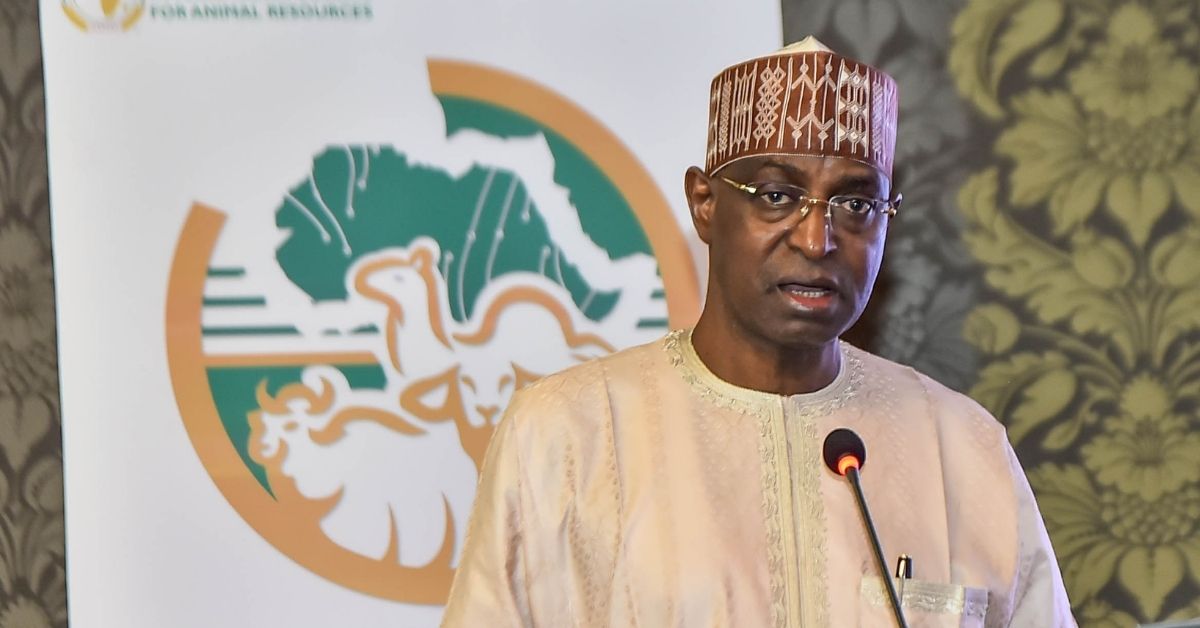
The Honourable Minister of Livestock Development, Alhaji Idi Maiha, disclosed this during recent meeting in Abuja with a delegation from Heifer International led by Surita Sandosham, President and Chief Executive Officer of the organisation.
Maiha said that Nigeria is entering what he described as a new phase in livestock sector development, with government investments and external partnerships being aligned under a national transformation framework.
Maiha noted that Nigeria possesses one of Africa’s largest livestock populations and consumer markets for animal products, supported by a population estimated at more than 240 million people and rising demand for meat, dairy, poultry and leather.
“The creation of the Federal Ministry of Livestock Development reflects the government’s determination to reposition the sector as a key driver of food security, rural development and economic diversification,” Maiha said.
Surita Sandosham, President and Chief Executive Officer of Heifer International, said that the organisation is expanding its agricultural support programmes in Nigeria through its Nigeria Unlock Signature Programme.
Sandosham said that the programme aims to support more than two million households in achieving sustainable living incomes by 2030.
DECISION HIGHLIGHT
The federal government is seeking expanded partnerships with development organisations and private actors to implement the National Livestock Growth Acceleration Strategy and modernise Nigeria’s livestock production systems.
DECISION MEMO
The federal government’s renewed push for partnerships in livestock development reflects recognition that Nigeria’s vast animal resources remain economically underutilised.
Despite possessing one of the largest livestock populations in Africa, Nigeria continues to face structural inefficiencies in meat and dairy production. Informal pastoral systems, limited veterinary infrastructure, weak feed supply chains and inadequate processing capacity have constrained productivity across the sector.
Maiha’s remarks suggest that policymakers increasingly view the livestock economy not simply as an agricultural subsector but as a strategic industry with potential to support food security, reduce rural poverty and expand agro-industrial value chains.
Maiha explained that the ministry’s policy direction is guided by the National Livestock Growth Acceleration Strategy, a framework designed to modernise livestock production and develop integrated value chains across multiple species including cattle, sheep, goats, pigs, poultry and rabbits.
A major element of this transformation plan involves the rehabilitation of Nigeria’s existing grazing infrastructure. According to Maiha, the country currently has 417 grazing reserves covering nearly 5million hectares of land, which the government intends to upgrade into modern livestock economic hubs.
Maiha said that the proposed hubs will include pasture systems, veterinary clinics, irrigation infrastructure, renewable energy facilities and social services such as schools.
The government also intends to establish National Livestock Service Centres across the country to support integrated animal production and processing activities.
These initiatives are expected to operate alongside programmes supported by development partners including the World Bank, the Foreign, Commonwealth and Development Office of the United Kingdom and the African Development Bank.
However, the success of these ambitions will depend on the ability to transition Nigeria’s livestock sector from largely extensive pastoral systems to more structured and commercially viable production models.
Sandosham outlined how development organisations are attempting to support that transition through targeted programmes. He said Heifer International is working to improve livestock productivity, strengthen climate-resilient agriculture and increase farmer incomes through the Nigeria Unlock Signature Programme.
Sandosham pointed to existing initiatives including collaboration with the Edo State Government and Amal Farms to support women and youth participation in livestock value chains. He also referenced the Transform Dairy Nigeria Project operating in Adamawa State and Taraba State, which uses artificial insemination technologies to improve cattle genetics and increase milk production.
Another component of the programme involves the development of irrigated fodder fields using solar-powered drip irrigation systems to provide year-round livestock feed and reduce the need for long-distance cattle migration.
While these initiatives demonstrate progress toward modernising livestock production, the broader challenge remains systemic. Nigeria’s livestock economy has historically been shaped by informal market structures, land use tensions and limited public investment in animal health systems.
Consequently, the government’s strategy relies heavily on partnerships with development agencies and private investors to mobilise capital, technology and technical expertise required for sector transformation.
DATA BOX
Nigeria’s population: Over 240 million
Existing grazing reserves in Nigeria: 417
Total land area covered by grazing reserves: Nearly 5 million hectares
Households targeted under Nigeria Unlock Signature Programme: Over 2 million by 2030
Countries where Heifer International operates: 19
WHO WINS / WHO LOSES
Winners
Smallholder livestock farmers could benefit from improved access to veterinary services, better breeding technologies and more reliable feed supply systems.
Agro-processing firms and meat and dairy processors may gain from more structured supply chains capable of supporting large-scale production.
Development finance institutions and agricultural technology providers may also find expanded opportunities as Nigeria attempts to modernise livestock systems.
Potential Losers
Informal livestock markets that currently operate outside structured supply chains may face pressure as government programmes attempt to formalise production and distribution systems.
Pastoral communities reliant on extensive grazing systems could experience adjustment pressures if land-use reforms prioritise ranching or semi-intensive production models.
POLICY SIGNALS
The creation of the Federal Ministry of Livestock Development signals an institutional attempt to elevate livestock production within Nigeria’s economic diversification strategy.
The policy direction also indicates growing government interest in integrating livestock development with food security planning, rural economic development and export opportunities under the African Continental Free Trade Area.
However, the strategy also acknowledges the limits of government capacity, as the transformation agenda is structured around partnerships with development institutions and private sector actors.
INVESTOR SIGNAL
Nigeria’s livestock sector presents substantial investment potential across several value chains including feed production, dairy processing, meat processing, animal genetics and cold chain logistics.
The proposed development of grazing reserves into livestock economic hubs may create opportunities for infrastructure investment, agribusiness partnerships and agro-industrial clusters.
If implemented effectively, the strategy could also position Nigeria as a regional supplier of livestock products within the African Continental Free Trade Area market.
RISK RADAR
Land use governance remains a major risk factor. Grazing reserves and livestock hubs could generate local tensions if land rights, community participation and compensation mechanisms are poorly managed.
Infrastructure financing also presents a constraint. Transforming grazing reserves into fully functional livestock economic hubs will require substantial investment in irrigation, veterinary services, transportation and energy systems.
Finally, productivity improvements will depend heavily on farmer adoption of modern breeding, feeding and animal health practices. Without sustained extension services and financing support, productivity gains may remain limited despite ambitious policy frameworks.
Discover more from StakeBridge Media
Subscribe to get the latest posts sent to your email.