

By Jennete Ugo Anya
The federal government will implement only 30 percent of the 2025 capital budget before November 2026, with the remaining 70 percent rolled into the 2026 fiscal framework.
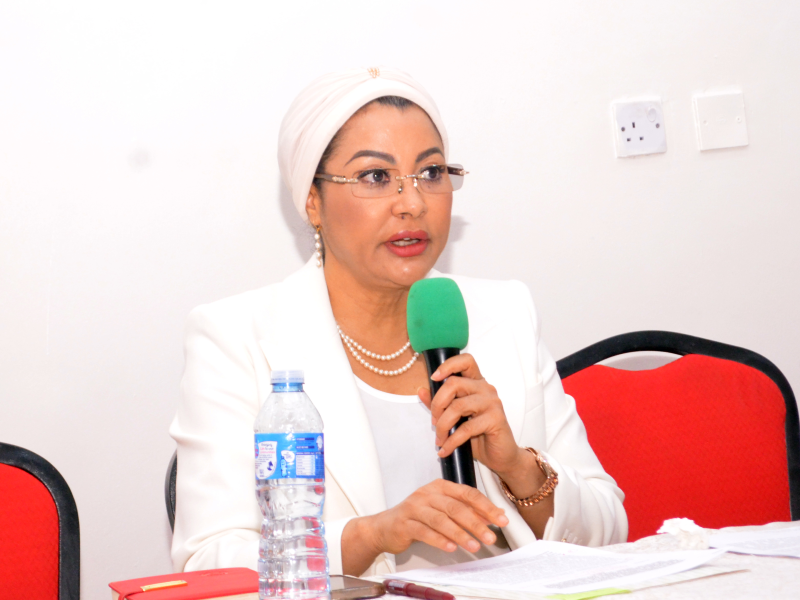
Accountant-General of the Federation (AGF), Dr. Shamseldeen Ogunjimi, disclosed that warrants have already been issued to Ministries, Departments and Agencies (MDAs) to commence execution, following restoration of the Government Integrated Financial Management Information System (GIFMIS).
DECISION HIGHLIGHT
Fiscal authorities are prioritising continuity of ongoing projects over full year capital delivery.
Ogunjimi stated that “30% of the 2025 Capital Budget will be implemented between now and 31 November 2026, while the remaining 70% has been rolled over into the 2026 Capital Budget to ensure seamless implementation.” He added that Treasury House will begin executing the 30 percent component immediately.
Honourable Minister of State for Finance, Doris Uzoka-Anite, reinforced compliance discipline, warning that “no capital payment should be processed outside approved procurement procedures.”
DECISION MEMO
The decision to execute only a fraction of the 2025 capital budget while rolling forward the bulk underscores the Federal Government’s continuing struggle to align fiscal ambition with cash flow reality.
On the surface, the move is framed as a continuity measure to protect ongoing projects. In practice, it reflects the persistent structural challenge of capital budget underperformance that has characterised Nigeria’s public finance cycle for years. By extending implementation into 2026, authorities are effectively smoothing fiscal pressure, but at the cost of delaying infrastructure momentum.
Ogunjimi’s confirmation that warrants have been issued and that GIFMIS has been fully restored suggests administrative bottlenecks are being addressed. However, the scale of the rollover, 70 percent of the capital envelope, indicates that the constraint is not purely technical. It points to deeper issues around revenue volatility, cash management and project execution capacity.
The insistence by Uzoka-Anite that capital projects must be backed by cash is particularly revealing. Her directive signals tighter expenditure control and reflects a shift toward more conservative treasury discipline amid constrained fiscal space. The assurance that government has “adequate funds to settle pending payments” attempts to calm contractor concerns, but market participants will likely wait for actual disbursement flows.
The policy also exposes the trade-off embedded in Nigeria’s current fiscal strategy. Protecting macro stability and avoiding new spending pressure may support debt sustainability in the near term, but prolonged capital deferrals risk slowing infrastructure delivery, crowding out growth multipliers and weakening private sector confidence in project pipelines.
Operational guidance from the Director of Funds, Steve Ehikhamenor, urging MDAs to avoid overruns and return excess funds, further reinforces the government’s tightening fiscal posture.
In effect, the 2025 capital budget has become a bridging instrument into 2026 rather than a fully executed fiscal programme. The key question now is whether the extended timeline improves delivery discipline or simply postpones the execution gap.
DATA BOX
- Share of 2025 capital budget to be executed: 30 percent
- Share rolled into 2026: 70 percent
- Implementation window: up to November 2026
- GIFMIS status: fully restored
- Warrants to MDAs: issued
- Policy condition: projects must be cash backed
WHO WINS / WHO LOSES
Ongoing federal contractors with already approved projects may benefit from continuity assurances if payments flow as promised. Treasury managers gain greater flexibility in cash flow management.
Infrastructure dependent sectors and new project proponents face slower capital deployment. State level supply chains tied to federal projects may experience delayed multiplier effects.
POLICY SIGNALS
The move signals a more conservative federal cash management stance and heightened procurement enforcement. It also confirms that capital budget realism is becoming more prominent in Nigeria’s fiscal framework.
The heavy rollover suggests revenue constraints continue to shape expenditure sequencing despite reform rhetoric.
INVESTOR SIGNAL
For investors, particularly in infrastructure and construction, the announcement reinforces the need to price in extended federal payment timelines. The restoration of GIFMIS is operationally positive, but execution credibility will depend on actual cash releases.
Fixed income investors may interpret the cautious capital rollout as supportive of near-term fiscal containment.
RISK RADAR
Execution and growth risks remain visible.
- Large capital rollover could slow infrastructure momentum.
- Cash backing requirement may delay project mobilisation.
- Contractor payment cycles could remain uneven.
- Revenue volatility may continue to constrain releases.
- Extended timelines risk eroding confidence in budget credibility.
The government has chosen fiscal caution over accelerated capital spending. The effectiveness of that choice will depend on whether the extended window delivers better project completion rather than simply deferring the execution gap.
Discover more from StakeBridge Media
Subscribe to get the latest posts sent to your email.