

By Enam Obiosio
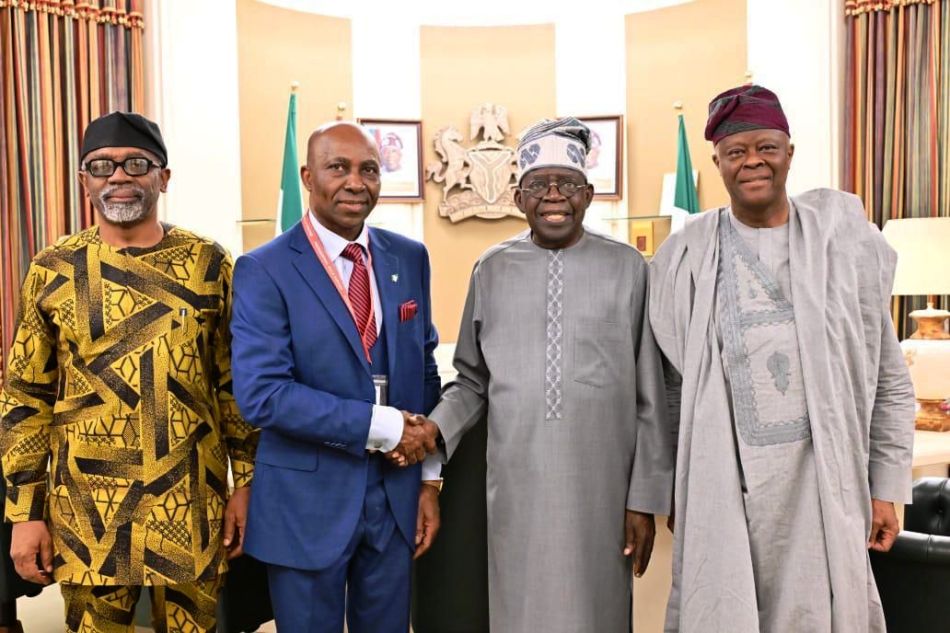
President Bola Ahmed Tinubu received Nigeria’s newly appointed Tax Ombudsman, John Nwabueze, at the State House in Abuja as part of ongoing tax administration reforms. Also present were the Minister of Finance and Coordinating Minister of the Economy, Wale Edun, and the Chief of Staff to the President, Femi Gbajabiamila.
The Office of the Tax Ombudsman is intended to handle complaints relating to taxes, levies, customs duties and regulatory charges.
DECISION HIGHLIGHT
Core elements of the reform:
- Independent dispute resolution channel for taxpayers
- Attempt to reduce multiple taxation exposure
- Transparency and accountability mechanism inside revenue administration
- Investor confidence signalling within fiscal reform programme
DECISION MEMO
The creation of a Tax Ombudsman acknowledges a structural weakness in Nigeria’s fiscal system, enforcement has historically outpaced legitimacy.
Tax compliance is rarely determined by rates alone. It is determined by whether taxpayers believe enforcement is predictable and contestable. In Nigeria, disputes frequently migrate from administrative review to negotiation, creating uncertainty premiums around operating costs. The reform attempts to insert procedural certainty into that gap.
An ombudsman does not directly raise revenue. Instead, it alters behaviour. Businesses are more likely to comply voluntarily when dispute resolution has an independent pathway. The government is therefore trading some enforcement discretion for compliance stability.
This also reflects a maturation of the reform strategy. Earlier fiscal measures focused on expanding the tax net. This step focuses on governing the net. The state is attempting to shift from extraction capacity to institutional credibility.
However, the effectiveness depends on autonomy rather than existence. If the office functions as advisory rather than corrective authority, it becomes reputational rather than operational. If binding, it reshapes the relationship between tax authorities and economic actors.
The reform’s economic logic is indirect. Reduced dispute friction lowers transaction costs, which improves investment predictability more than it increases immediate collections. The objective is not higher taxes but more dependable taxes.
DATA BOX
Institution created: Office of the Tax Ombudsman
Coverage: taxes, levies, customs duties, regulatory charges
Policy aim: transparency, dispute resolution, reduction of multiple taxation
WHO WINS / WHO LOSES
Wins
Businesses seeking predictable fiscal obligations
Long term investors pricing regulatory certainty
Compliant taxpayers facing fewer arbitrary charges
Loses
Revenue agencies reliant on discretionary assessments
Informal negotiation channels within tax administration
Short term revenue maximisation strategies
POLICY SIGNALS
Fiscal reform is moving from rate adjustments to governance architecture.
Government is prioritising voluntary compliance over enforcement intensity.
Institutional credibility becoming a tool of revenue expansion.
INVESTOR SIGNAL
Lower regulatory unpredictability improves operating cost forecasting.
Impact gradual, dependent on perceived independence of the office.
More relevant to long horizon investors than speculative entrants.
RISK RADAR
1 Limited operational authority weakening effectiveness
2 Institutional overlap with existing tax appeal mechanisms
3 Resistance within revenue agencies
4 Slow adoption by subnational tax bodies
5 Perception gap between policy announcement and administrative behaviour
The reform attempts to convert taxation from a negotiation environment into a rules-based environment. Its success depends less on legal creation and more on institutional behaviour change.
Discover more from StakeBridge Media
Subscribe to get the latest posts sent to your email.