

By Enam Obiosio
The federal government has released N127 billion to continue federal road projects previously financed by the Nigerian National Petroleum Company Limited (NNPCL) under the tax credit infrastructure scheme.
The Federal Ministry of Works now assumes full responsibility for supervision and contractor payment after the company exited the arrangement effective August 1, 2025.
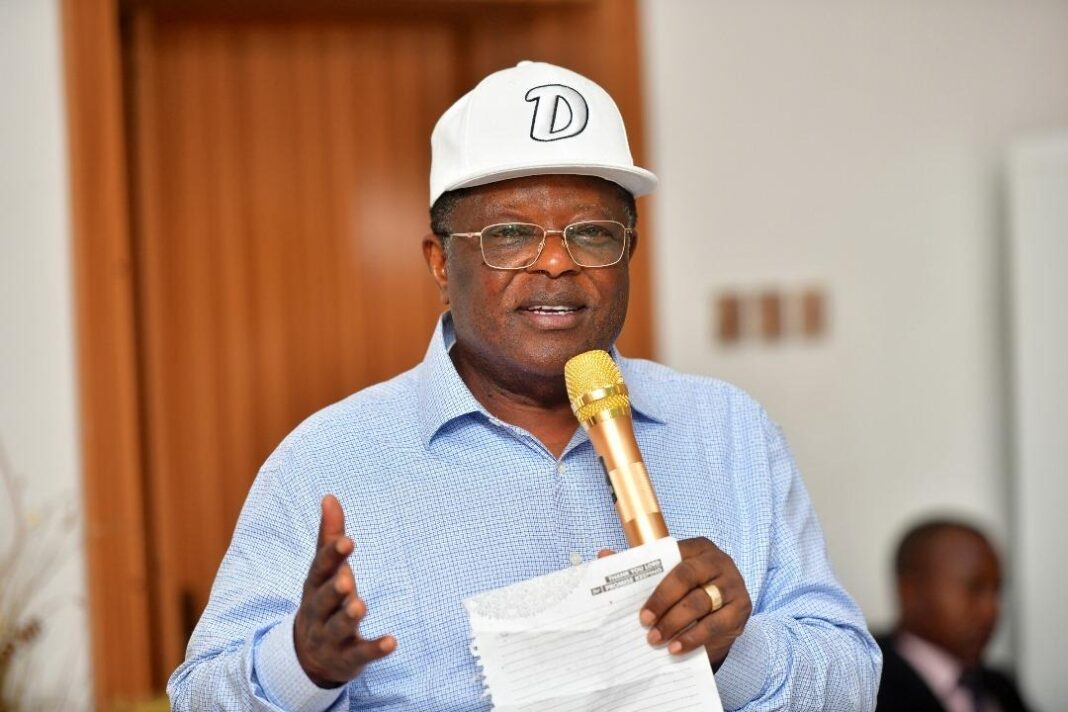
Sen. David Umahi, Honourable Minister of Works stated: “NNPCL will no longer directly pay contractors for these projects. The Federal Ministry of Works has officially taken over both project supervision and payment responsibilities.”
He added that “N127 billion has been released by Mr. President for the continuation of these projects.”
DECISION HIGHLIGHT
Nigeria has shifted road financing from corporate offset funding to sovereign budget liability.
DECISION MEMO
The decision marks a structural reversal in infrastructure financing philosophy. The tax credit scheme previously allowed private corporate tax obligations to substitute for federal capital expenditure. That blurred the boundary between fiscal appropriation and corporate settlement.
The withdrawal of NNPCL forced the government into a direct fiscal confrontation with infrastructure obligations. The N127 billion release is therefore not merely project funding. It is the first admission that off balance sheet infrastructure financing cannot substitute for treasury capacity indefinitely.
More revealing is the scale mismatch. While N127 billion has been released, Umahi disclosed about N7 trillion is required to complete inherited projects. The policy implication is clear, Nigeria moved projects forward without securing sovereign funding continuity.
The Nigeria Revenue Service (NRS) provided the institutional reasoning. Executive Chairman of NRS, Dr. Zacch Adedeji, explained the scheme conflicted with public finance rules because “public funds require legislative approval.”
This clarifies the real shift. The government is restoring budget sovereignty over infrastructure spending after a period of quasi fiscal outsourcing.
However, the replacement mechanism is unresolved. The administration is now considering Public Private Partnerships after discovering the true project cost is far larger than earlier estimates.
The financing structure therefore transitions through three stages, corporate substitution, withdrawal shock, and sovereign reassessment. The N127 billion is a stabilisation payment, not a completion strategy.
DATA BOX
Funding Structure
Immediate release: N127 billion
Outstanding inherited liabilities: about N7 trillion
Timeline
NNPCL exit date: August 1, 2025
Scheme: Executive Order 007 tax credit infrastructure model
Policy Replacement
PPP consideration: about N3 trillion previously estimated
Revised project exposure: about N7 trillion
Operational Note
Bodo–Bonny Road extension: 8.7 km
WHO WINS / WHO LOSES
Winners
Treasury oversight and fiscal transparency
Legislative appropriation authority
Structured PPP investors if implemented properly
Losers
Contractors expecting direct corporate payment certainty
Short term infrastructure completion speed
Agencies reliant on off budget project execution
POLICY SIGNALS
Government is recentralising capital expenditure control.
Infrastructure financing will increasingly pass through appropriation processes.
Quasi fiscal development models are being phased out for compliance reasons.
INVESTOR SIGNAL
Future infrastructure opportunities likely migrate to structured PPP frameworks.
Sovereign payment risk now replaces corporate payment risk.
Project bankability will depend more on budget credibility than corporate backing.
RISK RADAR
Fiscal risk, sovereign budget cannot absorb N7 trillion quickly.
Execution risk, project delays likely during financing transition.
Political risk, infrastructure expectations exceed treasury capacity.
The funding release prevents stoppage, but the financing model that created the projects has already ended. The policy challenge now is not continuation, it is redesign.
Discover more from StakeBridge Media
Subscribe to get the latest posts sent to your email.