

By Ayo Susan
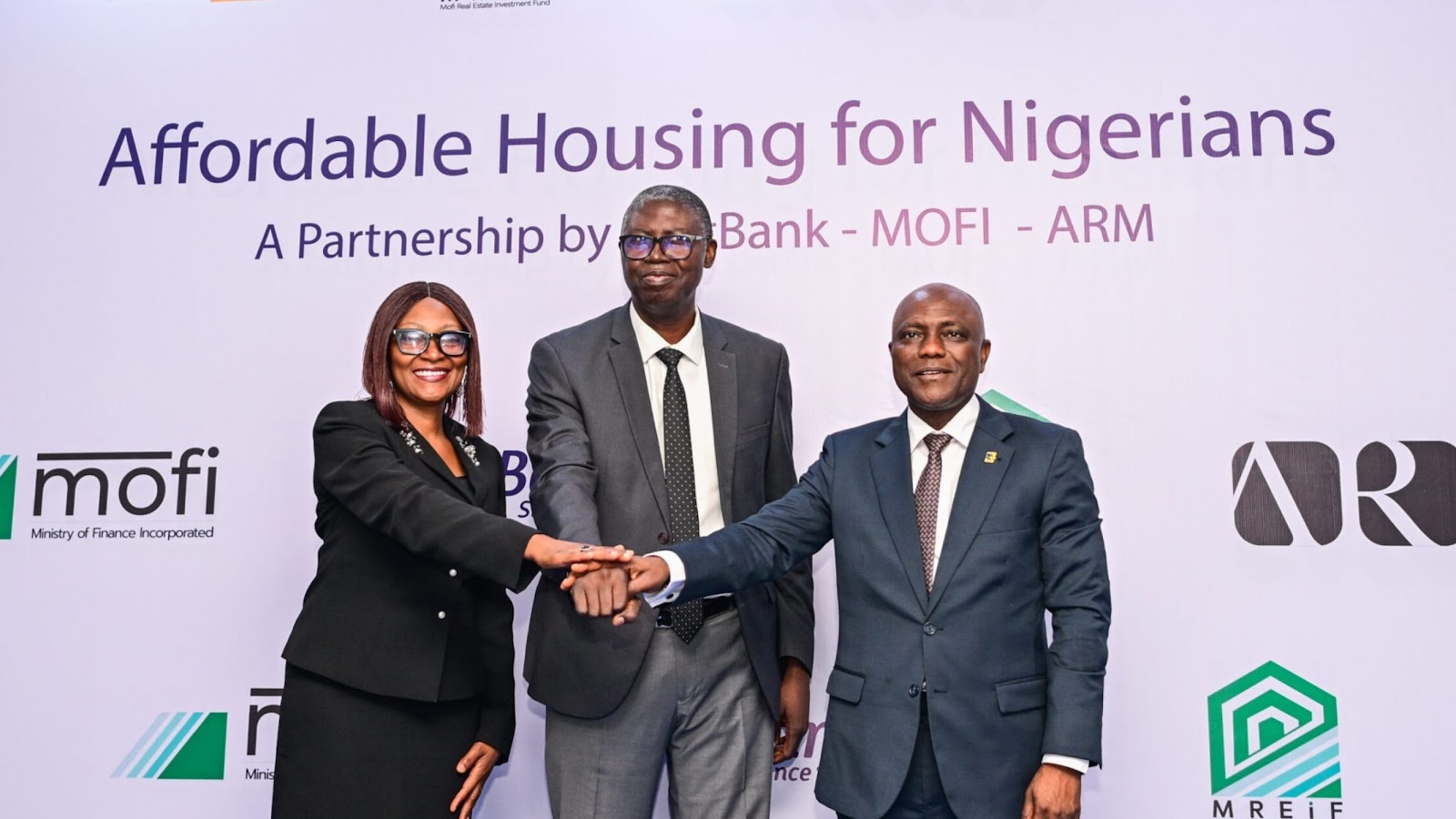
First Bank of Nigeria Limited has introduced a mortgage financing product aimed at expanding access to home ownership through a subsidised housing loan structure linked to the Ministry of Finance Incorporated Real Estate Investment Fund (MREIF).
The programme provides mortgage financing at 9.75 percent interest per annum, significantly below prevailing commercial lending rates in Nigeria.
The facility is supported by a N1 trillion housing intervention fund backed by the federal government, with eligible borrowers able to access up to N100 million repayable over 20 years.
The initiative seeks to expand mortgage access to salary earners, entrepreneurs and Nigerians in the diaspora.
DECISION HIGHLIGHT
First Bank of Nigeria Limited has aligned with the MREIF to deploy a subsidised mortgage product designed to reduce the cost barrier to housing finance.
The mortgage facility introduces a single-digit lending rate into a housing finance environment where most commercial loans remain priced well above 20 percent.
The programme forms part of a broader intervention framework designed to expand access to long-term housing credit.
DECISION MEMO
Housing finance remains one of the most structurally constrained segments of Nigeria’s financial system.
Despite a population exceeding 200 million and an estimated housing deficit running into tens of millions of units, mortgage penetration remains extremely low.
Commercial mortgage products typically carry high interest rates and short repayment tenures, making them unaffordable for a large segment of the population.
The mortgage programme introduced by First Bank of Nigeria Limited attempts to address one of the sector’s most persistent barriers: the cost of credit.
By anchoring the mortgage product to the MREIF, the bank is able to offer financing at 9.75 percent interest, significantly lower than conventional lending rates.
In Nigeria’s credit environment, where commercial loans often exceed 30 percent, the pricing differential is substantial.
The structure of the facility also introduces a longer repayment horizon.
Borrowers can access up to N100 million with repayment tenures extending to 20 years, creating the possibility of lower monthly repayment obligations compared with traditional bank loans.
The intervention highlights the central role of government-backed financing structures in Nigeria’s housing market.
Mortgage financing in many emerging markets depends heavily on long-term liquidity provided by public sector institutions or development finance frameworks.
Without such interventions, commercial banks often struggle to provide long-tenure housing loans due to the mismatch between short-term deposit funding and long-term mortgage assets.
The MREIF represents one such liquidity mechanism.
With a N1 trillion funding envelope, the programme is designed to expand mortgage access while stimulating activity within Nigeria’s housing sector.
The structure of the facility also attempts to broaden the borrower base beyond traditional salary earners.
Eligibility has been extended to entrepreneurs and Nigerians in the diaspora, reflecting the growing role of diaspora investment in the country’s real estate market.
For financial institutions such as First Bank of Nigeria Limited, mortgage products tied to government intervention funds provide an opportunity to participate in housing finance without absorbing the full credit and liquidity risks typically associated with long-term lending.
However, the broader structural challenges of Nigeria’s housing market remain significant.
High construction costs, land administration complexities and infrastructure deficits continue to constrain housing supply.
The mortgage intervention therefore addresses the financing dimension of the housing crisis but does not fully resolve the structural issues affecting the real estate sector.
Nevertheless, the programme signals a renewed attempt to expand housing credit access through coordinated public-private financing structures.
DATA BOX
Programme: Mortgage Financing Initiative
Financial Institution: First Bank of Nigeria Limited
Government Partner: Ministry of Finance Incorporated Real Estate Investment Fund
Total Fund Size: N1 trillion
Mortgage Interest Rate: 9.75 percent per annum
Maximum Loan Size: N100 million
Repayment Tenure: Up to 20 years
Target Beneficiaries:
Salary earners
Entrepreneurs
Diaspora Nigerians
Market Context:
Commercial lending rates often exceed 30 percent
Policy Objective:
Expand housing finance access
Stimulate real estate development
WHO WINS / WHO LOSES
Winners
Prospective homeowners gain access to mortgage financing at interest rates significantly lower than prevailing commercial loans.
Real estate developers may benefit from increased housing demand stimulated by expanded mortgage access.
Financial institutions participating in the programme gain exposure to mortgage lending supported by government liquidity frameworks.
Losers
Conventional mortgage products offered at commercial rates may become less competitive.
Informal housing finance mechanisms could lose relevance as structured mortgage products expand.
POLICY SIGNALS
The programme signals renewed government focus on expanding access to housing finance through intervention funds and public-private collaboration.
It also reflects recognition that mortgage market development requires subsidised liquidity mechanisms to offset high domestic interest rates.
INVESTOR SIGNAL
The scale of the N1 trillion housing intervention fund suggests increasing institutional interest in the housing sector as an economic growth driver.
Real estate financing platforms linked to government-backed liquidity pools may present emerging opportunities for investors.
RISK RADAR
Three structural risks remain visible.
First is housing supply risk, where limited residential construction could constrain the impact of expanded mortgage financing.
Second is credit risk, particularly if borrower repayment capacity is affected by inflation and macroeconomic volatility.
Third is policy sustainability risk, as the long-term viability of subsidised mortgage rates will depend on continued government support.
The First Bank of Nigeria Limited mortgage initiative therefore represents both a financial intervention and a policy experiment aimed at reshaping Nigeria’s housing finance landscape.
Discover more from StakeBridge Media
Subscribe to get the latest posts sent to your email.