

By Jennete Ugo Anya
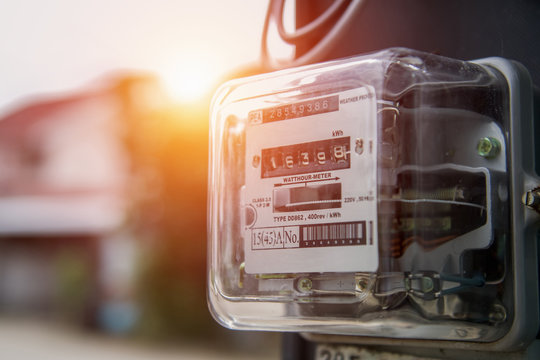
Nigeria has procured about 1.37 million electricity meters manufactured in China under the $500 million World Bank funded Distribution Sector Recovery Programme aimed at improving distribution company performance and closing the metering gap.
The World Bank confirmed that 95 percent of the first 1.44-million-meter batch has been produced and is either shipped or awaiting shipment, with about 408,000 units already in Nigeria and roughly 130,000 installed.
The programme exists because nearly 60 percent of grid customers remain unmetered and losses exceed 40 percent across the distribution segment.
DECISION HIGHLIGHT
Government chose speed of metering over domestic industrial policy protection.
DECISION MEMO
Metering reform is the financial foundation of power sector recovery, not a technical upgrade. Electricity distribution companies cannot collect revenue accurately without measurement, and tariff reforms fail without billing credibility.
The programme therefore attempts to repair the commercial logic of the power market. The World Bank defined the objective directly, to “improve financial and technical performance of the electricity distribution companies.”
However, the implementation structure reveals a policy contradiction. The government is simultaneously pursuing a Nigeria First industrial policy while importing large scale meter volumes. Local manufacturers argue the metering gap should have been converted into domestic industrial demand.
Durosola Omogbengun, President of Association of Meter Manufacturers of Nigeria (AMMON), warned that foreign procurement undermines local capacity and urged government to prioritise in country production.
Authorities instead prioritised speed and financing eligibility. International procurement satisfies lender compliance standards and accelerates deployment but weakens domestic value chain development. The reform therefore trades industrialisation for sector liquidity.
The slow installation pace complicates the logic further. Chief Technical Adviser to Chief Adebayo Adelabu, the Honourable Minister of Power, Adedayo Olowoniyi, admitted the deployment figures are “not an encouraging statistic.”
This exposes the real constraint. Nigeria’s electricity crisis is no longer only equipment scarcity. It is institutional execution capacity across utilities, installation contractors, data systems and customer enumeration.
Meter procurement solves supply. Revenue recovery depends on governance.
DATA BOX
Programme Size
World Bank commitment: $500 million
Meter batch one: 1.44 million units
Manufactured: about 1.37 million
Arrived in Nigeria: about 408,000
Installed: about 130,000
Sector Metrics
Unmetered customers: about 60% of grid users
Total metering gap: about 10 million connections
Losses: above 40% ATC&C
Targets
3.2 million meters planned under programme
Over 5 million meters by 2027 under PMI
WHO WINS / WHO LOSES
Winners
Distribution companies, improved billing potential
Federal fiscal position, higher collection prospects
Consumers receiving meters, reduced estimated billing disputes
Losers
Domestic meter manufacturers, reduced order volume
Industrial policy credibility, import substitution weakened
Short term reform perception, slow installation undermines trust
POLICY SIGNALS
Government prioritises revenue recovery before industrial expansion.
Power reform sequencing favours financial stabilisation over local manufacturing.
External financing conditions influence procurement strategy.
INVESTOR SIGNAL
Collection efficiency improvement is the core reform objective.
Distribution companies become viable only after metering credibility improves.
Power sector bankability depends more on billing discipline than tariff levels.
RISK RADAR
Execution risk, installation pace remains slow relative to target.
Policy conflict risk between localisation and financing requirements.
Public acceptance risk if billing does not improve after imports.
The programme confirms the sector’s central problem is commercial credibility. Hardware procurement has begun, but institutional capacity will determine whether electricity becomes a utility business or remains a subsidy system.
Discover more from StakeBridge Media
Subscribe to get the latest posts sent to your email.