

By Ayo Susan
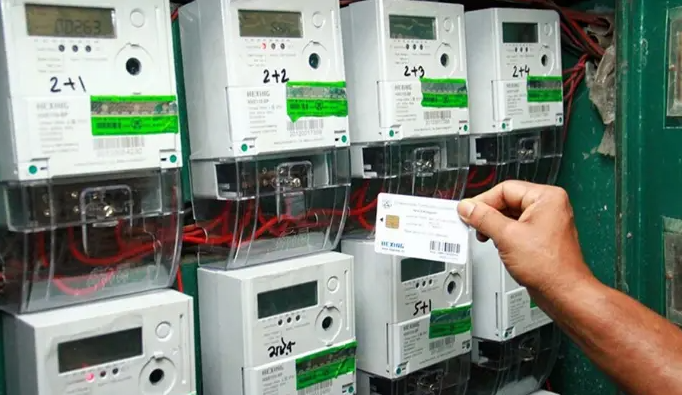
Electricity distribution companies are facing renewed financial pressure following a directive by the Nigerian Electricity Regulatory Commission (NERC) requiring operators to refund N20.33 billion to customers who purchased prepaid meters under the Meter Asset Provider (MAP) scheme.
The amended regulatory order issued on March 1, 2026 requires distribution companies to complete the refunds within 12 months, with reimbursements credited to affected customers through electricity bill deductions spread across the repayment period.
Industry operators say the directive comes at a time when distribution companies are already operating under severe liquidity constraints across the Nigerian Electricity Supply Industry.
A senior manager at Abuja Electricity Distribution Company (AEDC) said the order could further strain sector finances.
“These challenges have significantly constrained the cash flow available to distribution companies for infrastructure maintenance, network expansion and metering investments,” the official said.
DECISION HIGHLIGHT
The refund directive reinforces regulatory efforts to protect electricity consumers who paid upfront for prepaid meters under the MAP scheme.
However, the order simultaneously imposes new financial obligations on distribution companies already struggling with tariff gaps, weak revenue collection and operational losses within Nigeria’s electricity market.
DECISION MEMO
The NERC’s directive highlights a structural tension that has long defined Nigeria’s electricity distribution segment.
The MAP scheme was introduced to address Nigeria’s persistent metering deficit and reduce disputes linked to estimated billing. Under the framework, third-party investors supplied prepaid meters while customers paid the initial cost, which distribution companies were expected to reimburse over time.
While the policy accelerated meter deployment in several distribution networks, delayed refunds and operational bottlenecks generated complaints from electricity consumers.
The regulator’s amended order now seeks to resolve these disputes by mandating a structured reimbursement timeline.
Yet energy analysts argue that the directive reveals deeper financial weaknesses across the electricity value chain.
Ayodele Oni, a power sector analyst, said the refund obligation could intensify liquidity pressures facing distribution companies.
“If we do not address the underlying tariff gaps and revenue recovery challenges, policies like this could worsen liquidity problems and affect the ability of operators to invest in network improvements,” Oni said.
Benjamin Emmanuel, an energy economist, warned that forcing operators to absorb large refund obligations within a short period could further weaken already fragile balance sheets.
“Requiring DisCos to refund such a large amount within a short period without improving sector liquidity could put additional pressure on already weak balance sheets,” Emmanuel said.
Adedayo Ademiluyi, a power sector consultant, said the directive reflects long-standing financial fragility in Nigeria’s electricity distribution segment.
“DisCos are operating in an environment where tariffs are not fully cost-reflective and revenue collection remains weak,” Ademiluyi said.
Ibrahim Maryam, an energy policy analyst, argued that consumer protection must be balanced with reforms aimed at sustaining the financial viability of distribution companies.
“Consumer protection is important, but regulators must also ensure that the distribution companies remain financially viable,” Maryam said.
The policy intervention also comes against the backdrop of recent federal support for meter deployment. In October 2025, the Federal Government approved the disbursement of N28 billion to electricity distribution companies under the Meter Acquisition Fund (MAF) Tranche B scheme to support the procurement and installation of prepaid meters.
Taken together, the refund directive and the Meter Acquisition Fund intervention illustrate a regulatory system attempting to accelerate metering while managing liquidity stress within the electricity distribution segment.
DATA BOX
Refund Obligation to Customers: N20.33 billion
Repayment Period: 12 months
Refund Method:
Credits applied to customer electricity bills in equal instalments
Metering Framework: Meter Asset Provider (MAP) scheme
Federal Government Meter Support:
N28 billion under Meter Acquisition Fund (MAF) Tranche B – October 2025
Sector Challenge:
Persistent metering gap and revenue losses across distribution networks
WHO WINS / WHO LOSES
Winners
Electricity consumers who financed their prepaid meters receive regulatory protection and guaranteed reimbursement.
Consumer advocacy groups benefit from stronger enforcement of billing transparency.
Losers
Electricity distribution companies face immediate liquidity pressure as refund obligations reduce available operating cash.
Lower cash flow could affect network maintenance, metering expansion and infrastructure upgrades.
POLICY SIGNALS
The directive signals a regulatory priority around consumer protection and billing fairness within Nigeria’s electricity market.
At the same time, the policy highlights continuing debate around cost-reflective tariffs and sector liquidity reforms, both of which remain unresolved within the electricity distribution segment.
INVESTOR SIGNAL
For investors, the development reinforces persistent structural risk within Nigeria’s electricity distribution sector.
While metering programmes such as the Meter Asset Provider scheme and the Meter Acquisition Fund create opportunities in meter manufacturing and energy technology, the financial viability of distribution companies remains uncertain.
Capital deployment into the sector therefore remains sensitive to regulatory decisions and tariff reforms.
RISK RADAR
Three structural risks remain evident.
First is liquidity risk, as distribution companies absorb refund obligations while operating under tight cash flow conditions.
Second is tariff risk, where electricity prices remain insufficient to cover the full cost of supply.
Third is operational loss risk, driven by electricity theft, unpaid government electricity bills and aging distribution infrastructure.
The refund order ultimately underscores the fragile equilibrium within Nigeria’s electricity market, regulators are attempting to enforce consumer protection while distribution companies continue to operate within a structurally undercapitalised power sector.
Discover more from StakeBridge Media
Subscribe to get the latest posts sent to your email.