

By Jennete Ugo Anya
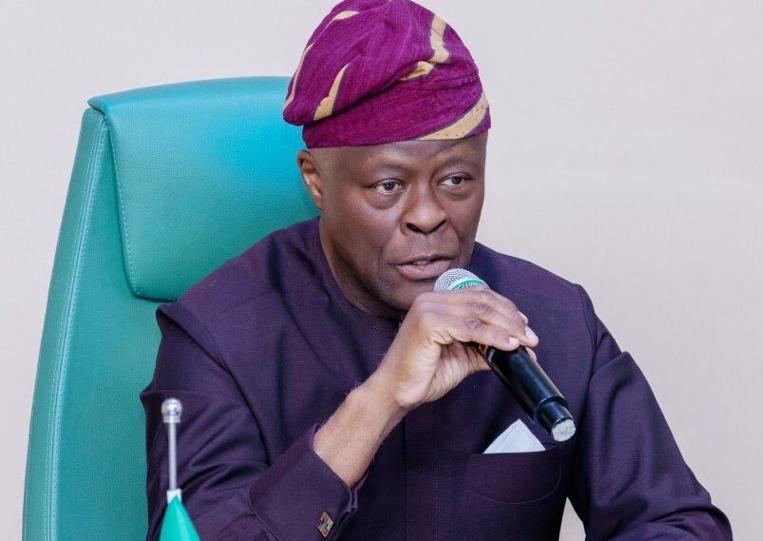
The federal government has intensified negotiations to secure up to $5.7 billion in strategic investment from China, targeting power, mining, and industrial manufacturing. The Ministry of Finance disclosed that the Minister of Finance and Coordinating Minister of the Economy, Mr. Wale Edun, hosted a high-level delegation from GCL Group in Abuja led by Orji Uzor Kalu.
According to the ministry, the engagement forms part of a broader effort to expand productive capacity and reposition the economy toward value-added industrial growth.
DECISION HIGHLIGHT
- Target investment size: up to $5.7 billion
- Lead investor: GCL Group delegation
- Priority sectors: power, mining, industrial manufacturing
- Strategic objective: boost jobs, exports, and value addition
- Policy framing: shift from raw exports to domestic production
- Status: negotiations ongoing
DECISION MEMO
The government’s latest outreach to Chinese capital underscores a familiar but consequential strategy, using targeted foreign direct investment to accelerate Nigeria’s stalled industrial transformation. The scale of the proposed $5.7 billion package is material, but the more important signal lies in sector targeting and policy timing.
Mr. Edun, according to the ministry, “received a high-level delegation from GCL Group in Abuja… as Nigeria moves to secure up to $5.7bn in strategic investments across power, mining and industrial manufacturing.” This framing confirms the administration is prioritising productive, asset-backed inflows rather than purely portfolio capital.
The ministry further clarified that the proposals include “large-scale energy generation, local mineral processing and new factories aimed at boosting jobs, exports and value addition.” In strategic terms, that aligns closely with the government’s stated ambition to pivot the economy away from raw commodity dependence.
However, the announcement stops short of firm commitments. No project timelines, financing structure, or implementation milestones were disclosed. That omission matters. Nigeria has historically announced large headline investment intentions that later faced execution friction, particularly in power and mining where regulatory and infrastructure bottlenecks remain significant.
The ministry’s assertion that the talks reflect “rising investor confidence” and are “backed by reforms under Bola Ahmed Tinubu” signals a deliberate narrative effort to link capital inflows with the administration’s reform credibility. Whether investors ultimately validate that confidence will depend on bankable project structuring and policy consistency.
From a macro standpoint, the focus on energy generation and mineral processing is economically rational. Power reliability remains the single largest constraint on industrial scale, while local mineral beneficiation is central to capturing more value from Nigeria’s resource base. If executed effectively, the investment pipeline could support export diversification and manufacturing depth.
Still, the absence of disclosed deal mechanics suggests the process remains at the courtship stage rather than financial close. Until term sheets harden, the announcement should be read as strategic intent rather than secured inflow.
DATA BOX
Investment Snapshot
- Target capital: $5.7 billion
- Lead engagement: GCL Group delegation
- Key sectors: power, mining, manufacturing
- Strategic aim: jobs, exports, value addition
- Policy alignment: Tinubu reform agenda
- Status: negotiations ongoing
WHO WINS / WHO LOSES
Who Wins
- Power and industrial value chains if projects materialise
- Mining sector participants positioned for local processing
- Subnational economies hosting new factories
- Labour markets through potential job creation
- Infrastructure suppliers and EPC contractors
Who Loses
- Import dependent industrial operators
- Competing FDI destinations if Nigeria executes quickly
- Domestic firms unable to scale alongside new entrants
- Fiscal space if incentives become overly generous
POLICY SIGNALS
- Government is doubling down on production-led FDI strategy.
- Energy and minerals remain top industrial policy priorities.
- China continues to be a central capital partner.
- Value addition is now the dominant resource policy theme.
- Reform credibility is being used as an investment marketing tool.
INVESTOR SIGNAL
For investors, the proposed deal reinforces Nigeria’s push to attract long-term strategic capital into hard infrastructure and industrial assets. If the projects reach financial close, they could strengthen power supply, deepen mineral value chains, and improve export capacity.
However, sophisticated investors will reserve judgment until financing structure, project bankability, and execution safeguards become clearer. Nigeria’s investment history shows that memorandum-stage announcements do not always translate into capital deployment.
The opportunity is significant, but so is the execution bar.
RISK RADAR
- Negotiations failing to reach financial close
- Power sector bottlenecks delaying project delivery
- Regulatory friction in mining and industrial licensing
- FX and repatriation concerns for foreign investors
- Overreliance on a single external capital partner
- Incentive mispricing affecting fiscal balance
- Implementation slippage across MDAs
Bottom line: the $5.7 billion China engagement signals serious industrial ambition, but until project structures crystallise and capital is firmly committed, the announcement remains a promising pipeline rather than realised investment.
Discover more from StakeBridge Media
Subscribe to get the latest posts sent to your email.