

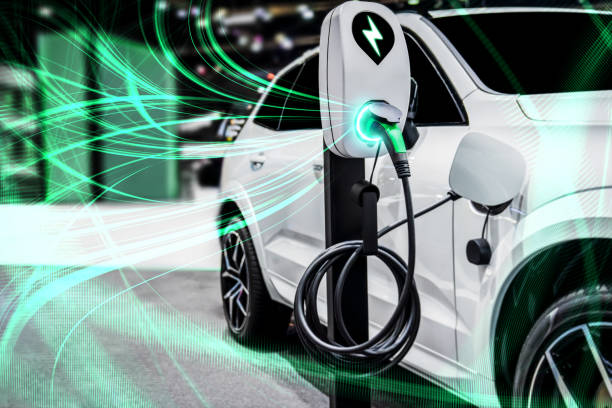
The Federal Government signed an agreement with South Korea’s Asia Economic Development Committee (AEDC) to establish Africa’s first electric vehicle manufacturing plant. The project begins with assembly and progresses toward full local production, targeting capacity of up to 300,000 vehicles annually and about 10,000 jobs.
The deal was executed by Honourable Minister of State for Industry, Sen. John Enoh and AEDC Chairman, Yoon Suk-hun, as part of a broader clean mobility and industrialisation strategy.
DECISION HIGHLIGHT
Core structural intentions:
- Phased shift from assembly to full manufacturing
- Technology transfer and workforce training integration
- Development of local supplier and battery ecosystem
- Domestic production to reduce EV cost barriers
DECISION MEMO
The project is less about cars and more about industrial positioning.
Electric vehicles globally represent a supply chain transition rather than a transport transition. Batteries, electronics and software determine value capture. By localising production, the country aims to enter that value chain instead of remaining an import destination.
The phased assembly approach reveals realism about capability gaps. Immediate full manufacturing would fail due to skills and infrastructure constraints. Gradual localisation allows competence accumulation while maintaining investor confidence.
The policy logic is demand creation through supply presence. EV adoption in Africa remains low largely because prices and charging infrastructure lag scale. Local production attempts to reverse causality, increase availability first to stimulate ecosystem development.
The partnership choice also matters. Collaborating with a technologically advanced manufacturer reduces learning cycles and embeds standards early. Industrial policy here functions as capability acquisition rather than tariff protection.
However, the project’s success depends on complementary systems. Without reliable electricity, charging networks and component suppliers, assembly risks remaining isolated. The investment therefore implicitly commits the state to parallel infrastructure expansion.
DATA BOX
Planned annual capacity: 300,000 vehicles
Projected jobs: ~10,000
Africa EV fleet: ~30,000 vehicles mid-2025
Private EV share: <1% of vehicle sales
Implementation model: assembly to full manufacturing
WHO WINS / WHO LOSES
Wins
Local manufacturing workforce
Component and battery suppliers
Regional automotive distribution networks
Loses
Used vehicle import channels
Fuel dependent mobility segments
Pure import dealership models
POLICY SIGNALS
Industrial policy shifting toward technology acquisition.
Energy transition linked with manufacturing localisation.
Regional trade integration expected around automotive supply chains.
INVESTOR SIGNAL
Long term opportunity tied to ecosystem development.
Returns dependent on infrastructure rollout rather than immediate sales.
Industrial partnerships becoming central to climate strategy.
RISK RADAR
1 Power supply reliability affecting adoption
2 Charging infrastructure rollout delays
3 Cost competitiveness versus imports
4 Limited supplier base localisation
5 Policy continuity across implementation phases
The agreement positions the country as a potential producer in the clean mobility chain, but execution will determine whether it becomes an industry or remains an assembly initiative.
Discover more from StakeBridge Media
Subscribe to get the latest posts sent to your email.