

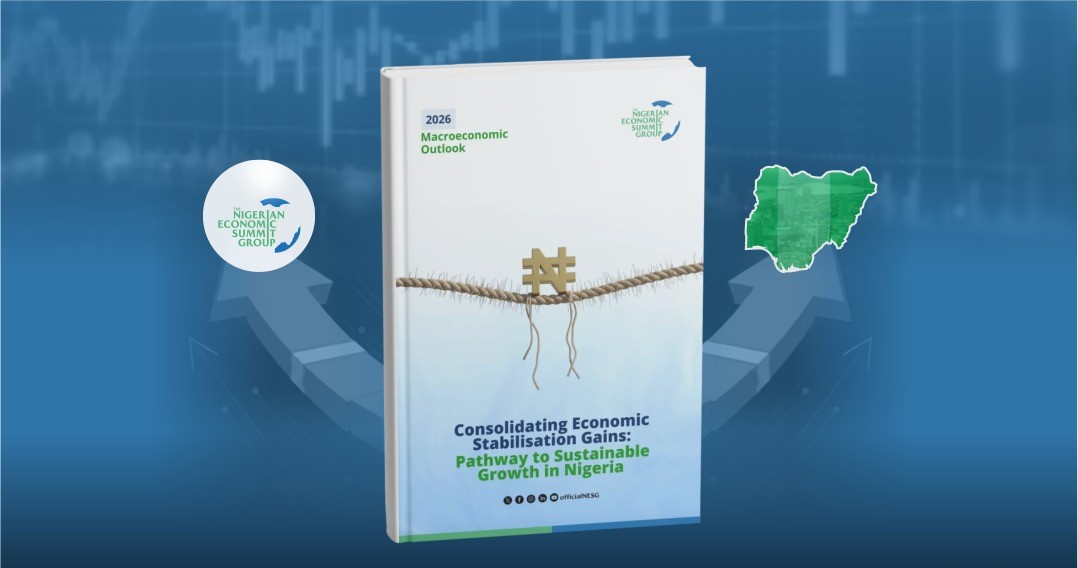
Nigeria’s stabilisation gains have come at high social cost. While inflation is easing, household welfare remains under pressure from food prices, unemployment, and reduced public investment. NESG warns that consolidation will fail without credible social protection and job creation.
DECISION HIGHLIGHT
- Decision Type: Fiscal consolidation with social buffering
- Trade-Off: Debt service versus development spending
- Execution Lever: Targeted safety nets, youth employment
- Political Sensitivity: Extremely high
DECISION MEMO
Fiscal consolidation is Nigeria’s tightrope. Revenues improved in 2025, particularly from non-oil taxes, yet debt service absorbed an outsized share of spending. Capital expenditure collapsed, crowding out growth-enhancing investments.
NESG’s analysis shows that public debt rose to N152.4 trillion by mid-2025, with the Debt Burden Index signalling elevated repayment risk. While fiscal restraint restored confidence, it also compressed social and infrastructure spending.
This creates a political economy dilemma. Stabilisation without welfare translation risks backlash. NESG explicitly argues that consolidation must include expanded social protection, apprenticeship schemes, and labour-intensive programmes to sustain reform legitimacy.
The message is clear: macro stability that excludes households is unstable by design.
DATA BOX
- Public debt (H1 2025): N152.4trn
- Debt service (Jan–Jul 2025): N9.8trn
- Capital spending shortfall: ~74%
- Poverty reduction growth threshold: ≥6% GDP growth
- Youth unemployment: structurally elevated
WHO WINS / WHO LOSES
- Winners: Fiscal hawks, bondholders, policy credibility
- Losers: Youth labour market, infrastructure-dependent sectors
POLICY SIGNALS
Fiscal discipline must now prove socially intelligent.
INVESTOR SIGNAL
Political sustainability is now a core macro risk variable.
RISK RADAR
- Social unrest
- Reform reversal pressure
- Youth unemployment spillovers
- Weak delivery capacity
Discover more from StakeBridge Media
Subscribe to get the latest posts sent to your email.