

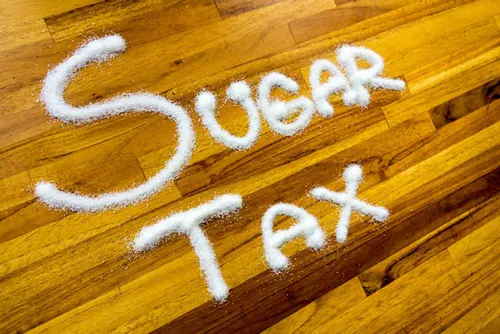
- A sugar tax may satisfy health advocates, but in today’s economy it risks deepening cost pressures, weakening manufacturers, and putting jobs at risk
The Centre for the Promotion of Private Enterprise (CPPE) has cautioned that renewed advocacy for a sugar tax on non-alcoholic beverages could worsen pressures on Nigeria’s manufacturing sector, threaten jobs, and weaken an already fragile economic recovery. The warning comes amid persistent inflation, weak consumer purchasing power, and rising production costs across the food and beverage value chain.
DECISION HIGHLIGHT
Decision type: Proposed fiscal intervention, sector-specific taxation
Decision owner: Federal fiscal and health policy authorities
Policy trigger: Renewed advocacy for sugar-specific tax
Primary respondent: Centre for the Promotion of Private Enterprise (CPPE)
Key spokesperson: Dr. Muda Yusuf, Chief Executive Officer
Sector exposed: Food and beverage manufacturing, agriculture, logistics, retail
Headline implication: Public health objectives risk colliding with industrial survival and employment stability
DECISION MEMO
CPPE’s objection reframes the sugar tax debate from a narrow public health lens to a broader macro-industrial risk assessment. While acknowledging the legitimacy of concerns around diabetes and cardiovascular diseases, the think tank argues that a sugar-specific tax is ill-timed and poorly aligned with Nigeria’s economic realities.
“The proposition of a sugar-specific tax is misplaced, economically risky, and weakly supported by empirical evidence, especially when viewed against Nigeria’s prevailing structural and macroeconomic realities,” Yusuf said.
At the core of CPPE’s argument is the centrality of the food and beverage sector to Nigeria’s manufacturing ecosystem. According to Yusuf, the sector functions as the backbone of domestic manufacturing, supporting millions of livelihoods across farming, processing, packaging, logistics, wholesale and retail trade, and hospitality. Any policy shock that weakens this ecosystem, he warned, carries multiplier effects far beyond beverage producers.
The timing is critical. Manufacturers in the non-alcoholic beverage segment are already absorbing cumulative fiscal and cost pressures. “Existing obligations include company income tax, value-added tax, excise duties, levies on profits and imports, and multiple state and local government charges,” Yusuf noted. These are layered onto high energy costs, exchange-rate volatility, elevated interest rates, and expensive logistics.
CPPE’s intervention challenges the assumption that sugar taxes operate in a neutral pricing environment. Retail prices of many non-alcoholic beverages, Yusuf said, have already risen by about 50 per cent over the past two years, even without the introduction of new taxes. In a context of declining real incomes, further price increases risk suppressing demand, shrinking production volumes, and accelerating job losses.
The organisation also questioned the intellectual importation of global policy templates. CPPE argues that sugar taxation proposals in Nigeria are often influenced by international health frameworks that do not adequately account for local consumption patterns, enforcement capacity, or the informal food economy that dominates large segments of Nigerian society.
Beyond economics, Yusuf raised doubts about effectiveness. He argued that non-communicable diseases in Nigeria are driven by a complex mix of lifestyle, healthcare access, education, and urban stress factors, none of which are resolved by a narrow product-specific tax. In this framing, the sugar tax risks becoming a revenue-seeking instrument with weak health outcomes and strong industrial distortions.
The underlying critique is fiscal sequencing. CPPE’s position implies that Nigeria is attempting to impose corrective consumption taxes before stabilising production costs, power supply, logistics efficiency, and consumer welfare. In such conditions, the tax burden is more likely to be transferred to consumers and workers than absorbed by firms.
DATA BOX
Sector affected: Non-alcoholic beverages, food and beverage manufacturing
Retail price increase (2 years): ~50%
Key cost pressures: Energy, FX volatility, interest rates, logistics
Existing taxes: CIT, VAT, excise duties, import levies, subnational charges
Employment exposure: Millions across agriculture, manufacturing, trade, hospitality
WHO WINS / WHO LOSES
Winners: Short-term fiscal revenues, import substitutes in informal markets.
Losers: Beverage manufacturers, supply chain workers, consumers, investment confidence in consumer goods manufacturing.
POLICY SIGNALS
The debate signals rising tension between health-driven taxation and industrial policy coherence. Without sequencing and compensatory reforms, fiscal activism risks undermining manufacturing resilience.
INVESTOR SIGNAL
Renewed sugar tax advocacy adds policy uncertainty to consumer goods manufacturing. Investors should price in regulatory risk and potential demand contraction if the proposal advances.
RISK RADAR
Key risks include accelerated job losses, demand compression, informal market expansion, weak health outcomes, and erosion of manufacturing competitiveness. In a high-inflation environment, poorly targeted consumption taxes risk becoming contractionary rather than corrective.
Discover more from StakeBridge Media
Subscribe to get the latest posts sent to your email.