

By Ayo Susan
The Honourable Minister of Finance and Coordinating Minister of the Economy, Mr. Wale Edun, has stated that the country requires approximately $14 billion annually to bridge its infrastructure financing gap.
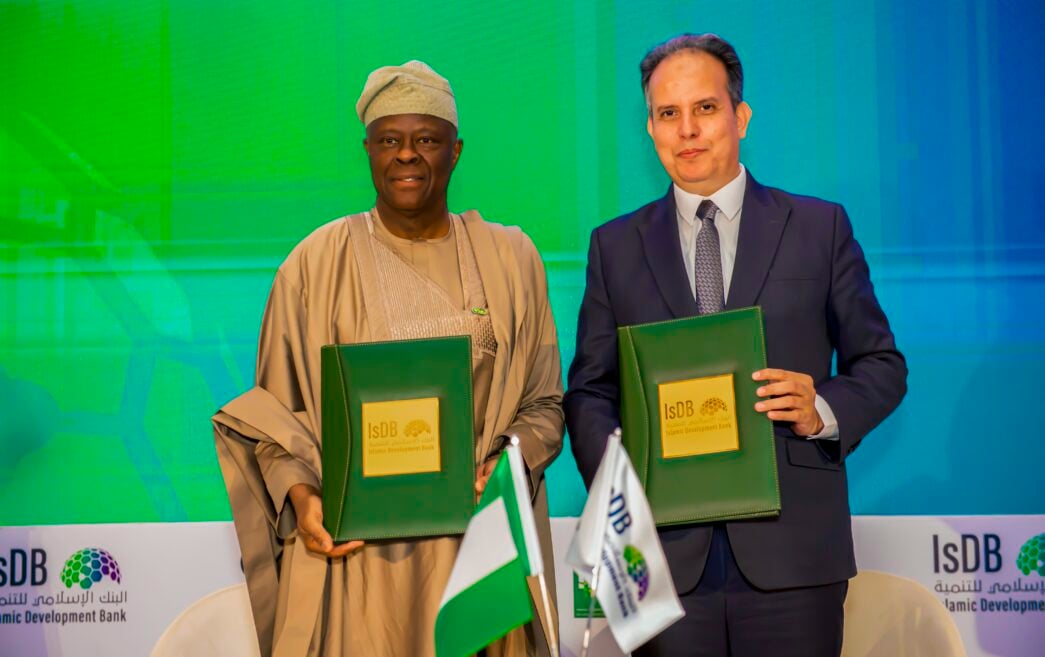
Speaking recently at the Islamic Development Bank (IsDB) Day in Lagos, Edun highlighted ongoing collaboration with the Islamic Development Bank as part of efforts to mobilise funding.
“We are moving… from relying on public financing to mobilising private capital,” Edun said, outlining a shift toward innovative financing mechanisms and investment attraction.
DECISION HIGHLIGHT
The Federal Government is repositioning infrastructure financing from public expenditure to private capital mobilisation, signalling a structural shift in funding strategy.
DECISION MEMO
Edun’s $14 billion annual requirement underscores a persistent structural imbalance between Nigeria’s infrastructure needs and its fiscal capacity.
The scale of the gap reflects both historical underinvestment and current constraints on public finance. With debt servicing already absorbing a significant share of government revenue, reliance on budgetary allocations alone is no longer viable. This necessitates a transition toward private capital, multilateral partnerships, and alternative financing instruments.
Edun’s emphasis on moving from “stabilisation to growth” signals a policy pivot. The focus is shifting from macroeconomic correction to capital formation. However, this transition is contingent on the credibility of the macroeconomic environment, including exchange rate stability, inflation control, and regulatory consistency.
The proposed use of instruments such as Sukuk and asset securitisation indicates an attempt to diversify funding sources beyond conventional borrowing. These instruments can potentially attract long-term capital, but their effectiveness depends on investor confidence and project bankability.
The linkage between infrastructure investment and a targeted seven per cent Gross Domestic Product growth rate introduces a performance benchmark. Achieving this level of growth requires not only capital inflows but also efficient deployment across priority sectors such as energy, transport, and digital infrastructure.
The reference to Nigeria’s population growth rate of approximately three per cent annually highlights the urgency of infrastructure expansion. Without proportional investment, infrastructure deficits will widen, constraining productivity and increasing economic inequality.
However, the reliance on external and private capital introduces new vulnerabilities. Investment flows are sensitive to global conditions, domestic policy credibility, and risk perception. Inconsistent policy signals or execution delays could deter capital inflows, undermining the financing strategy.
The broader context, with Africa requiring up to $170 billion annually for infrastructure, places Nigeria’s challenge within a continental framework. The competition for limited global capital intensifies the need for credible, bankable projects and stable investment environments.
DATA BOX
- Annual infrastructure gap (Nigeria): $14 billion
- Target GDP growth: 7% annually
- Population growth rate: ~3% annually
- Africa infrastructure gap: $130–$170 billion annually
- Key sectors: Energy, transport, agriculture, digital infrastructure
WHO WINS / WHO LOSES
Winners:
- Private investors accessing infrastructure opportunities
- Multilateral institutions expanding financing roles
- Sectors prioritised for infrastructure investment
Losers:
- Public finance, constrained by limited fiscal space
- Projects lacking bankability or investor appeal
- Populations affected by delayed infrastructure delivery
POLICY SIGNALS
The government is signalling a decisive shift toward private-sector-led infrastructure financing, supported by innovative instruments and partnerships.
It also reflects increasing reliance on capital markets and non-traditional funding mechanisms to close financing gaps.
INVESTOR SIGNAL
Nigeria is positioning infrastructure as a key investment destination, with emphasis on de-risking and long-term capital attraction.
However, investor participation will depend on macroeconomic stability, regulatory clarity, and the availability of bankable projects.
The use of Sukuk and securitisation may broaden investor access but requires strong execution frameworks.
RISK RADAR
- Execution Risk: Weak project preparation limiting capital deployment
- Macroeconomic Risk: Inflation and exchange rate volatility affecting investor confidence
- Financing Risk: Dependence on external and private capital flows
- Policy Credibility Risk: Inconsistent reforms undermining investment attractiveness
- Scale Risk: Funding gap may outpace mobilisation efforts
Nigeria’s $14 billion infrastructure requirement reflects both necessity and constraint. The strategy to mobilise private capital introduces a viable pathway, but its success will depend on converting policy intent into credible, investable projects within a stable economic environment.
Discover more from StakeBridge Media
Subscribe to get the latest posts sent to your email.