

By Ayo Susan
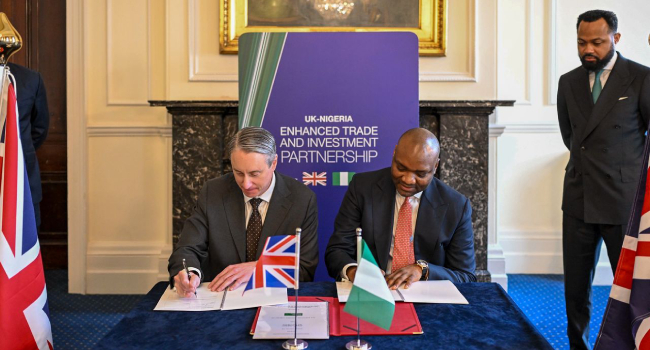
The Nigeria Sovereign Investment Authority (NSIA) signed a Memorandum of Understanding (MoU) with Asset Green Limited to develop a $500 million integrated dairy project in Nigeria.
Aminu Umar-Sadiq, Managing Director of NSIA, described the initiative as “one of the most ambitious… aimed at strengthening Nigeria’s food and nutrition security in a generation.” Rod Bassett, Director at Asset Green Limited, stated that the partnership reflects efforts to reduce Nigeria’s dependence on dairy imports.
The project structure combines large-scale farming, processing, and distribution within a single platform.
DECISION HIGHLIGHT
The NSIA is deploying sovereign-backed capital into a vertically integrated dairy model aimed at import substitution, local production scaling, and foreign exchange conservation.
DECISION MEMO
This transaction reflects a recurring Nigerian policy instinct, substitute imports through large-scale domestic production. The difference here is structure. Unlike fragmented agricultural interventions, the dairy project is designed as a fully integrated value chain, from forage cultivation to processing and distribution.
However, integration does not eliminate structural constraints. Nigeria’s agricultural sector remains defined by weak land tenure systems, low irrigation penetration, climate exposure, and limited input efficiency. Embedding a $500 million project within this environment introduces execution risk that capital alone cannot resolve.
Umar-Sadiq’s framing of the project as “transformative” underscores its scale, but scale in Nigerian agriculture has historically struggled with continuity. Large projects often face bottlenecks in land aggregation, community alignment, and logistics infrastructure. The commitment to integrate up to 10,000 rural households through out-grower schemes is notable, yet such models depend heavily on coordination, extension services, and consistent input supply, areas where past programmes have underperformed.
Bassett’s emphasis on reducing import dependence highlights the macroeconomic logic. Nigeria’s dairy import bill places sustained pressure on foreign exchange. The proposed annual revenue projection of $620 million suggests commercial viability, but this assumes stable production cycles, efficient processing, and competitive pricing against imported alternatives.
The involvement of Jonny Baxter, British Deputy High Commissioner, signals that this is not purely a domestic agricultural intervention but part of a broader United Kingdom–Nigeria investment corridor. That introduces an additional layer, external partnership credibility, but also exposure to foreign investor expectations on governance and returns.
The model aligns with parallel interventions such as the African Development Bank Group’s National Agricultural Growth Scheme – Agro-Pocket programme, which has demonstrated that input access and technology can improve yields. Yet, the dairy project operates at a different scale and complexity, requiring not just productivity gains but system-wide coordination.
The central issue is not intent but execution. Nigeria has repeatedly demonstrated policy ambition in agriculture. Delivery remains inconsistent.
DATA BOX
- Investment size, $500 million
- Land footprint, 20,000 hectares
- Dairy herd capacity, 10,000 milking cows
- Processing output, up to 15,000 metric tonnes of infant formula annually
- Projected annual revenue, $620 million
- Jobs, 2,500 direct, 5,000 indirect
- Out-grower integration, up to 10,000 rural households
- Agriculture sector share, ~25 percent of GDP, 38 percent employment
WHO WINS / WHO LOSES
Winners
Nigeria Sovereign Investment Authority, expanding its role as a strategic investor in real sector assets
Asset Green Limited, gaining entry into a large-scale agricultural platform
Rural participants integrated into structured value chains
Conditional winners
Consumers, dependent on whether local production translates to lower prices and improved supply
Losers
Import-dependent dairy traders if substitution is effective
Unstructured smallholder systems excluded from integrated supply chains
POLICY SIGNALS
The deal signals a shift toward large-scale, state-backed agro-industrialisation rather than dispersed smallholder interventions. It also reinforces import substitution as a central economic strategy, particularly in food systems tied to foreign exchange pressures.
INVESTOR SIGNAL
There is growing institutional appetite to deploy capital into agriculture, particularly through integrated platforms that promise scale and efficiency. However, returns remain contingent on resolving structural bottlenecks rather than purely financial inputs.
RISK RADAR
Land acquisition and community alignment risks across large-scale acreage
Climate variability affecting forage and livestock productivity
Infrastructure gaps in transport, storage, and cold chain systems
Execution risk in coordinating out-grower networks at scale
Foreign exchange volatility impacting input costs and pricing competitiveness
The project introduces scale and structure into Nigeria’s dairy ambition. Whether it delivers depends less on capital and more on the system it is inserted into.
Discover more from StakeBridge Media
Subscribe to get the latest posts sent to your email.