

By Enam Obiosio
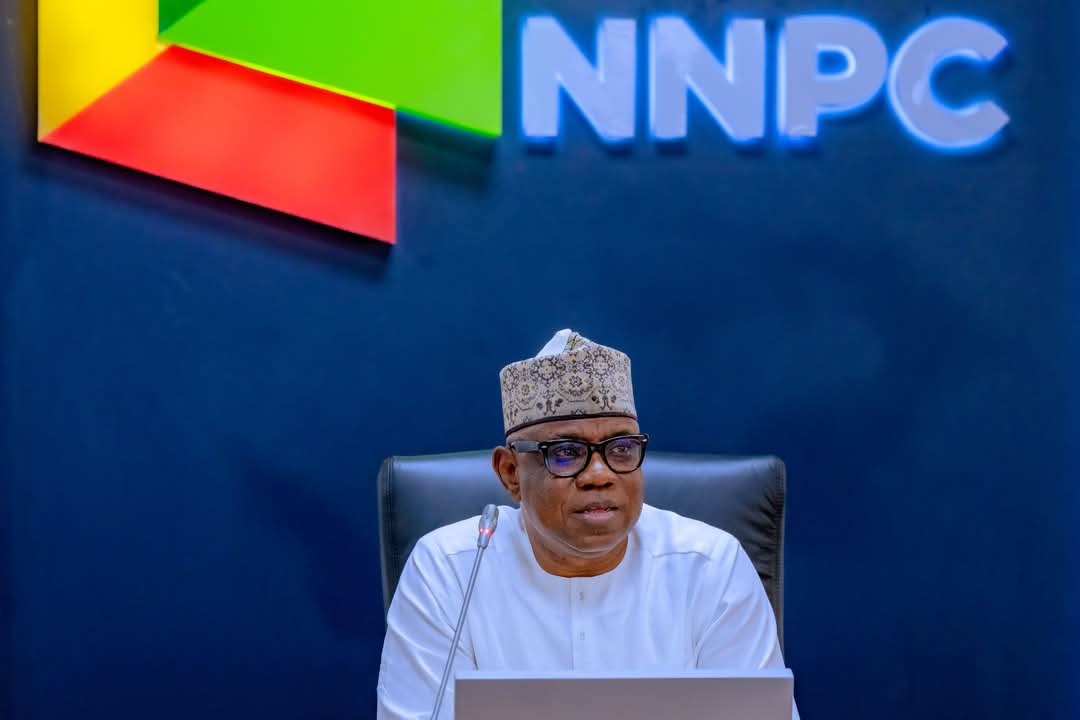
At the 2026 International Energy Week in London, the Group Chief Executive Officer (GCEO) of Nigerian National Petroleum Company Limited (NNPCL), Engr. Bashir Bayo Ojulari, argued that Africa’s energy security would depend less on reserves and more on coordination architecture.
Speaking during a fireside chat with Mr. Andy Brown of Ørsted and the Energy Institute, he listed shared infrastructure, aligned regulation, joint capital frameworks and regional diplomacy as the structural pillars of energy stability.
He tied NNPC’s regional gas strategy to cross-border pipelines, particularly the Nigeria–Morocco Gas Pipeline and the West African Gas Pipeline expansion.
Ojulari stated: “Our pathway is clear: grow production responsibly, scale gas as the backbone of Africa’s industrialisation, strengthen environmental accountability, and align with global decarbonisation objectives—while ensuring that Africans are not left behind in the energy transition.”
In the official communication issued by Chief Corporate Communications Officer Mr. Andy Udey, the company positioned the message as a continental development framework rather than a corporate ambition.
DECISION HIGHLIGHT
NNPC is reframing itself from national oil company to regional energy coordinator.
The emphasis is no longer domestic production targets but cross-border system design.
DECISION MEMO
The speech is less a policy recommendation and more a strategic admission.
Africa’s energy constraint is institutional fragmentation, not hydrocarbon scarcity. The continent has molecules but lacks market architecture. Ojulari’s argument effectively concedes that national energy independence is economically inefficient for mid-scale producers. Integration becomes survival logic.
The Nigeria–Morocco pipeline is therefore not only a gas monetisation project. It is a geopolitical transmission line. It converts stranded reserves into diplomatic leverage and replaces tanker trade with treaty trade.
The regulatory alignment proposal is the most consequential part. Pricing frameworks and transit protocols are political sovereignty instruments. Harmonising them reduces sovereign discretion but increases bankability. The trade-off is deliberate. Africa sacrifices unilateral control to obtain capital access.
By invoking the Petroleum Industry Act as a template, NNPC signals regulatory exportation. Nigeria is positioning its reform framework as a continental compliance model, effectively attempting soft regulatory leadership.
The decarbonisation reference completes the capital argument. Climate alignment is not environmental positioning but financing eligibility. The message to investors is that African hydrocarbons will be transition-compatible assets rather than stranded ones.
The company frames the intervention carefully. It avoids production boasting and emphasises cooperation language. That communication choice indicates awareness that future valuation depends on integration credibility more than reserve size.
DATA BOX
Key Policy Elements Announced
• Shared infrastructure among African NOCs
• Aligned pricing and transit protocols
• Joint investment platforms
• Integrated continental gas market
• Cross-border technical standards
Flagship Regional Projects
• Nigeria–Morocco Gas Pipeline
• West African Gas Pipeline expansion
Strategic Targets
• Expand oil output responsibly
• Scale gas industrialisation backbone
• Align with global decarbonisation goals
WHO WINS / WHO LOSES
Wins
Regional midstream developers
Multilateral financiers and DFIs
Gas-based industrial economies in West and North Africa
Loses
Isolated national oil exporters
Short-cycle crude trading arbitrage players
Countries relying on regulatory protectionism
POLICY SIGNALS
Energy policy is shifting from resource nationalism to infrastructure multilateralism.
Regulatory sovereignty is being partially pooled to unlock financing scale.
Gas is being institutionalised as Africa’s transition fuel in diplomacy language.
INVESTOR SIGNAL
Bankability will migrate from upstream acreage to cross-border transmission assets.
Projects backed by multiple sovereigns gain lower political risk premium.
Climate-aligned gas projects will dominate capital allocation over standalone oil expansion.
RISK RADAR
Political risk
Multi-country agreements vulnerable to regime change
Regulatory risk
Harmonisation delays may stall financial close
Commercial risk
Demand aggregation assumptions may be overstated
Strategic risk
Energy transition timelines could outpace infrastructure payback periods
Discover more from StakeBridge Media
Subscribe to get the latest posts sent to your email.