

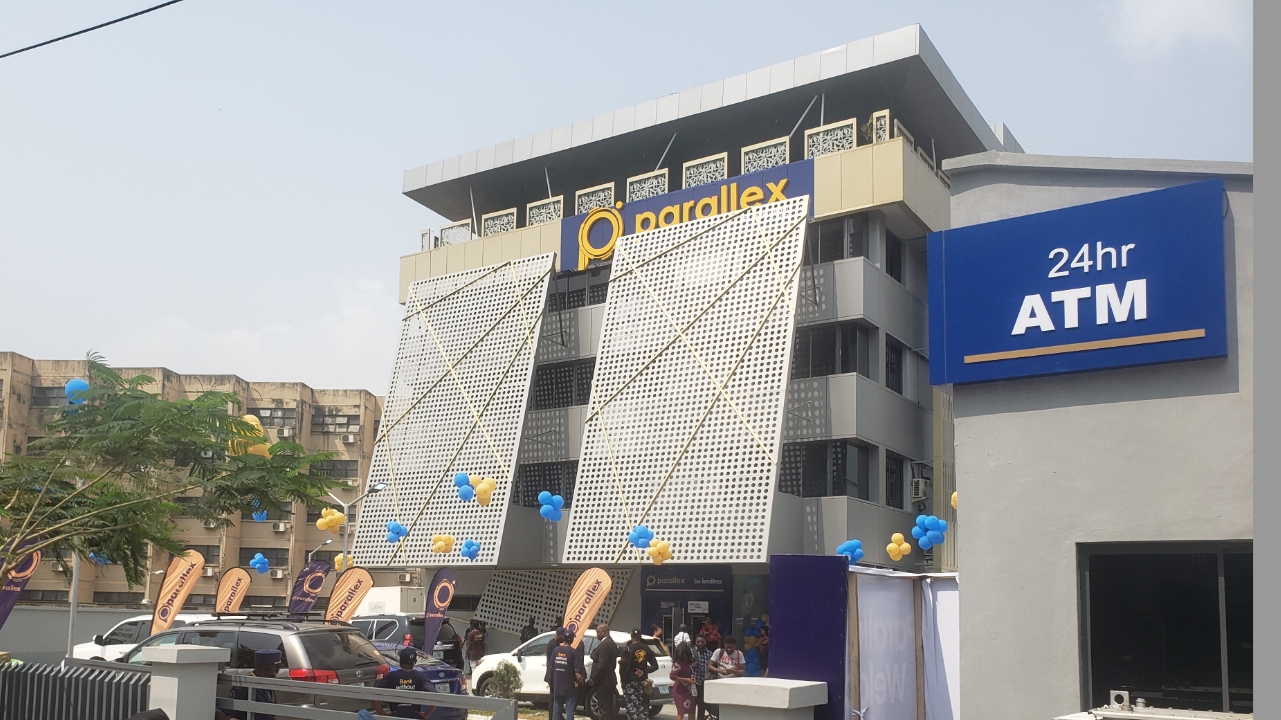
By Kingsley Ani
Parallex Bank Limited has announced that it has completed the recapitalisation requirement introduced by the Central Bank of Nigeria (CBN), exceeding the N50 billion minimum capital threshold set for regional commercial banks.
The recent development places the bank among deposit money banks that have complied with the regulatory directive aimed at strengthening the capital base of the Nigerian banking sector and improving financial system stability.
Olufemi Bakre, Managing Director of Parallex Bank Limited, said that the milestone reflects the institution’s commitment to sustained financial discipline and long-term growth.
“This milestone underscores our belief that excellence, when consistently pursued, delivers sustainable results,” Bakre said.
Bakre added that the strengthened capital position would enable the bank to expand lending capacity and broaden its financial services across different segments of the economy.
DECISION HIGHLIGHT
Parallex Bank Limited has exceeded the CBN’s N50 billion minimum capital requirement for regional commercial banks ahead of the regulatory recapitalisation deadline.
DECISION MEMO
The recapitalisation milestone achieved by Parallex Bank Limited reflects the wider restructuring underway in Nigeria’s banking sector as regulators push financial institutions to strengthen their balance sheets.
The CBN introduced new capital thresholds for deposit money banks as part of a regulatory effort to improve systemic resilience and expand the banking sector’s capacity to finance economic activity.
Capital adequacy remains a critical element of financial sector stability. Banks with stronger capital buffers are generally better positioned to absorb credit losses, withstand macroeconomic shocks and sustain lending activity during economic downturns.
Bakre framed the bank’s recapitalisation achievement as a strategic step toward expanding its operational capacity. He said that the stronger capital base would enable the institution to increase its lending activity and support financial inclusion initiatives.
Beyond internal institutional goals, the development reflects broader structural adjustments within Nigeria’s banking industry. Recapitalisation requirements often trigger a combination of capital raising, strategic partnerships and, in some cases, consolidation among financial institutions unable to meet regulatory thresholds independently.
For smaller or regionally focused banks, meeting higher capital thresholds can present operational and financial challenges. Raising additional equity requires access to investors willing to commit long-term capital in a banking sector that continues to operate within a volatile macroeconomic environment.
Parallex Bank Limited’s ability to exceed the N50 billion requirement suggests that the institution has successfully mobilised sufficient capital to remain competitive within its regulatory category.
However, capital adequacy alone does not guarantee operational strength. Banks must also maintain asset quality, effective risk management systems and sustainable earnings capacity.
The CBN’s recapitalisation policy therefore functions as a structural filter within the banking system, strengthening institutions capable of meeting higher capital requirements while potentially forcing weaker institutions to restructure or merge.
Bakre acknowledged the role of the bank’s internal governance structures in achieving the recapitalisation target.
Bakre credited the institution’s Board of Directors for providing strategic oversight and supporting the capital planning process that enabled the bank to meet regulatory expectations within the stipulated timeframe.
DATA BOX
Minimum capital requirement for regional commercial banks: N50 billion
Regulatory authority: CBN
Institution meeting the threshold: Parallex Bank Limited
Policy objective: Strengthen banking sector stability and lending capacity
WHO WINS / WHO LOSES
Winners
Customers and businesses may benefit from improved lending capacity if recapitalised banks expand credit to productive sectors of the economy.
Investors and depositors could gain greater confidence in banks that demonstrate strong capital buffers and regulatory compliance.
Financial institutions that successfully meet recapitalisation requirements may also strengthen their competitive position within the banking sector.
Potential Losers
Banks unable to meet new capital thresholds may face pressure to merge, restructure or downgrade their operating licences.
Shareholders of weaker institutions may also face dilution or capital losses if banks are forced to raise emergency funding to meet regulatory requirements.
POLICY SIGNALS
The recapitalisation programme signals the CBN’s intention to strengthen the structural resilience of the financial sector.
It reflects a regulatory approach that prioritises stronger capital buffers as a safeguard against macroeconomic volatility and financial instability.
The policy also indicates the regulator’s expectation that banks should possess sufficient capital to support long-term economic growth through expanded lending.
INVESTOR SIGNAL
Investors often interpret successful recapitalisation as an indicator of institutional strength and regulatory credibility.
Banks that exceed capital thresholds may attract greater investor confidence, particularly in an environment where regulatory compliance signals operational discipline and financial stability.
The development may also position Parallex Bank Limited to pursue expansion strategies or partnerships within Nigeria’s evolving banking landscape.
RISK RADAR
Despite stronger capital buffers, Nigerian banks continue to face risks associated with macroeconomic volatility, currency fluctuations and credit exposure within key sectors of the economy.
Rapid credit expansion following recapitalisation could also increase asset quality risks if lending standards weaken under competitive pressure.
Finally, regulatory expectations may continue to evolve as the CBN monitors the effectiveness of the recapitalisation programme in strengthening the banking system.
Discover more from StakeBridge Media
Subscribe to get the latest posts sent to your email.