

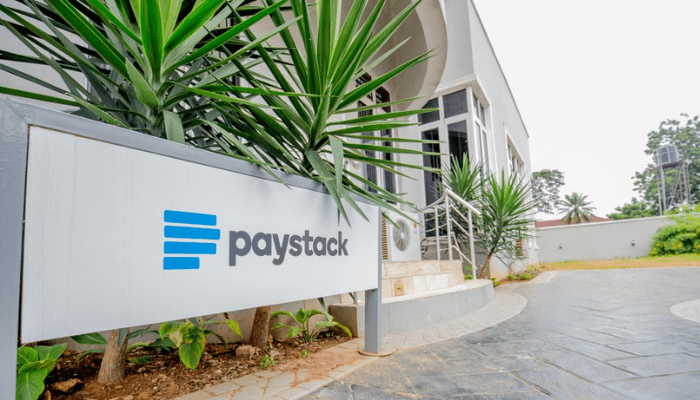
Paystack has reorganised its operations into The Stack Group (TSG), a holding company that formalises its evolution from a single-product payments company into a multi-business technology group.
The restructure comes after Paystack achieved group-wide profitability and sustained positive monthly cash flow, more than five years post-Stripe acquisition. TSG now oversees Paystack’s merchant payments business, the consumer payments app Zap, Paystack Microfinance Bank (MFB), and TSG Labs, a venture studio exploring fintech and emerging technologies.
DECISION HIGHLIGHT
Company: Paystack
Structural Change: Formation of holding company, The Stack Group (TSG)
Trigger: Group profitability and positive cash flow
Core Assets: Paystack (merchant payments), Zap, Paystack MFB, TSG Labs
Ownership Model: Joint ownership by founder, Stripe, and employees
Strategic Aim: Expansion beyond payments with operational and regulatory separation
DECISION MEMO
The restructuring reflects governance, risk management, and strategic optionality rather than immediate growth pursuit.
Paystack’s core merchant payments business remains revenue-generating and insulated, while TSG allows risk and regulatory separation for consumer banking, fintech products, and experimental ventures. This separation mitigates regulatory exposure, containing potential fines or compliance issues within individual subsidiaries.
TSG formalises a reality already in motion: Paystack is now a multi-brand technology group. By housing diverse businesses under a holding company, the firm balances expansion ambitions with regulatory compliance, operational clarity, and shareholder alignment. Employees gain ownership exposure, and Stripe maintains strategic influence.
The venture studio, TSG Labs, signals measured expansion into emerging technologies such as AI or stablecoins, but the core focus remains fintech. Paystack’s leadership acknowledges the limits of consumer finance and offline distribution, highlighting that execution, not ambition alone, will determine long-term success.
The restructure also provides a governance framework to manage operational complexity across different risk and licensing regimes, positioning the company to scale safely while pursuing optionality in higher-risk ventures.
DATA BOX
Year Founded: 2016
Stripe Acquisition: $200 million
Payment Volume Growth Since Acquisition: Over 12x
Countries of Operation: 5 African markets
Referenced Regulatory Fine (Zap): N250 million
Current Status: Group-wide profitability, positive monthly cash flow
WHO WINS / WHO LOSES
Who Wins
– Core merchant payments business, shielded from non-core risks
– Regulators, with clearer risk and licence separation
– Employees, through shared ownership in TSG
– Long-term partners seeking governance clarity
Who Loses
– Assumptions that payment scale guarantees success in consumer finance
– Short-term growth narratives driven by brand stretch rather than structural design
POLICY SIGNALS
– Regulatory architecture can be a strategic lever, not a constraint
– Profitability is now the threshold for credible fintech expansion
– Holdco structures are emerging as the preferred model for regulated tech ecosystems
INVESTOR SIGNAL
TSG presents disciplined optionality. Paystack preserves a cash-generating core while creating ring-fenced vehicles for higher-risk ventures. Growth potential exists, but capital allocation and governance take precedence over rapid scaling.
RISK RADAR
– Execution risk in consumer distribution and offline penetration
– Heightened regulatory scrutiny across banking and consumer finance
– Talent and leadership stretch across multiple subsidiaries
– Maintaining capital discipline as venture-style experiments scale
Bottom Line
Paystack’s transition to a holding company is not driven by ambition alone. It reflects strategic control. Profitability has enabled optionality, while the holdco structure clarifies where risk resides and where growth will be pursued.
Discover more from StakeBridge Media
Subscribe to get the latest posts sent to your email.