

We welcome numbers when they finally move in the right direction. Nigeria’s foreign reserves have climbed to $48.5 billion, the strongest level since 2013. The Central Bank’s rebuilding effort has produced a steady upward curve from roughly $40.8 billion at the start of 2025 to $45.5 billion at year end, and now close to $50 billion early in 2026.
On paper, this is a macroeconomic milestone. It signals improved inflows, tighter liquidity management and a stronger capacity to defend external obligations. It also revives a memory many policymakers prefer, a period when Nigeria’s buffers appeared robust and confidence less fragile.
But we must be clear about what reserves mean and what they do not mean.
Foreign reserves measure a country’s financial endurance. They do not measure a citizen’s economic experience.
We have seen this gap before. Governments accumulate buffers and markets applaud stability, yet households feel little relief. The danger is not economic mismanagement but communication misalignment. Policymakers interpret reserves as recovery. Citizens interpret recovery as affordability.
If prices remain elevated, reserves become an abstract success.
The current accumulation cycle follows reforms in foreign exchange transparency and liquidity control. From a technical standpoint, this matters. A credible reserve position moderates currency volatility, improves import cover and reassures investors about sovereign payment capacity. These are real achievements, and they matter for macro stability.
However, macro stability is only the first half of legitimacy. The second half is lived stability.
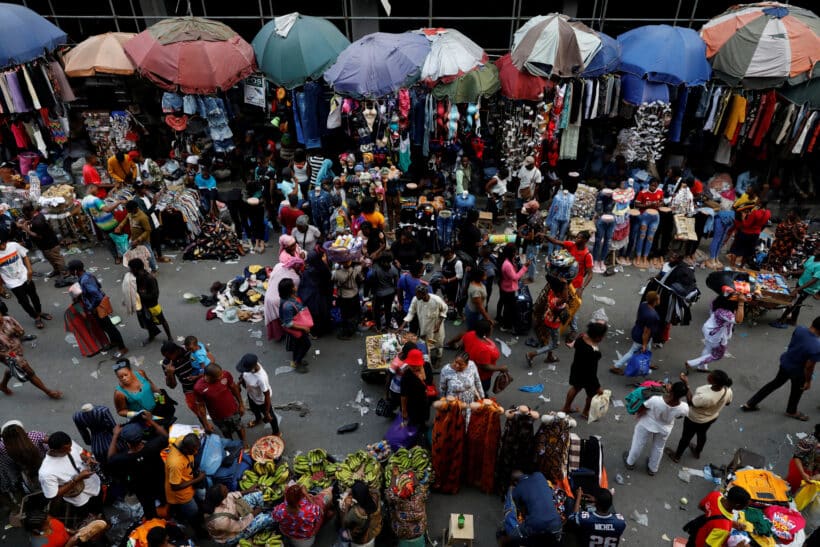
When people cannot directly experience improvement, economic credibility weakens even as indicators improve. A stronger reserve position does not automatically lower food costs, rent burdens or transport pressure. Yet those are the metrics by which most citizens judge whether the economy works.
We, therefore, confront a familiar Nigerian paradox, statistical recovery coexisting with social strain.
The Central Bank of Nigeria projects reserves could reach $51 billion by the end of 2026. The projection itself is less important than what accompanies it. If reserves grow while purchasing power stagnates, the policy success risks political failure. Economic stabilization succeeds technically but fails socially.
Markets price solvency. Citizens price survival.
This distinction matters because confidence has two audiences. External investors want assurance Nigeria can meet obligations. Domestic households want assurance Nigeria can meet expectations. One responds to balance sheets. The other responds to daily transactions.
Ignoring either side produces instability.
The rebuild of reserves also reflects improved inflows rather than purely export expansion. That creates a second challenge. Buffer accumulation must translate into predictable currency conditions. Without exchange rate reliability, businesses cannot plan and wages cannot hold value. Stability must be visible in everyday pricing, not only in central bank dashboards.
Otherwise, the reserves function as insurance for government but not security for citizens.
We have learned repeatedly that credibility is cumulative. Inflation shocks damage trust faster than reserve gains restore it. Each time the public hears recovery but feels pressure, the gap widens. Over time the credibility cost outweighs the financial benefit.
Nigeria therefore stands at a delicate point. The country is stabilizing financially but must now stabilize psychologically. That requires demonstrating that stronger reserves produce tangible outcomes, steadier prices, predictable currency, lower volatility and clearer planning horizons for firms and households alike.
If reserves translate into calmer markets, investment follows. If investment follows, employment strengthens. If employment strengthens, legitimacy deepens. The chain must be completed.
We should resist declaring victory too early. A higher reserve number is not the end of reform. It is evidence reform has begun to work. The true test is whether stability migrates from official statistics into household experience.
We must insist on that translation. Because economies are not judged by their strongest indicator but by their weakest daily reality.
Nigeria’s reserves have returned to 2013 levels. The question is whether economic confidence will return to everyday life.
Discover more from StakeBridge Media
Subscribe to get the latest posts sent to your email.