

By Ayo Susan
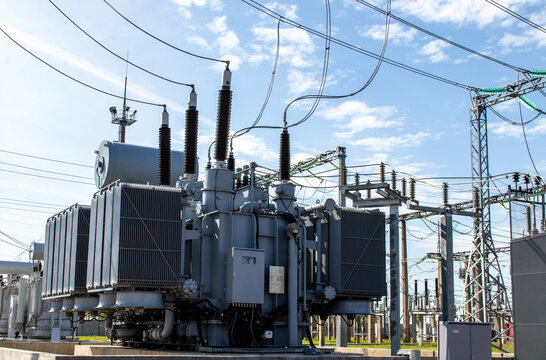
The Transmission Company of Nigeria (TCN) has commissioned a new 300MVA transformer at the 330/132/33kV Egbin Transmission Substation in Lagos, lifting the station’s total capacity to 450MVA.
The upgrade is expected to improve bulk power availability to the Ikeja Electricity Distribution Company network serving key industrial and residential corridors.
DECISION HIGHLIGHT
- New transformer capacity: 300MVA
- Substation capacity before: 300MVA
- Substation capacity after: 450MVA
- Location: Egbin Transmission Substation, Lagos
- Beneficiary network: Ikeja Electric coverage zone
- Execution model: in-house TCN engineers
- Delivery timeline: six weeks
DECISION MEMO
The latest capacity expansion at the Egbin transmission node underscores Nigeria’s continuing attempt to address grid bottlenecks through incremental infrastructure reinforcement rather than wholesale system overhaul.
While the addition of a 300MVA transformer is operationally significant for the Lagos load centre, the broader question is whether such modular upgrades can keep pace with the structural weaknesses of the national transmission backbone.
Ndidi Mbah, General Manager Public Affairs at TCN, framed the intervention in consumer terms, stating: “This upgrade will directly benefit customers in Ikorodu, Shagamu, Ijede, and surrounding areas. It will enhance the reliability of power supply, support economic growth, and contribute to a more stable grid.”
The language reflects the familiar reliability narrative that accompanies most grid upgrades. However, the material policy signal lies in the execution method. Adeshina Adeonipekun, General Manager Transmission, Lagos Region, emphasised that “the project was completed in-house by TCN engineers in just six weeks,” presenting the delivery speed as evidence of institutional capacity.
This detail is not trivial. Nigeria’s power sector has historically struggled with project latency, procurement delays and contractor dependence. Demonstrating in-house execution capability suggests TCN is attempting to build internal technical depth rather than relying solely on external EPC pipelines.
Still, the scale question remains. Even with the upgrade to 450MVA, Nigeria’s transmission constraints are systemic, not localised. The grid continues to face wheeling limitations, frequency instability and regional congestion risks. Incremental transformer additions improve node-level resilience but do not automatically resolve nationwide evacuation constraints.
For Ikeja Electric’s franchise area, the immediate impact could be measurable. The Egbin corridor serves one of the country’s highest demand clusters, where even marginal improvements in bulk supply can translate into reduced load shedding.
The strategic test will be replication speed across other constrained nodes and whether transmission reinforcement keeps pace with generation recovery and distribution reforms.
DATA BOX
Egbin Upgrade Metrics
- Transformer added: 300MVA
- Previous substation capacity: 300MVA
- New total capacity: 450MVA
- Voltage configuration: 330/132/33kV
- Completion timeline: six weeks
- Execution: in-house TCN engineers
- Key beneficiary areas: Ikorodu, Shagamu, Ijede
WHO WINS / WHO LOSES
Who Wins
- Ikeja Electric network customers
- Industrial and commercial users in the corridor
- TCN’s internal engineering credibility
- Businesses sensitive to power reliability
- Grid stability in the Lagos load pocket
Who Loses
- Areas still constrained by transmission bottlenecks
- Diesel generator dependence only marginally
- Regions outside priority upgrade zones
- Contractors displaced by in-house delivery
POLICY SIGNALS
- TCN is prioritising targeted capacity reinforcement.
- In-house engineering capability is being emphasised.
- Lagos load centres remain top grid priority.
- Transmission upgrades are proceeding incrementally.
- Reliability messaging remains central to sector reform narrative.
INVESTOR SIGNAL
For power sector investors, the Egbin upgrade is a modest but positive indicator of ongoing transmission strengthening, particularly in Nigeria’s most commercially critical electricity market.
However, investors will continue to focus on system-wide wheeling capacity rather than isolated node improvements. Sustainable gains in generation offtake and distribution performance depend on broader grid stability, not only substation-level upgrades.
If replicated at scale and supported by grid automation, such investments could gradually reduce evacuation risk. If not, transmission will remain the binding constraint in the power value chain.
RISK RADAR
- System-wide transmission bottlenecks persist
- Wheeling capacity constraints remain
- Grid frequency instability risk
- Uneven regional upgrade coverage
- Maintenance sustainability risk
- Generation-transmission mismatch
- Distribution offtake limitations
Bottom line: the Egbin transformer deployment improves local grid resilience and demonstrates faster in-house execution by TCN, but Nigeria’s transmission challenge remains structural, and incremental upgrades must scale rapidly to materially shift national power reliability.
Discover more from StakeBridge Media
Subscribe to get the latest posts sent to your email.