

By Enam Obiosio
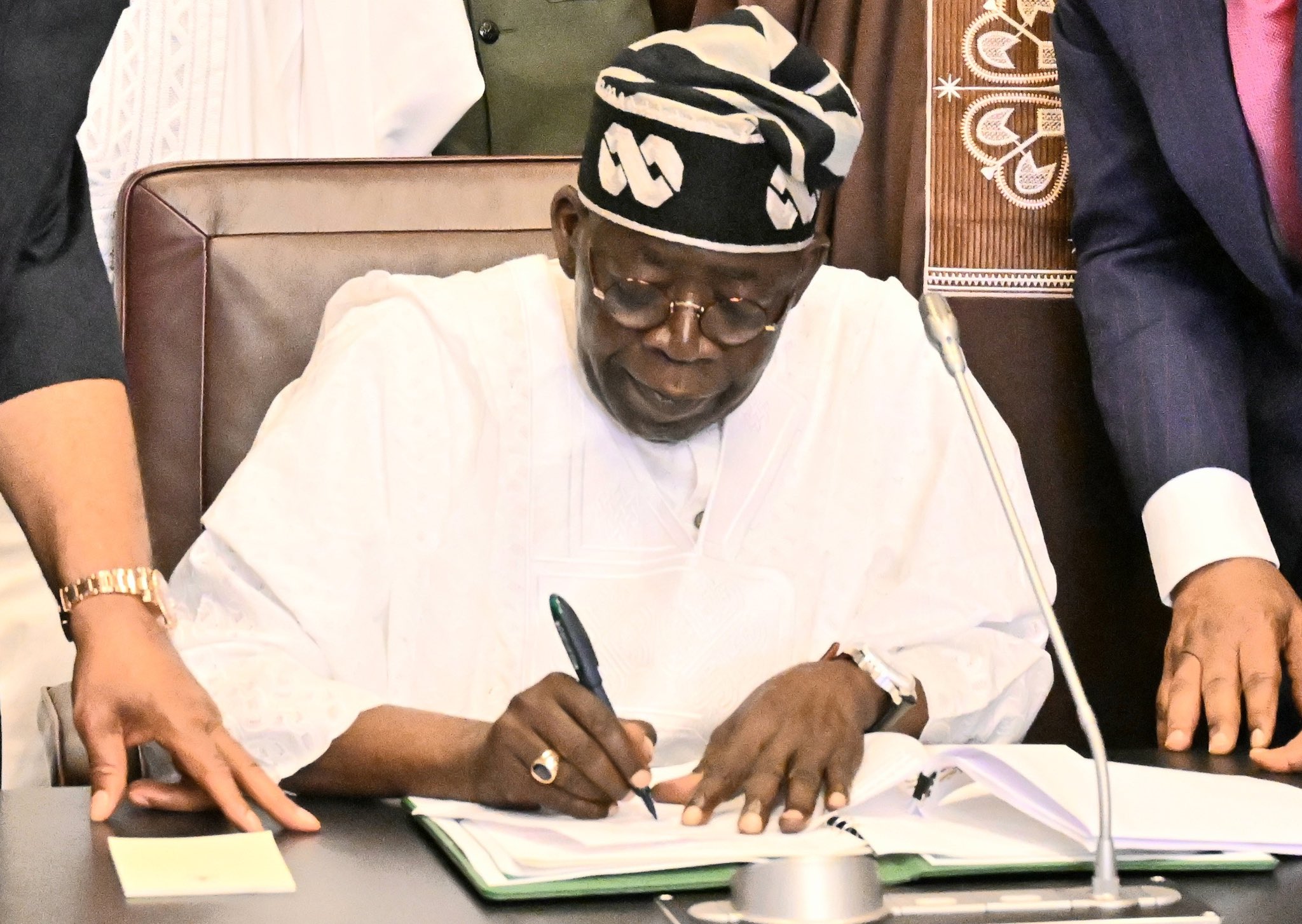
President Bola Tinubu has established a Virtual Asset Regulatory Council (VARC) and designated the Central Bank of Nigeria (CBN) and the Nigeria Revenue Service (NRS) as joint Virtual Asset Regulatory Authority (VARA) for non-security digital assets.
The Presidency disclosed that between July 2024 and June 2025, Nigerians conducted virtual asset transactions estimated at $92.1 billion in the formal market, excluding peer-to-peer and over-the-counter trades. The framework builds on a Presidential Directive issued in August 2025 and recognises the Securities and Exchange Commission (SEC) as regulator of crypto assets classified as securities.
DECISION HIGHLIGHT
- Creation of Virtual Asset Regulatory Council, VARC
- CBN and NRS designated joint Virtual Asset Regulatory Authority, VARA
- SEC retains authority over security-classified virtual assets
- Establishment of Virtual Asset Regulatory Office, VARO
- Introduction of a Virtual Asset Sandbox
- No immediate new legislation, reliance on existing statutory powers
DECISION MEMO
The federal government has moved to formalise oversight of Nigeria’s fast-expanding digital asset ecosystem. The structural design is deliberate. Instead of creating a new standalone regulator, the administration has opted for a coordinated supervisory architecture anchored by existing institutions.
The Presidency stated that “the scale of activity underscores the urgency of creating robust safeguards to protect users, prevent financial crimes such as money laundering and terrorism financing, and formalise a sector that has operated largely in fragmented regulatory spaces.” That framing positions the initiative less as restriction and more as systemic stabilisation.
At its core, VARC will serve as the strategic coordination body. The Governor of the CBN and the Executive Chairman of the NRS will co-chair the council, supported by other enforcement and regulatory agencies. Operational coordination for non-security assets will be handled through Virtual Asset Regulatory Office (VARO), while agency-based regulatory teams will function within their respective mandates.
The most consequential design feature is regulatory delineation. According to officials, “VARA will focus exclusively on non-security virtual assets, including currency-pegged stablecoins, payment tokens, tokenised deposits and related services such as issuance, custody, payment processing, banking services and exchange operations.” The Presidency added that “virtual assets classified as securities will remain under the regulatory purview of the SEC, ensuring continuity in capital market oversight.”
This division attempts to address one of Nigeria’s historical regulatory weaknesses in the crypto space, overlapping mandates and enforcement uncertainty.
Yet the critical variable remains execution discipline. Coordinated frameworks can either reduce duplication or introduce additional layers of bureaucracy. The administration acknowledges that the framework’s credibility will rest on implementation.
Notably, the government has chosen not to introduce immediate new legislation. Instead, it is empowering regulators to act within existing statutory frameworks while the system evolves. The policy approach draws conceptual influence from the Dubai Virtual Assets Regulatory Authority model, though Nigeria’s structure differs by functioning as a coordination mechanism rather than a single new authority.
For operators, the trade-off is explicit. Exchanges and platforms serving Nigerian users will be required to register, meet client asset protection standards, comply with know your customer (KYC) and cybersecurity requirements, and adhere to reporting obligations. In exchange, compliant firms gain formal recognition, improved banking access and eligibility for regulated partnerships.
The Virtual Asset Sandbox signals that the government intends to preserve innovation pathways while licensing standards are phased in.
The broader ambition is strategic. With one of Africa’s highest crypto adoption rates, Nigeria is attempting to convert scale into structured growth rather than regulatory friction. Whether this becomes a catalyst for digital economy expansion or another compliance burden will depend on administrative coherence across agencies.
DATA BOX
- Formal virtual asset transactions July 2024–June 2025: $92.1 billion
- Oversight structure: VARC, VARA, VARO
- Joint regulators for non-security assets: CBN and NRS
- Securities-classified assets: SEC oversight
- Regulatory approach: Coordinated framework, no new legislation at launch
- Strategic target: Contribution to $1 trillion economy ambition by 2030
WHO WINS / WHO LOSES
Potential Winners:
Compliant exchanges and fintech platforms that gain formal recognition and banking access. Institutional investors seeking regulatory clarity. Law enforcement agencies with clearer supervisory boundaries.
Under Pressure:
Unregistered offshore platforms and operators dependent on regulatory ambiguity. Informal peer-to-peer channels facing tighter compliance scrutiny.
POLICY SIGNALS
The administration is shifting from reactive crypto oversight to structured governance. The coordinated model reflects a preference for institutional harmonisation rather than regulatory proliferation.
It also signals intent to align Nigeria’s digital asset ecosystem with global best practices while retaining local supervisory control.
INVESTOR SIGNAL
Regulatory clarity, if implemented consistently, could improve investor confidence and reduce jurisdictional risk premiums associated with Nigeria’s crypto market.
However, investors will watch closely for inter-agency coherence and enforcement predictability. Fragmentation would undermine the framework’s credibility.
RISK RADAR
- Potential duplication despite coordination mandate
- Compliance burden increasing operating costs for local platforms
- Enforcement inconsistency across agencies
- Overregulation stifling innovation if sandbox mechanisms are weak
- Market migration to informal channels if regulatory friction rises
The government has opted for coordination over creation of a new standalone regulator. The architecture is conceptually sound. Its durability will depend on disciplined execution across Nigeria’s financial supervisory ecosystem.
Discover more from StakeBridge Media
Subscribe to get the latest posts sent to your email.