

By Johnson Emmanuel
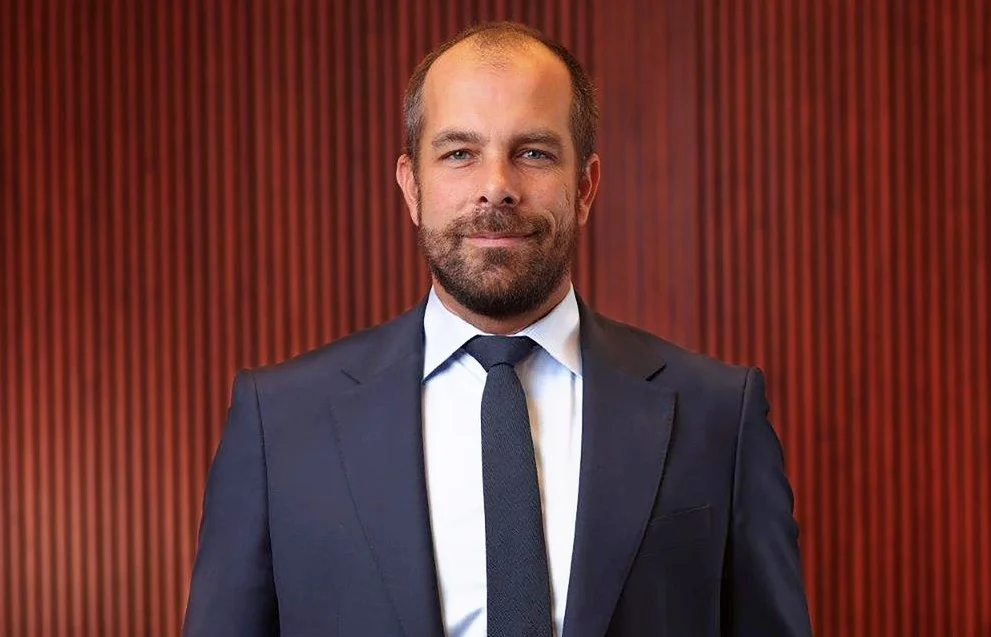
The Country Chairman and Managing Director of TotalEnergies EP Nigeria Limited, Matthieu Bouyer, has urged Nigeria to translate its oil and gas reforms into bankable projects, higher production and sustained investment. Speaking on Wednesday at the 5th Petroleum and Natural Gas Senior Staff Association of Nigeria Energy and Labour Summit 2026 in Abuja, Bouyer said that policy stability, predictable regulation, faster execution and industrial harmony were essential to converting Nigeria’s resources into economic value. His intervention comes as the federal government targets about US$50 billion in deep offshore investment and nearly one million barrels per day of additional crude oil and condensate production over four to five years.
DECISION HIGHLIGHT
The message from TotalEnergies is that reform credibility will ultimately be measured by projects reaching Final Investment Decision, construction and production, not by policy announcements. Nigeria’s investment proposition therefore depends increasingly on reducing the gap between regulatory intent and project execution.
DECISION MEMO
Nigeria’s upstream reform agenda is entering a more demanding phase. The Petroleum Industry Act, deepwater and non-associated gas incentives, efforts to shorten contracting timelines and renewed licensing activity have sought to address barriers that previously weakened investment. The private-sector response, however, increasingly centres on whether these measures produce commercially bankable projects.
“Nigeria does not lack potential,” Bouyer said. “The real challenge is conversion.”
That conversion has several dimensions. Fiscal incentives must produce viable project economics; regulatory reforms must shorten decision cycles; infrastructure must support gas development; and security and industrial relations must reduce operational uncertainty. Without those conditions, approved opportunities can remain stranded between policy design and capital deployment.
Bouyer argued that stability is the first condition for growth, with government responsible for clear policy and effective regulation, regulators for predictable implementation, operators for disciplined investment and safe operations, labour for constructive engagement, and communities for trust and shared responsibility.
The same logic applies to exploration. Bouyer described exploration as “the renewal engine” of the industry, because declining reserves without new discoveries eventually constrain production, employment and investment. The 2024 and 2025 exploration licensing rounds therefore matter not merely as regulatory events, but as mechanisms for replenishing Nigeria’s future project pipeline.
TotalEnergies’ own experience provides a case study. Bouyer cited the 2024 Final Investment Decision on the Ubeta gas development by TotalEnergies and Nigerian National Petroleum Company Limited, saying: “Reform becomes real when it unlocks projects.”
The company’s emissions agenda also illustrates how operational improvements can intersect with economics. Bouyer said that TotalEnergies eliminated routine flaring across its operated Nigerian assets at the end of 2023 and is working with Nigerian National Petroleum Company Limited on AUSEA drone-based methane and carbon dioxide monitoring, alongside more than 2,500 sensors installed across operated assets.
DATA BOX
- Deep offshore investment target: About US$50bn
- Potential additional production: Nearly 1m barrels per day
- Target period: 4-5 years
- TotalEnergies Nigeria presence: Since 1956
- Ubeta FID: 2024
- Routine flaring eliminated by TotalEnergies: End-2023
- Methane monitoring sensors: More than 2,500
- Key investment requirements: Fiscal certainty, regulation, infrastructure, security, execution and bankable offtake
WHO WINS / WHO LOSES
Who wins: Nigeria, investors, workers, host communities and oilfield-service companies if reforms translate into timely projects, production and local economic activity.
Who loses: Nigeria bears the opportunity cost when regulatory delays, infrastructure constraints or uncertainty prevent approved projects from reaching investment and production stages.
POLICY SIGNALS
The next reform priority is implementation discipline. Reducing approval timelines, eliminating overlapping mandates, strengthening gas infrastructure and maintaining predictable fiscal terms will determine whether Nigeria converts policy reform into sustained capital formation.
INVESTOR SIGNAL
The investment proposition is improving, but investors should distinguish announced opportunities from bankable projects. FID, financing, offtake, infrastructure access, regulatory certainty and execution schedules remain the stronger indicators of investability.
RISK RADAR
The principal risks are regulatory uncertainty, overlapping institutional mandates, project delays, weak gas infrastructure, payment risks, security concerns and industrial or community disruptions. The central risk is that Nigeria succeeds in improving policy architecture without achieving the execution speed required to convert resources into production and returns.
Discover more from StakeBridge Media
Subscribe to get the latest posts sent to your email.