

By Olumide Johnson
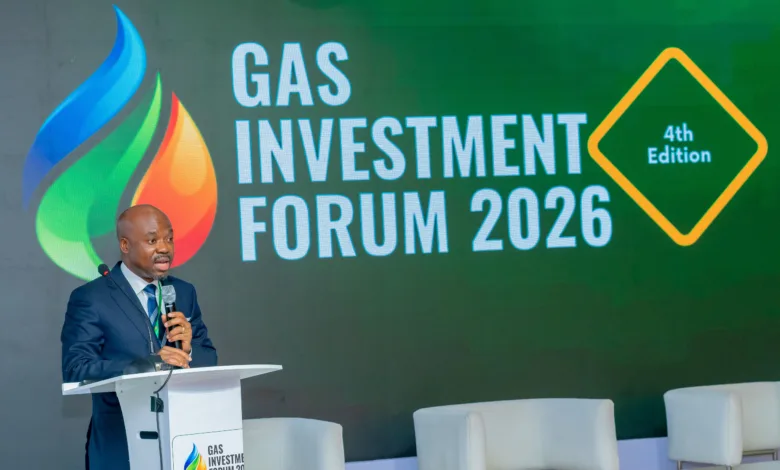
Gas industry leaders at the Gas Investment Forum 2026 have shifted attention from Nigeria’s gas reserves to the infrastructure and commercial conditions required to monetise them. Their central argument is that resources alone will not attract sustained investment without bankable demand, dependable infrastructure, regulatory certainty and disciplined execution.
DECISION HIGHLIGHT
Nigeria’s gas investment challenge is increasingly a conversion problem: how to connect abundant resources with processing facilities, pipelines, power plants, industries, households and export markets in a commercially viable system.
DECISION MEMO
Director and Chief Commercial Officer, Chevron Nigeria and Mid Africa, Chris Jablonski, identified three requirements for Nigeria’s gas industry: resources, certainty and execution.
“The world already knows Nigeria has the gas,” Jablonski said, arguing that the priority must now be moving projects from concept to reality.
“That means moving from resource declarations and headlines to bankable demand, developing anchor energy, industrial, domestic and regional export projects, accelerating infrastructure delivery, and strengthening commercial discipline and payment security. What it needs is a decade of execution,” he noted.
The investment implication is that gas reserves become economically valuable only when infrastructure and customers exist to support their development.
Managing Director of Shell Nigeria Gas, Ralph Gbobo, reinforced the interdependence between supply and demand.
“The question is how quickly and effectively we can translate our ambitions into delivery,” Gbobo said.
He stressed that investors require capital, effective governance, disciplined execution, clear regulations and transparent processes.
“Supply without viable demand will not deliver sustainable investments. And if we have demand but don’t have viable infrastructure, that will also constrain growth. Nigeria does not need more declarations of projection. It needs more projects delivered safely, delivered efficiently and sustainably.”
Gbobo said that Shell’s approach was focused on productive consumption rather than infrastructure for its own sake.
“Our core objective is not just to extend pipelines. It is to bring reliable gas closer to businesses to support industrial productivity,” he noted.
Okechukwu Mba, Director of Gas and New Energy at Seplat Energy Plc, extended the argument across the entire value chain.
“Harnessing Nigeria’s gas abundance for industry requires significant investment in the entire value chain. We must unlock capital for the critical infrastructure required to produce gas, process it and deliver it to the doorstep of customers by implementing certain policy actions that derisk investment and increase competitiveness,” Mba said.
He cited efforts to address legacy gas debts owed to the power sector as important for making gas supply to power plants bankable. He also referenced recent final investment decisions and the opening of the OB3 pipeline.
Seplat’s operations illustrate the emerging model. Its joint venture with Nigerian National Petroleum Company Limited operates three gas processing plants, including ANOH, and supplies gas directly to six power stations and indirectly to industrial customers, including fertiliser producers.
Mba also highlighted Seplat’s participation in liquefied petroleum gas, butane and compressed natural gas.
Nigeria’s geographic position provides another opportunity. Mba said its Gulf of Guinea location places the country seven to 10 days from major European markets, while Atlantic access reduces exposure to major maritime choke points.
The underlying investment question is therefore no longer whether Nigeria has gas, but whether the infrastructure, demand and commercial structures can make that gas reliably deliverable.
“We need ideas to convert gas molecules to gas that will be delivered to homes and businesses, and ideas to unlock products. Nigeria cannot wait any longer. The time is now,” Mba emphasised.
DATA BOX
- Nigeria: described as having Africa’s largest natural gas resources.
- Seplat processing: three gas processing plants, including ANOH.
- Direct power customers: six power stations.
- European market proximity: seven to 10 days, according to Mba.
- Core requirements: processing, pipelines, transportation, distribution and storage.
- Bankability requirements: credible demand, payment security, regulatory certainty and execution.
WHO WINS / WHO LOSES
Gas producers, infrastructure developers, power generators, industrial customers and technology providers could benefit from a more integrated gas market. Projects without dependable demand, adequate infrastructure or payment security remain exposed to weak utilisation and uncertain returns.
POLICY SIGNALS
Industry expectations are shifting towards policies that de-risk infrastructure investment, strengthen payment security and accelerate project execution rather than simply promote Nigeria’s gas potential.
INVESTOR SIGNAL
The opportunity increasingly spans processing, pipelines, distribution, industrial gas supply, power generation, liquefied petroleum gas, compressed natural gas and export infrastructure.
RISK RADAR
Insufficient bankable demand, infrastructure gaps, financing constraints, payment insecurity, regulatory uncertainty and weak execution remain the principal risks to converting Nigeria’s gas resources into sustained investment.
Olumide Johnson is a journalist, reporting on energy, maritime, business, and developments shaping Nigeria’s economy.
Discover more from StakeBridge Media
Subscribe to get the latest posts sent to your email.