

By Jennete Ugo Anya
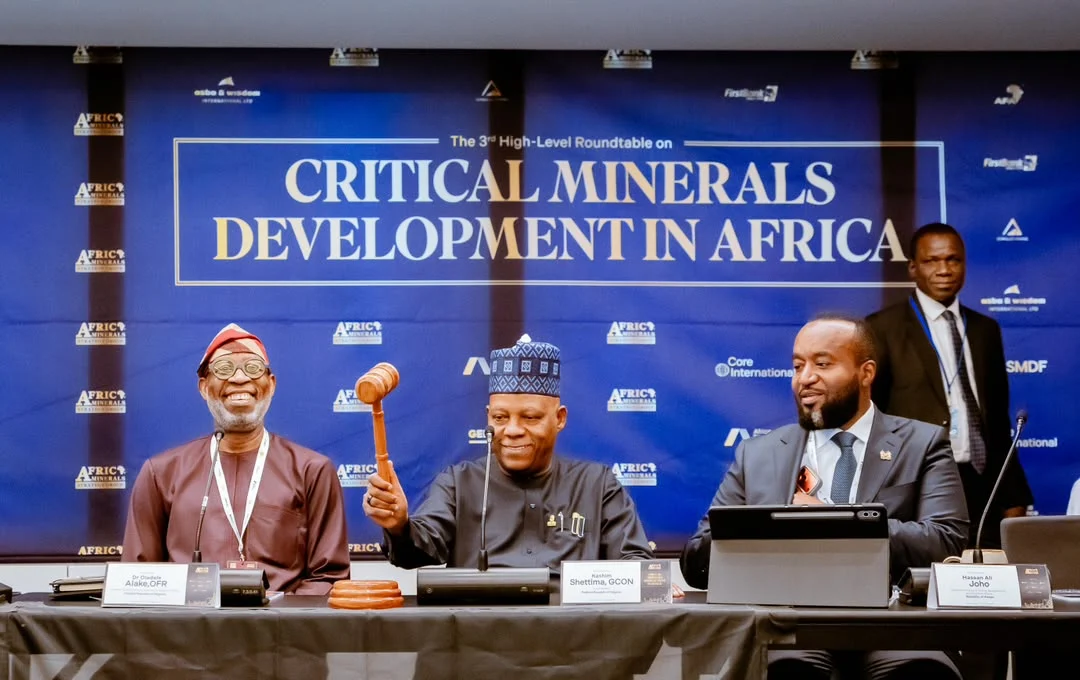
Vice President Kashim Shettima has called for an overhaul of Africa’s approach to mineral resources, urging countries to stop exporting raw minerals without capturing sufficient value through processing, manufacturing and industrialisation.
Shettima, representing President Bola Tinubu at the Third Africa Minerals Strategy Group (AMSG) High-Level Roundtable in New York, said that mineral wealth has little meaning if communities surrounding deposits remain poor.
DEVELOPMENT:
Shettima urged African countries to coordinate rather than compete for investors through lower royalties, weaker local-content requirements and excessive concessions.
He advocated integrated markets, regional processing hubs and cross-border mineral corridors to strengthen Africa’s bargaining position in global mineral supply chains.
He cited Nigeria’s mining reforms, including improved geological information, formalisation of artisanal mining, measures against illegal mining and greater emphasis on local value addition. He also pointed to growing mining revenues and lithium-processing investments in Nasarawa State.
Backing the AMSG Mutual Assured Development (MADE) Framework, Shettima said that governments must provide predictable policies and credible institutions, while investors should bring responsible capital, technology transfer and local value.
DATA:
The economic opportunity is increasingly tied to what happens after extraction.
Shettima’s focus on processing reflects the gap between exporting raw minerals and retaining higher-value activities such as refining, manufacturing, technology and equipment production within Africa.
At the meeting, Minister of Solid Minerals Development and AMSG Chairman, Dr. Dele Alake, proposed an African Artisanal Mining Formalisation and Safety Facility.
Alake cited more than 200 deaths in eastern Democratic Republic of Congo in January, scores of deaths in the Central African Republic in August and 60 deaths in West Kordofan, Sudan, following mining-site collapses.
SIGNIFICANCE:
The debate is shifting from mineral ownership to mineral economics.
Africa possesses significant deposits of critical minerals, but exporting concentrates or raw ore limits the continent’s participation in the higher-value segments of the supply chain.
Shettima said that the success of Africa’s mineral strategy should ultimately be visible in “roads, railways, factories, competitive African enterprises, skilled jobs and thriving mining communities”.
That makes infrastructure, local-content policy, energy supply, financing, technology transfer and regulatory certainty central to the continent’s minerals strategy.
NEXT MOVE:
The immediate test is implementation of the Continental Integration and Economic Assurance Declaration, signed by participating countries at the meeting.
Shettima called for the declaration to move beyond ceremony through clear timelines, financing and accountability.
Alake’s proposed formalisation facility also requires attention, particularly its potential role in licensing, cooperative formation, geological support, safer equipment, occupational safety and environmental rehabilitation.
The meeting included African ministers, development finance institutions, multilateral organisations, mining and technology companies, and United States Government representative and Special Advisor to the U.S. State Department on the Bureau of African Affairs, Chris Kulukundis, who expressed readiness for U.S. partnership with Africa on mineral development.
OUR LENS:
The deeper issue is whether Africa can convert mineral abundance into industrial capacity.
Shettima’s argument challenges the traditional extract-and-export model, while Alake’s proposal addresses the safety and informality problems at the production end.
The new continental pact could therefore become significant if it produces coordinated mineral policies, regional processing capacity and investment frameworks that retain more economic value within Africa.
The strategic question is no longer simply who owns Africa’s minerals. It is who captures the value created from them.
Jennete Ugo Anya is a journalist and researcher with interests across Nigeria’s economy, public policy, business, MSMEs, development and strategic communications, Foreign direct investments, development finance institutions.
Discover more from StakeBridge Media
Subscribe to get the latest posts sent to your email.