

By Kingsley Ani
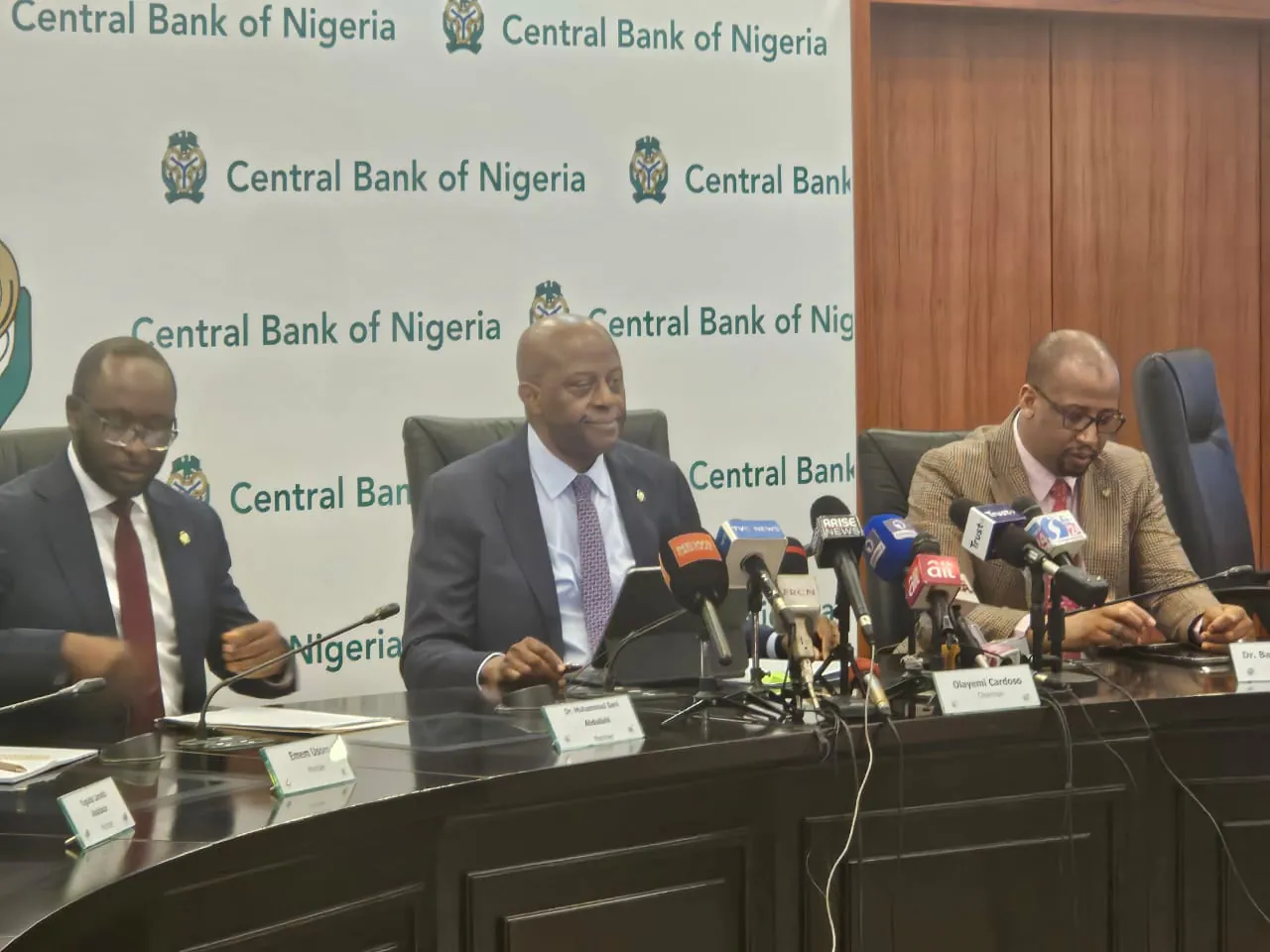
The Central Bank of Nigeria (CBN) has made its clearest monetary-policy shift of 2026, cutting the Monetary Policy Rate (MPR) from 26.5 percent to 23 percent at the 307th Monetary Policy Committee (MPC) meeting in Abuja.
CBN Governor, Mr. Olayemi Cardoso, announced the decision on Tuesday, September 22, 2026, marking a 350-basis-point reduction from the rate retained at the MPC’s July meeting.
DEVELOPMENT:
The MPC did more than reduce the benchmark rate. It recalibrated the Standing Facilities Corridor (SFC) to +50/-300 basis points around the MPR, while retaining the Cash Reserve Requirement (CRR) at 45 percent for Deposit Money Banks (DMBs), 16 percent for Merchant Banks and 75 percent for non-Treasury Single Account public-sector deposits.
Cardoso said that the committee decided to “reset the monetary policy rate to 23 percent”.
The decision represents a sharp departure from the cautious sequence established earlier in the year. The MPC cut the MPR by only 50 basis points, from 27 percent to 26.5 percent, in February. It then retained 26.5 percent at both its May and July meetings.
The September reduction therefore amounts to seven times the size of February’s cut.
DATA:
The immediate macroeconomic justification is the continued moderation in inflation. NBS data show headline inflation at 15.39 percent in August, down from 15.43 percent in July. Core inflation stood at 13.29 percent, while food inflation was 19.57 percent.
At 23 percent, however, the MPR remains substantially above headline inflation. The nominal policy rate therefore remains restrictive even after the cut.
The distinction here is that the CBN has not moved from tight money to cheap money. Rather, it has reduced the degree of monetary restraint while maintaining significant liquidity controls through unchanged CRR requirements.
SIGNIFICANCE:
The July MPC decision effectively preserved the existing anti-inflation stance. The September decision begins to change the transmission mechanism.
For businesses, the critical question is whether the 350-basis-point reduction will feed into lending rates, rather than merely lowering the CBN benchmark. With CRR unchanged at high levels, banks still face substantial liquidity constraints.
For fixed-income investors, the decision introduces a different consideration. Lower policy rates can place downward pressure on money-market and short-term government-security yields, although the adjustment will depend on liquidity conditions, inflation expectations and the CBN’s subsequent operations.
For the real economy, the significance is potentially greater. Nigeria has spent much of the recent tightening cycle attempting to stabilise inflation, the naira and monetary conditions. The latest move suggests that the CBN now sees sufficient disinflation and macroeconomic stability to give greater weight to credit transmission and economic activity.
NEXT MOVE:
The next test is transmission. The CBN has explicitly linked the corridor recalibration to strengthening monetary-policy transmission and reinforcing the MPR as the principal policy signal.
The market should therefore watch commercial-bank lending rates, deposit rates, Treasury-bill yields, interbank liquidity, private-sector credit growth and the naira.
The critical question is whether 23 percent becomes the beginning of a sustained easing cycle or remains a one-off recalibration following the recent improvement in inflation.
OUR LENS
The 307th MPC meeting changes the character of Nigeria’s monetary policy.
The February cut was marginal and followed by two meetings of caution. September is different in both scale and signalling. A 350-basis-point reduction, accompanied by a narrower Standing Facilities Corridor but unchanged CRR, suggests that the CBN is attempting to improve monetary transmission without abandoning its inflation-control architecture.
The policy challenge has therefore moved from simply restraining inflation to managing the consequences of easing without reversing the disinflation gains.
For investors, the key story is no longer whether Nigerian interest rates will eventually fall. It is whether the CBN can translate a lower policy rate into cheaper credit while preserving price and foreign-exchange stability.
The strongest point here is the contrast between the February 50-basis-point cut and the September 350-basis-point cut. The CBN’s own published record confirms that it held 26.5 percent in May and July after the February reduction. The August inflation data provide the clearest numerical backdrop for the September move.
Kingsley Ani is a journalist who has over the years been covering capital markets, corporate results, economic and public-interest developments with a focus on clear, factual reporting.
Discover more from StakeBridge Media
Subscribe to get the latest posts sent to your email.