

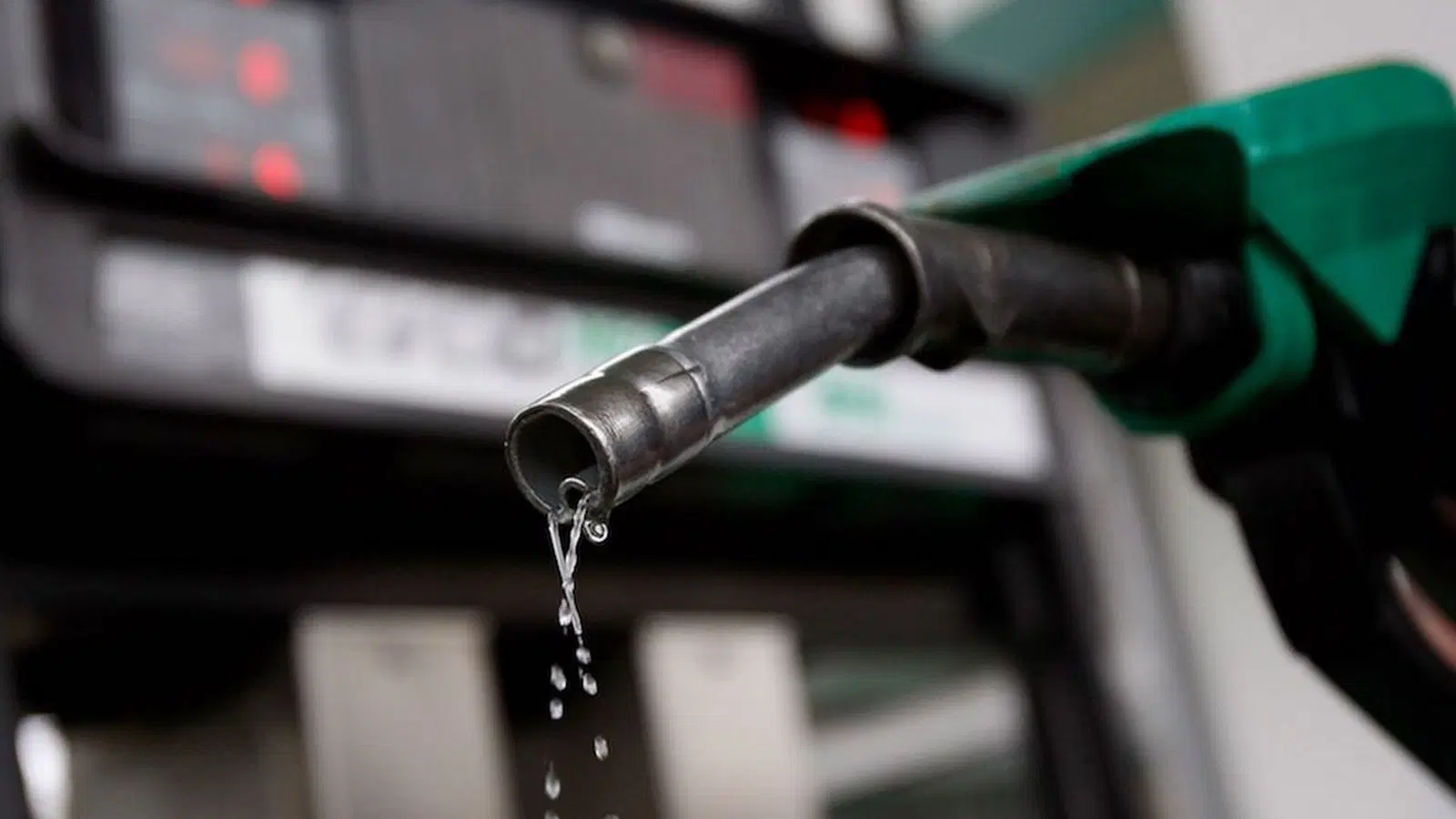
- Rising logistics costs threaten margins and purchasing power.
Nigeria’s latest petrol price increase is no longer simply a downstream petroleum-market development; it is becoming a broader cost shock with consequences for how people and businesses move, produce, distribute and consume. With petrol prices reaching about N1,470 per litre in some locations, manufacturers, SMEs, transport operators, farmers and households are confronting higher operating and living costs, while rising logistics expenses are feeding pressure into food and other consumer prices. For President Bola Ahmed Tinubu’s administration, which has rejected a return to the former petrol subsidy regime as fiscally unsustainable, the immediate challenge is how to contain the wider economic cost of higher fuel prices without reversing the fiscal gains associated with subsidy removal. Enam Obiosio examines how far the economy can absorb the latest energy-cost shock before it further erodes business margins and household purchasing power.
Petrol prices have risen to about N1,470 per litre in some locations, increasing transportation, logistics, production and operating costs across Nigeria. The increase, which also include cooking gas and diesel, is placing additional pressure on household, manufacturers and small and medium-sized enterprises, many of which depend on petroleum products for transportation and power generation. Higher transport costs are also raising the cost of moving agricultural produce from farms and rural communities to urban markets.
The development has reopened the policy debate over whether government should provide targeted interventions to cushion businesses and consumers or maintain a market-based system while reducing the cost of domestic refining. At the same time, global crude prices have remained elevated, with Brent and West Texas Intermediate recently falling from $108 and $105 per barrel to $105.60 and $102 respectively.
DECISION HIGHLIGHT
The immediate significance of the fuel-price increase is its transmission through the wider economy. Petrol is not simply a household expense; it is an input into transportation, production, distribution and food supply. Its higher cost therefore creates pressure well beyond the filling station.
DECISION MEMO
Nigeria’s latest petrol-price pressure exposes the extent to which energy costs remain embedded in the country’s economic structure.
The first transmission channel is transportation. Higher petrol prices raise the operating costs of vehicles moving people, raw materials and finished products. For businesses, that means the cost increase begins before production starts and continues through distribution. For households, higher transport costs reduce disposable income available for other consumption.
The second channel is production. Manufacturers and SMEs are particularly exposed because petroleum products are used for transportation and, in many cases, power generation. Gertrude Akhimien, Chairman of the Lagos chapter of the National Association of Small-Scale Industries, said that higher fuel prices were increasing transportation costs for raw materials and finished products, while workers were also spending more to commute.
“The overheads for warehousing, distribution, and logistics services are going up. There is also pressure on profitability, especially for low-margin or commodity-driven sectors,” she said.
This creates a difficult pricing decision for businesses. Absorbing higher costs compresses margins; transferring them to customers increases the prices of goods and services. Akhimien said that businesses would ultimately be forced to transfer additional costs to consumers.
The third channel is food. Agriculture is particularly vulnerable because produce must move from farms and rural communities to markets. Daniel Dickson-Okezie, an SME expert, captured the transmission mechanism directly: “Anything that affects transportation will affect goods and services, especially food items that have to be transported from farms to markets. That will ultimately drive inflation.”
This makes the petrol increase a broader cost-of-living issue. At N1,470 per litre, fuel expenditure becomes materially heavier for households and businesses that consume significant volumes. Imokhai Ehimigbai, a member of the Manufacturers Association of Nigeria Export Group, said: “When fuel prices increase, transport fares rise, food prices increase, and ordinary Nigerians face more hardship.” He added that “At the end of the day, the final consumer bears the cost.”
The paradox is that higher domestic refining capacity has not removed this exposure. Alhaji Aliko Dangote, President of Dangote Group, said that his refinery purchases crude at prevailing market prices and had paid as much as $124 per barrel in May. “We can’t go now and subsidise everything,” he said.
The implication is important. Domestic refining changes where petroleum products are produced, but the cost of the crude input remains a major determinant of the final product price.
This places government before a difficult policy trade-off. The federal government has rejected a return to the former subsidy regime as fiscally unsustainable. Mohammed Idris, Minister of Information and National Orientation, said that subsidy savings mobilised about N15.8 trillion for the Federation between June 2023 and December 2025.
Stakeholders in the supplied material are instead proposing interventions further upstream and within vulnerable parts of the economy. These include competitive crude supply to domestic refineries, targeted support for essential sectors, stronger fuel distribution systems, strategic reserves, improved electricity supply and tighter action against smuggling.
David Etim, Project Lead, Calabar and Gulf of Guinea Municipal and Trade Centre, proposed allocating about 450,000 barrels of crude oil per day to domestic refineries at controlled prices, while exporting the balance. He argued that such an arrangement could reduce domestic exposure to international crude-price volatility.
The underlying issue is therefore not simply whether petrol should become cheaper. It is whether Nigeria can reduce the cost transmitted from crude supply and refining into transport, production and food without recreating the fiscal burden of the former subsidy system.
DATA BOX
- Petrol price: about N1,470 per litre in some locations.
- Reported Abuja and environs range: N1,395-N1,450 per litre.
- Brent crude: $105.60, down from $108.
- WTI crude: $102, down from $105.
- Dangote refinery crude purchase: as high as $124 per barrel in May.
- Subsidy savings: about N15.8 trillion between June 2023 and December 2025.
- Proposed domestic crude allocation: about 450,000 barrels per day.
- Suggested crude economics from David Etim: approximately $35 production cost and about $50 domestic supply price including margin.
WHO WINS / WHO LOSES
The immediate burden falls on households, manufacturers, SMEs, farmers, traders, transport operators and logistics businesses. Low-margin enterprises are particularly exposed because their ability to absorb higher costs is limited.
Domestic refiners could benefit from stronger local demand, but their economics remain exposed to crude acquisition costs and global oil-market movements.
POLICY SIGNALS
The material points towards targeted intervention rather than a broad return to petrol subsidy. Priority areas include competitive crude supply for local refineries, fuel-storage and distribution infrastructure, anti-smuggling measures, strategic reserves and improved electricity supply.
INVESTOR SIGNAL
The fuel-price increase reinforces the importance of energy costs in assessing Nigerian businesses. Companies with high transport, logistics or generator dependence face greater margin pressure, while businesses with stronger pricing power or lower energy intensity may have greater capacity to absorb the shock.
RISK RADAR
The principal risk is a wider cost cascade. Higher petrol prices can raise transport costs, which increase logistics and food costs, while manufacturers and SMEs face higher operating expenses. Businesses may respond by raising prices, reducing margins or limiting activity.
The deeper risk is that persistent energy-cost pressure could weaken production, employment and household purchasing power simultaneously. As Imokhai Ehimigbai put it, “When fuel prices increase, transport fares rise, food prices increase, and ordinary Nigerians face more hardship.”
Enam Obiosio is a public relations and investor relations practitioner and journalist with experience in arts and business journalism, with expertise spanning financial markets, economic policy, infrastructure, corporate communications, and the creative economy.
Discover more from StakeBridge Media
Subscribe to get the latest posts sent to your email.