

We cannot treat the resurgence of call masking as another technical irregularity in Nigeria’s telecommunications industry. When a practice conceals the identity of callers, distorts legitimate industry revenues and undermines the integrity of telecommunications operations, it moves beyond a narrow regulatory breach into a question of economic and digital security. The Nigerian Communications Commission (NCC)’s Board has rightly described call masking as economic sabotage, and we believe the seriousness of that description demands equally serious enforcement. The forthcoming Telecommunications Identity Risk Management System, alongside the already-live Device Management System, provides an important regulatory infrastructure for tightening control over digital identities and devices. But technology alone will not resolve the problem. The real measure will be whether the NCC can translate these systems into sustained detection, enforcement and deterrence, working with security agencies and operators to close the channels through which abuse persists.
We must also place this issue within the larger question of trust in Nigeria’s digital economy. Mobile numbers are increasingly connected to financial, social and other digital services. Any weakness in the integrity of telecommunications identities therefore has implications beyond voice calls. The commission’s decision to deploy the Telecommunications Identity Risk Management System, with its associated business rules scheduled to go live next month, is consequently more than an administrative upgrade. It is an attempt to strengthen the identity architecture upon which a wider digital economy increasingly depends.
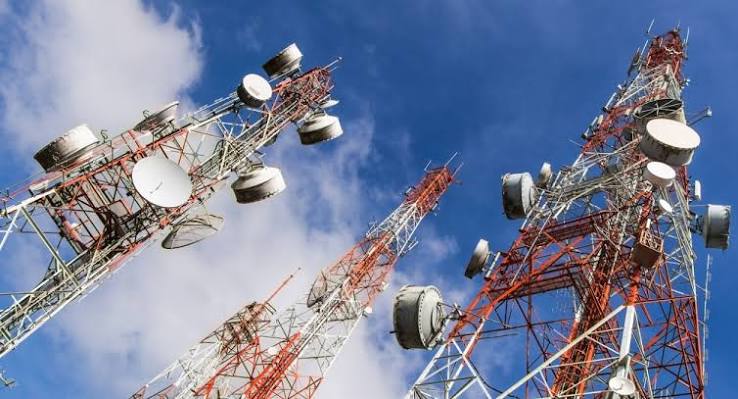
We should equally recognise that regulation cannot focus on identity security while allowing physical network infrastructure to remain vulnerable. The commission reported that 8,526 of 12,179 infrastructure commitments by Mobile Network Operators had been deployed, representing approximately 70 percent. Yet fibre cuts contributed to a sharp rise in network disruptions in June. This tells us that digital resilience requires both technological systems and protection of the physical infrastructure on which those systems depend.
There is also a broader regulatory lesson in the commission’s agenda. The proposed zero-rating of educational platforms, scheduled for nationwide go-live on October 1, 2026, places digital inclusion alongside security and market integrity. Meanwhile, the proposed repositioning of the Digital Bridge Institute points to the need for stronger institutional relevance and long-term sustainability.
We therefore see the NCC’s current agenda as a test of regulatory coherence. Call masking must be confronted decisively because telecom integrity cannot coexist with practices that compromise legitimate operations and revenue. Network infrastructure must be protected because connectivity without resilience is unreliable connectivity. Digital identity systems must be strengthened because digital expansion without trust creates new vulnerabilities.
Our position is straightforward: Nigeria’s telecommunications sector cannot become the infrastructure of a modern digital economy while leaving gaps that enable identity abuse, revenue distortion and network insecurity. The NCC has identified the problems. The next question is whether enforcement, infrastructure protection and regulatory technology can now move with the same urgency.
Discover more from StakeBridge Media
Subscribe to get the latest posts sent to your email.