

By Kingsley Ani
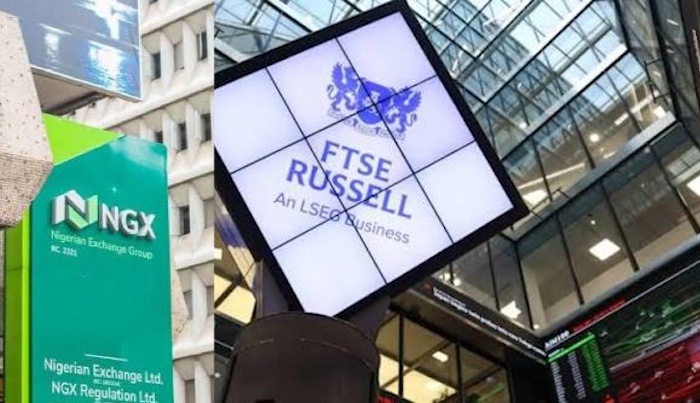
Nigeria’s official return to FTSE Russell’s Frontier Market indexes has triggered renewed foreign and institutional interest in Nigerian equities, with major banking stocks recording increased trading activity as benchmark-linked investors begin repositioning.
DEVELOPMENT
The reclassification marks a significant step in the recovery of Nigeria’s capital market after FTSE Russell moved the country to ‘Unclassified’ status in September 2023 because of severe foreign-exchange illiquidity, trapped capital and substantial FX backlogs that restricted foreign investors’ ability to repatriate funds.
Following reforms by the Central Bank of Nigeria to clear verified FX backlogs, improve naira stability and strengthen market infrastructure, including Nigeria’s migration to a T+1 settlement cycle in June, FTSE Russell confirmed that the market had met all five quality-of-markets criteria.
The re-entry has initially concentrated demand on Zenith Bank Plc, Guaranty Trust Holding Company Plc and FirstHoldCo Plc, reflecting selective portfolio rebalancing by international investors.
DATA
Eligible Federal Government of Nigeria bonds are offering yields of around 17.10 percent, adding a potentially attractive carry component for foreign investors entering the domestic market.
Nigeria is also gaining representation across both fixed-income and equity benchmarks as FTSE Russell includes Nigerian equities in its Frontier Index.
SIGNIFICANCE
The return to the FTSE Russell Frontier Market universe could broaden Nigeria’s foreign investor base, increase secondary-market liquidity and strengthen the connection between domestic securities and international benchmark funds.
An analyst at Meristem Securities Limited said: “We expect the inclusion to increase foreign demand for naira-denominated government securities as benchmarked investors begin to allocate to Nigerian bonds. This should deepen the investor base, improve secondary-market liquidity and, if inflows are sustained, support lower bond yields.”
The analyst added that stronger inflows “could also improve FX liquidity through increased foreign inflows”, while cautioning that greater foreign participation could increase sensitivity to global risk sentiment and exchange-rate movements.
Coronation research analysts said: “We expect the positive sentiment to persist in the near term, supported by potential passive fund inflows following Nigeria’s reclassification to frontier market status by FTSE Russell,” adding that the move “could drive additional demand from funds tracking relevant FTSE Russell indices”.
NEXT MOVE
The immediate focus will be on the scale and persistence of foreign portfolio flows, the performance of leading banking stocks, bond-market liquidity and whether increased capital inflows translate into improved FX liquidity.
OUR LENS
Group Managing Director and Chief Executive Officer of NGX Group, Mr. Temi Popoola, described the re-entry as “an important recognition of the progress made in our capital market and the strengthening of the infrastructure that supports it.”
He stressed that “Reclassification, however, is not the destination; it is a gateway,” adding that Nigeria must convert renewed international attention into “meaningful, long-term investment”.
Popoola said that the timing was significant because major Nigerian businesses are showing renewed interest in the capital market as a means of mobilising capital and broadening ownership.
“At NGX Group, we remain focused on strengthening the connections between Nigerian enterprise and capital, at home, across Africa and around the world,” he said.
The deeper issue is therefore not simply Nigeria’s return to an index. It is whether improved market infrastructure, FX accessibility, liquidity and corporate participation can turn renewed benchmark visibility into sustained capital formation.
Kingsley Ani is a journalist who has over the years been covering capital markets, corporate results, economic and public-interest developments with a focus on clear, factual reporting.
Discover more from StakeBridge Media
Subscribe to get the latest posts sent to your email.