

By Hannah Yemisi
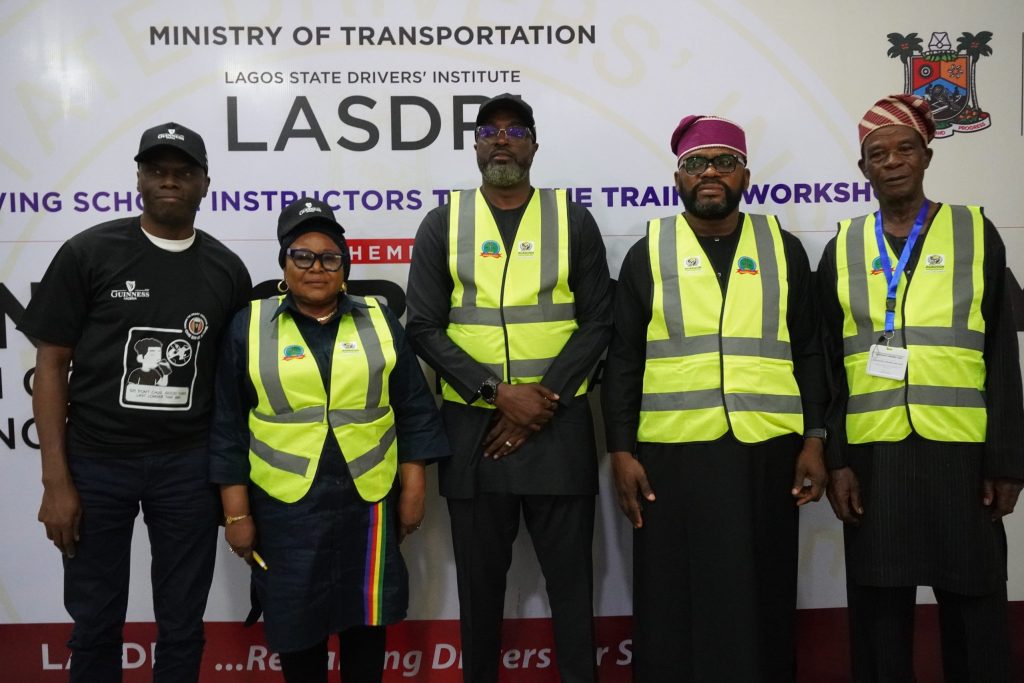
Guinness Nigeria Plc recently partnered with the Lagos State Drivers’ Institute (LASDRI) at its 2026 Annual Train-the-Trainer Programme for driving school proprietors and instructors at Eko FM Multipurpose Hall, Agidingbi, Lagos. The partnership seeks to embed responsible drinking and safer-driving practices into driver education, using instructors as the transmission channel for behavioural change.
DECISION HIGHLIGHT
The intervention shifts road-safety advocacy upstream, from motorists already on the road to the institutions that shape driving behaviour before licensing. For Guinness Nigeria, it also places responsible-drinking messaging within a professional training system rather than relying solely on consumer-facing campaigns.
DECISION MEMO
The strategic value of the Guinness-LASDRI partnership lies in its behavioural architecture. Driving schools influence motorists at the point when attitudes towards risk, defensive driving and compliance are being established. Integrating responsible-drinking education into that process therefore creates a longer-term pathway for the message that “If you drive, don’t drink.”
Lagos State Commissioner for Transportation, Honourable Oluwaseun Osiyemi, identified instructors as critical moulders of road-safety culture and called for stronger certification, standardised training, rigorous testing and continuous professional development. “The war for road safety is not a luxury; it is a moral imperative,” he said.
The position is significant because road safety extends beyond possession of a driving licence. Continuous training addresses changes in traffic regulations, vehicle technology, hazard awareness and defensive driving, while creating an institutional mechanism for reinforcing responsible choices.
LASDRI General Manager, Afusat Abike Tiamiyu, similarly stressed refresher training and professional standards, including ensuring that certificates are issued only to individuals who complete the required training.
For Guinness Nigeria Corporate Relations and Legal Director, Rotimi Odusola, the partnership connects corporate responsibility with a defined behavioural intervention. “At Guinness Nigeria, we believe responsible drinking is not just about how our products are consumed, but also about making choices that protect people and communities.” He added that the partnership could influence “safer choices among current and future drivers”, ending with the company’s central message: “If you drive, don’t drink.”
The economic implication is indirect but material. Safer roads can reduce accident-related losses, productivity disruptions, vehicle damage and pressure on emergency and healthcare systems. For Guinness Nigeria, credible responsible-drinking programmes can also strengthen social licence and stakeholder confidence, particularly in a market where alcohol-related road safety remains a reputational issue.
DATA BOX
- Programme: 2026 Annual Train-the-Trainer Programme
- Partners: Guinness Nigeria Plc and LASDRI
- Primary audience: Driving school proprietors and instructors
- Location: Lagos State
- Training focus: Defensive driving, hazard awareness, regulations, vehicle technology and responsible driving
- Core message: “If you drive, don’t drink”
- Next policy context: Lagos State’s annual Ember Months road-safety campaign
WHO WINS / WHO LOSES
Who wins: Road users, driving schools, Lagos State transport authorities and Guinness Nigeria, if the training translates into measurable behavioural change and stronger public trust.
Who loses: The greatest potential loss is borne by road users and the wider economy if training remains compliance-driven without sustained enforcement, assessment and behavioural measurement.
POLICY SIGNALS
Road safety policy is moving towards continuous professional development rather than licence acquisition alone. The stronger policy opportunity is to link instructor certification, periodic testing, enforcement data and measurable safety outcomes into one system.
INVESTOR SIGNAL
For Guinness Nigeria, the partnership demonstrates how corporate responsibility can be integrated with stakeholder management and brand-risk mitigation. Its investment value will ultimately depend less on visibility than on measurable outcomes, including training reach, behavioural adoption and road-safety impact.
RISK RADAR
The principal risk is implementation dilution. Training programmes can produce limited impact if instructors are inadequately monitored, certificates are weakly controlled or responsible-driving messages are not reinforced through enforcement. The partnership therefore requires outcome measurement, not merely participation records, to establish durable road-safety value.
Discover more from StakeBridge Media
Subscribe to get the latest posts sent to your email.