

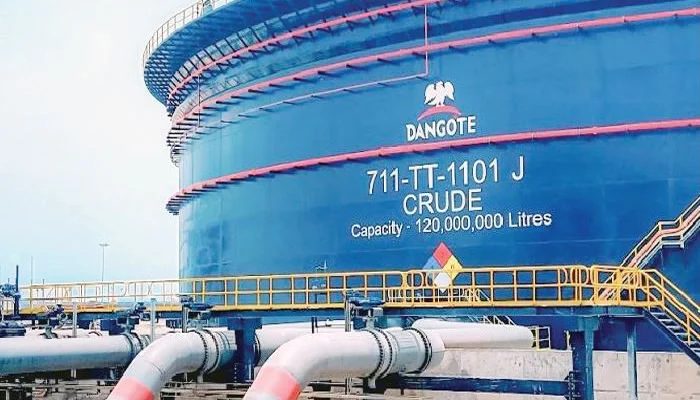
Engineers India Limited (EIL) has signed a $350 million contract with the Dangote Group to expand the Dangote Refinery from 650,000 barrels per day to 1.4 million barrels per day. The expansion, known as Train 2, will also raise polypropylene production from 830 kilotonnes to 2.4 million metric tonnes per year and produce Euro VI-grade fuels. Dangote Group President, Alhaji Aliko Dangote, and Managing Director, David Bird, project completion within three years, positioning the refinery as the world’s largest single-location facility and strengthening Nigeria’s role as a regional hub for refined petroleum products and petrochemicals.
DECISION HIGHLIGHT
Decision Context:
Large refinery expansion projects globally are frequently delayed and over budget, often due to redesigns, extended engineering phases, and equipment procurement bottlenecks.
Strategic Choice:
Engage Engineers India Limited as Project Management Consultant (PMC) and Engineering, Procurement, and Construction Management (EPCM) consultant, replicating the proven 650,000bpd refinery design rather than starting a new engineering cycle.
Execution Model:
Revamp the existing polypropylene unit, install a 1.2 MMTPA PPU, and add a 750 kTPA UOP Oleflex unit, while running equipment procurement and civil works in parallel to accelerate the schedule.
Strategic Objective:
Deliver rapid capacity expansion while controlling execution risk, minimizing cost overruns, and strengthening Nigeria’s domestic refining and petrochemical capabilities.
DECISION MEMO
The Dangote Refinery expansion reflects a deliberate strategy of replication over reinvention. By duplicating the operational 650,000bpd configuration, the project avoids the lengthy redesign processes that typically extend timelines for large-scale refinery projects.
Early procurement of long-lead equipment, combined with simultaneous civil works, addresses common sources of delay. Pre-prepared land and infrastructure further reduce technical and schedule risks. Once complete, the 1.4 million bpd facility will bolster Nigeria’s domestic fuel supply, reduce reliance on imports, and enable regional exports, positioning the country as a net energy hub in West and Central Africa.
EIL’s repeat engagement, after serving as PMC and EPCM consultant for the original refinery, underscores confidence in its technical capabilities and project delivery. The expansion also significantly increases polypropylene output, supporting Nigeria’s industrial growth and advancing the country’s goal of becoming a regional petrochemical leader.
DATA BOX
• Current capacity: 650,000 barrels per day
• Proposed expanded capacity: 1.4 million barrels per day
• Expansion timeline: 3 years
• Project location: Lekki Free Trade Zone, Lagos
• Contract value (EIL): $350 million
• Execution approach: Design replication, parallel procurement, and construction
WHO WINS / WHO LOSES
Who Wins:
• Nigeria, through reduced fuel imports and stronger FX conservation
• West and Central African markets, accessing regional refined fuel supply
• Dangote Group, through scale-driven competitiveness
Who Loses:
• Fuel import-dependent supply chains
• Smaller refineries unable to match speed or scale
POLICY SIGNALS
The expansion reinforces Nigeria’s industrial policy focus on domestic refining, energy security, and value retention within the downstream petroleum sector.
INVESTOR SIGNAL
Replication-led expansion reduces execution risk compared with greenfield builds, signaling disciplined capital deployment based on proven assets.
RISK RADAR
• Global refining margin volatility affecting returns
• Procurement bottlenecks for specialised equipment
• Regulatory and logistics pressures as output scales
• Regional demand fluctuations impacting export absorption
Dangote Refinery’s Train 2 expansion is more than a corporate growth project. It demonstrates that speed, certainty, and regional energy leadership can be achieved when expansion builds on proven systems, positioning Nigeria as a decisive player in Africa’s fuel and petrochemical landscape.
Discover more from StakeBridge Media
Subscribe to get the latest posts sent to your email.