

By Olumide Johnson
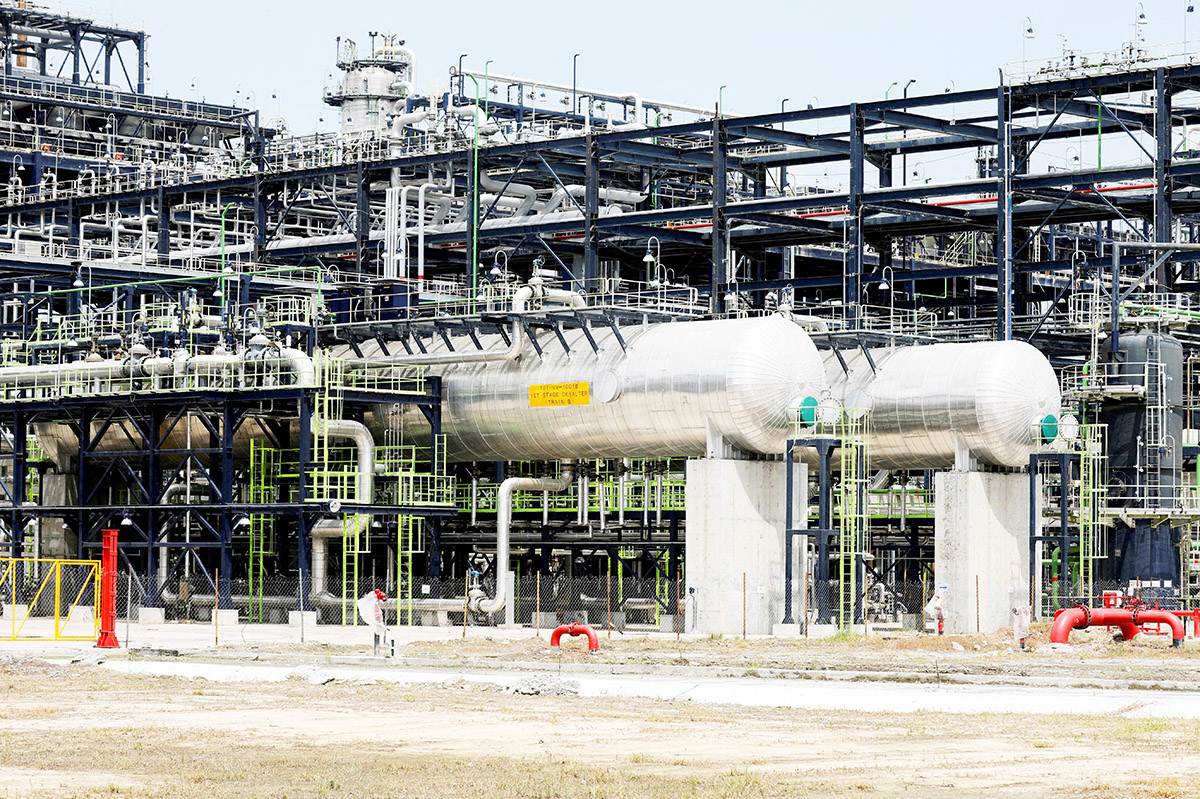
President and Chief Executive of Dangote Industries Limited, Alhaji Aliko Dangote, hosted Chairman of First HoldCo Group, Olufemi Otedola, alongside senior executives, at the Dangote Petroleum Refinery and Petrochemicals on Wednesday, 20 May 2026, as strategic engagement around Africa-led industrialisation and long-term infrastructure financing continued to intensify.
The engagement followed recent visits by representatives of South Africa’s Government Employees Pension Fund (GEPF), the Public Investment Corporation (PIC) and Alterra Capital Partners to the Dangote Petroleum Refinery and Petrochemicals as well as Dangote Fertiliser Limited, reflecting rising institutional interest in energy security, refining capacity, industrial production and regional economic resilience.
The refinery, one of Africa’s largest industrial infrastructure projects, is also approaching a planned initial public offering (IPO), with increasing institutional attention focused on its role within regional energy supply, import substitution and industrial integration.
Separately, President of the United Republic of Tanzania, Samia Suluhu Hassan, also engaged Dangote in high-level discussions on industrialisation, refining infrastructure, regional energy systems and long-term economic development across Africa.
Dangote Group stated that it remained committed to strengthening Africa’s industrial growth through large-scale infrastructure investment and production capacity.
DECISION HIGHLIGHT
The engagements reflect stronger alignment between African industrial capital, institutional finance and government leadership around infrastructure-led economic transformation.
The Dangote Refinery is also increasingly emerging not merely as a private-sector energy project but as a continental industrial asset attracting sovereign, pension-fund and strategic investment attention.
The growing institutional engagement further signals that African capital pools are gradually becoming more willing to finance large-scale productive infrastructure within the continent rather than relying predominantly on offshore allocation strategies.
DECISION MEMO
The significance of the Dangote Refinery increasingly extends beyond petroleum refining into broader questions surrounding Africa’s industrial sovereignty and capital formation capacity.
For decades, African economies remained structurally dependent on imported refined petroleum products despite abundant crude oil reserves, exposing the continent to foreign exchange pressure, energy insecurity and external supply disruptions. The refinery therefore represents an attempt to reverse a longstanding structural imbalance through domestic industrial-scale processing capacity.
The rising involvement of pension funds, investment corporations and regional institutional investors also reflects a wider shift within African finance towards productive asset allocation linked to infrastructure, manufacturing and energy security.
Otedola’s engagement alongside interest from South African institutional investors demonstrates increasing convergence between industrial operators and African financial institutions around long-duration infrastructure financing.
The refinery’s planned IPO further introduces a broader capital-market dimension capable of testing investor appetite for large-scale African industrial assets within regional and international markets.
The wider strategic implication is that Africa’s industrialisation debate is increasingly shifting from policy aspiration towards questions of execution scale, domestic capital mobilisation and regional production integration.
However, sustaining long-term industrial competitiveness will depend on operational efficiency, feedstock security, logistics integration, regulatory consistency and the ability to maintain commercially viable refining economics within volatile global energy markets.
DATA BOX
- Key institution:
- Dangote Industries Limited
- Major project:
- Dangote Petroleum Refinery and Petrochemicals
- Key executive:
- Aliko Dangote, President and Chief Executive, Dangote Industries Limited
- Financial sector participant:
- Olufemi Otedola, Chairman, First HoldCo Group
- International institutional participants:
- Government Employees Pension Fund (GEPF)
- Public Investment Corporation (PIC)
- Alterra Capital Partners
- Government participant:
- Samia Suluhu Hassan, President, United Republic of Tanzania
- Strategic themes highlighted:
- industrialisation
- refining capacity
- infrastructure investment
- energy security
- regional economic resilience
- domestic production
- Emerging capital event:
- forthcoming initial public offering (IPO)
- Core sectors affected:
- petroleum refining
- fertiliser production
- energy infrastructure
- industrial manufacturing
- logistics and supply chains
WHO WINS / WHO LOSES
Who Wins:
- African institutional investors seeking infrastructure exposure
- Regional manufacturing and industrial supply chains
- Energy-dependent economies pursuing import substitution
- Pension funds allocating towards productive assets
- Governments prioritising industrial self-sufficiency
Who Loses:
- Import-dependent refined petroleum supply chains
- Foreign refiners supplying African markets
- Economies lacking large-scale industrial infrastructure
- Traders benefiting from fuel import inefficiencies
- Weak domestic manufacturing ecosystems unable to integrate into industrial supply chains
POLICY SIGNALS
African governments and institutional investors are increasingly prioritising infrastructure-backed industrialisation as a core economic strategy.
The refinery’s growing strategic relevance also signals stronger continental interest in domestic production capacity, energy security and regional value-chain integration.
The participation of pension and sovereign-linked institutions further suggests broader policy support for long-term infrastructure financing within African capital markets.
INVESTOR SIGNAL
The Dangote Refinery’s planned IPO may become a major test case for investor appetite towards large-scale African industrial infrastructure assets.
Rising institutional engagement additionally indicates growing interest across:
- refining,
- petrochemicals,
- fertiliser production,
- logistics infrastructure,
- industrial manufacturing,
- regional energy systems.
The convergence between industrial operators and African institutional capital may strengthen long-term infrastructure financing ecosystems if execution performance remains commercially sustainable.
RISK RADAR
Execution sustainability and operational efficiency remain central risks confronting large-scale industrial infrastructure projects across Africa.
Key vulnerabilities include:
- crude supply security,
- foreign exchange volatility,
- regulatory uncertainty,
- logistics bottlenecks,
- global energy price fluctuations,
- debt-servicing pressure,
- infrastructure maintenance costs,
- policy inconsistency.
The refinery’s long-term competitiveness will also depend on maintaining pricing efficiency against imported products within changing global refining and energy-transition dynamics.
Discover more from StakeBridge Media
Subscribe to get the latest posts sent to your email.