

By Jennete Ugo Anya
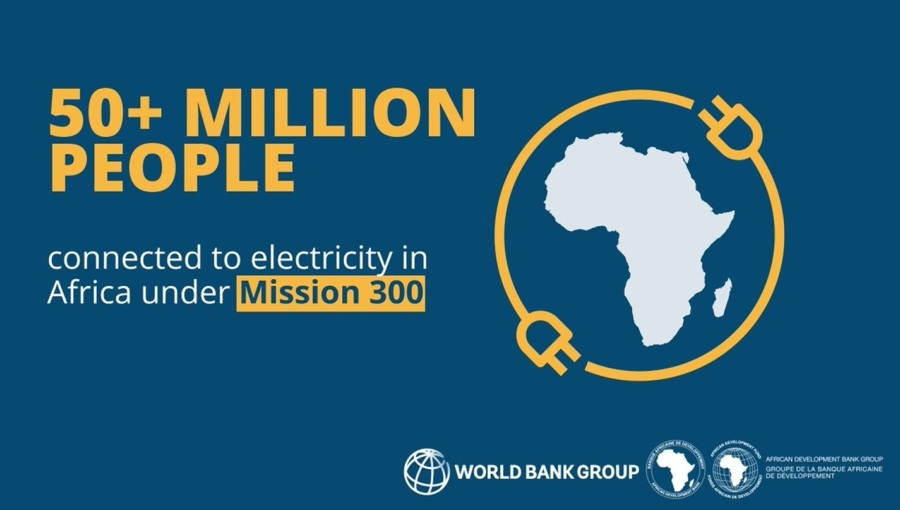
The World Bank Group and the African Development Bank (AfDB) recently announced that Mission 300, launched in 2024 and supported by development finance institutions, philanthropic partners and private investors, has connected more than 50 million Africans to electricity across 40 countries, including 4.5 million Nigerians. The milestone was disclosed recently as the initiative advances towards its target of providing electricity access to 300 million people by 2030. The programme combines investments across generation, transmission and last-mile distribution, while leveraging policy reforms, concessional financing, guarantees and private capital to accelerate both on-grid and off-grid connections.
DECISION HIGHLIGHT
Mission 300 is evolving from a development financing programme into a continental energy market platform, using coordinated reforms, blended finance and private sector participation to compress electrification timelines and improve investment viability across underserved markets.
DECISION MEMO
The significance of Mission 300 lies less in the 50 million connections achieved and more in the institutional architecture being created to sustain future energy access growth.
Historically, African electrification initiatives have suffered from fragmented financing, isolated policy interventions and weak coordination among governments, development institutions and investors. Mission 300 attempts to address these structural constraints through a unified framework that aligns capital deployment, regulatory reform and implementation.
Nigeria’s 4.5 million new connections through private sector-led initiatives illustrate the programme’s underlying thesis: public finance is being deployed not as a substitute for private investment but as a risk-mitigation tool capable of opening commercially viable electricity markets. Similar outcomes in Tanzania and Ethiopia suggest that policy reforms and financing support can materially improve electrification rates when implemented simultaneously.
Ajay Banga, President of the World Bank Group, captured this broader development objective, stating: “Mission 300 is helping countries move faster, connect more people, and build a platform that will last well beyond this effort.” His observation highlights a shift from project-based intervention towards long-term market creation.
Sidi Ould Tah, President of the AfDB, linked electrification directly to productivity and social outcomes, noting that faster access can enhance food security, healthcare delivery and economic empowerment. Rajiv Shah, President of The Rockefeller Foundation, described the results as evidence that African-led investment partnerships can deliver infrastructure outcomes at scale.
The emerging policy pattern suggests that electrification is increasingly being treated as an economic competitiveness agenda rather than solely a social development objective. If sustained, this approach could improve industrial productivity, digital inclusion and job creation across participating economies.
DATA BOX
- Africans connected under Mission 300: 50 million+
- Countries reached: 40
- Nigerians connected: 4.5 million
- Tanzania beneficiaries: 7.5 million
- Ethiopia beneficiaries: 4.6 million
- Target by 2030: 300 million people
- World Bank Group and AfDB financing committed: Nearly $15 billion
- Co-financing mobilised: About $4.5 billion
- Additional partner commitments: More than $7 billion
- Countries with National Energy Compacts launched: 30
- Mission launch year: 2024
WHO WINS / WHO LOSES
Winners
- Households and businesses gaining electricity access.
- Private energy developers benefiting from reduced investment risk.
- Governments implementing energy sector reforms.
- Renewable energy and off-grid solution providers.
- Development finance institutions seeking scalable impact.
Losers
- Communities remaining outside reform and investment corridors.
- Energy markets with weak regulatory implementation.
- Economies where grid expansion continues to lag demand growth.
POLICY SIGNALS
- Blended finance is becoming the preferred model for African infrastructure delivery.
- National Energy Compacts are emerging as the primary framework for electricity sector reform.
- Governments are increasingly linking electrification targets to economic growth objectives.
- Development partners are prioritising private capital mobilisation over direct public funding alone.
INVESTOR SIGNAL
Mission 300 strengthens the investment case for African power infrastructure, distributed energy systems, mini-grids, transmission assets and renewable energy projects. The combination of concessional finance, guarantees and regulatory reforms lowers entry barriers and improves project bankability, particularly in underserved markets such as Nigeria.
RISK RADAR
- Reform momentum could weaken with political transitions.
- Grid reliability may not improve at the same pace as new connections.
- Currency volatility could affect project economics and investor returns.
- Financing commitments must continue scaling significantly to meet the 300 million target.
- Implementation capacity varies widely across participating countries, creating uneven execution risk.
Discover more from StakeBridge Media
Subscribe to get the latest posts sent to your email.