

By Ayo Susan
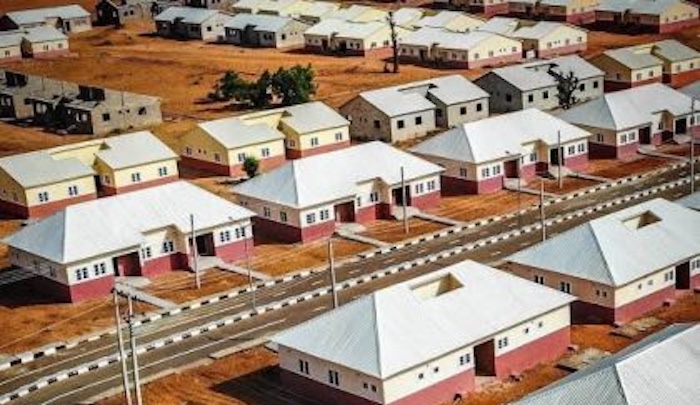
President Bola Ahmed Tinubu recently disclosed that more than 15,000 housing units are currently under construction nationwide under the Renewed Hope Housing Programme, part of a broader target to deliver 100,000 homes across Nigeria. The programme includes housing cities of 1,000 units in each geopolitical zone and the Federal Capital Territory (FCT), alongside estates of up to 500 units in other states. Major projects include over 3,000 units at Karsana, Abuja, and a 2,000-unit housing city in Ibeju-Lekki, Lagos. The initiative is supported by land administration reforms, housing finance interventions, equipment leasing support, building materials hubs and mortgage financing through the MOFI Real Estate Investment Fund (MREIF).
DECISION HIGHLIGHT
The administration is attempting to reposition housing from a social welfare programme into a multi-sector economic development strategy.
DECISION MEMO
The significance of the Renewed Hope Housing Programme lies not only in the number of homes being constructed but in the policy architecture being built around housing delivery.
Historically, housing programmes in Nigeria have struggled because construction was pursued without corresponding reforms in land administration, housing finance and building material supply chains. The current approach suggests an effort to address multiple constraints simultaneously.
President Tinubu framed the programme as a nationwide intervention rather than a collection of isolated projects, stating: “We promised a programme built on a national scale, 100,000 homes in all.” His assertion that “more than 15,000 units are rising as I write this” indicates that implementation has moved beyond planning into active construction.
The inclusion of land titling reforms, undertaken in collaboration with the World Bank, is particularly significant. Access to secure land titles remains one of the largest structural barriers to housing finance and property market development in Nigeria. Improving land registration could potentially unlock broader housing market activity beyond government-led construction.
The financing framework is equally important. Tinubu noted that 1,859 families across 25 states have accessed N128 billion in mortgages through the MOFI Real Estate Investment Fund at 9.75 percent interest over 20 years. This suggests that government policy is increasingly focused on housing affordability through financing mechanisms rather than direct construction alone.
The programme also reflects a segmented market strategy. Former Minister of Housing and Urban Development, Ahmed Musa Dangiwa, explained that government-subsidised estates target lower-income households while public-private partnership housing cities are designed for middle- and upper-income buyers. This approach attempts to align delivery models with different income segments rather than applying a uniform housing solution.
However, the scale challenge remains substantial. Dangiwa estimated that Nigeria requires approximately 550,000 housing units annually over the next decade, requiring N5.5 trillion in yearly investment. Against that backdrop, the current programme represents meaningful progress but also illustrates the magnitude of the housing deficit still to be addressed.
The broader implication is that housing policy is increasingly being deployed as an economic stimulus tool, with expected impacts extending beyond shelter provision into employment creation, industrial demand, financial sector growth and urban development.
DATA BOX
| Indicator | Status |
| National housing target | 100,000 units |
| First-phase target | 50,000 units |
| Housing units under construction | Over 15,000 |
| Karsana, Abuja project | Over 3,000 units |
| Ibeju-Lekki, Lagos project | 2,000 units |
| MOFI mortgage beneficiaries | 1,859 families |
| Mortgage value disbursed | N128bn |
| Mortgage interest rate | 9.75% |
| Mortgage tenor | 20 years |
| Annual housing requirement | 550,000 units |
| Annual investment requirement | N5.5tn |
| Family Homes Funds target | 500,000 homes |
| Projected jobs from Family Homes Funds | 1.5 million |
WHO WINS / WHO LOSES
Wins
- Prospective homeowners accessing subsidised housing.
- Construction and building materials industries.
- Mortgage and housing finance institutions.
- Communities benefiting from housing-related infrastructure.
- Employment-intensive sectors linked to construction.
Loses
- Informal housing markets lacking access to structured finance.
- Households still unable to meet affordability thresholds.
- Regions where housing demand continues to outpace supply.
POLICY SIGNALS
- Housing is being positioned as a growth sector rather than a welfare programme.
- Land administration reform is becoming a housing policy priority.
- Public-private partnerships remain central to large-scale housing delivery.
- Mortgage accessibility is receiving increased policy attention.
- Government is pursuing a national rather than city-specific housing strategy.
INVESTOR SIGNAL
The programme strengthens opportunities across real estate development, mortgage finance, building materials manufacturing, construction services and infrastructure delivery. The combination of housing finance reforms and large-scale construction targets suggests a broader attempt to deepen Nigeria’s formal housing market. However, long-term viability will depend on affordability, mortgage uptake and sustained private-sector participation.
RISK RADAR
- Large gap between housing demand and supply.
- Affordability constraints despite subsidised financing.
- Delays in land titling reforms.
- Funding and execution risks across multiple project sites.
- Inflationary pressures on construction costs.
- Dependence on sustained public-private sector collaboration.
- Risk that housing delivery targets lag population growth and urbanisation trends.
Discover more from StakeBridge Media
Subscribe to get the latest posts sent to your email.