

By Ovio Peters
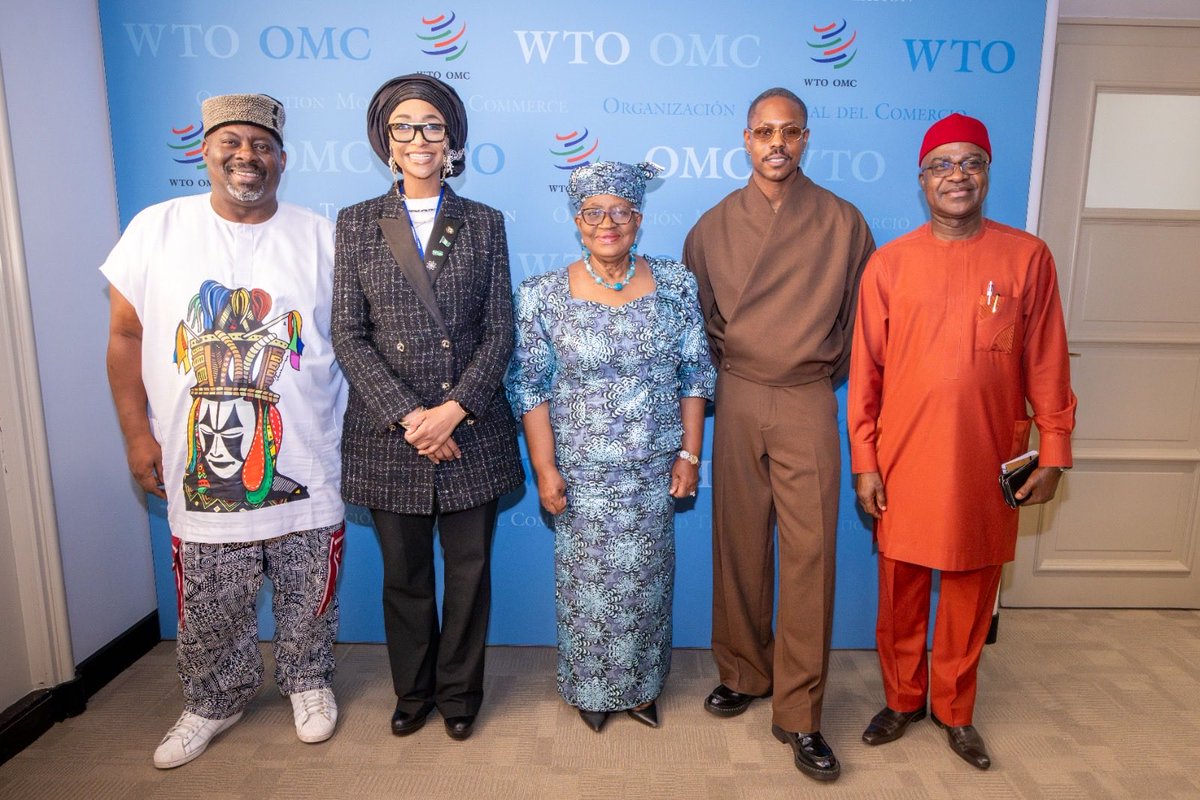
The Director-General (DG) of the World Trade Organization (WTO), Dr. Ngozi Okonjo-Iweala, recently met in Geneva with Minister of Art, Culture, Tourism and the Creative Economy, Hannatu Musa Musawa, alongside Chargé d’Affaires a.i. at Nigeria’s Permanent Mission to the United Nations and other International Organisations, Ambassador Innocent Iwejuo, Director-General (DG) of the National Council for Arts and Culture (NCAC), Obi Asika, Special Assistant to the President on Creativity, Baba Agba, and recording artist LadiPoe. Following the engagement, Okonjo-Iweala commended the performance of Nigeria’s creative industry, describing it as a significant contributor to economic growth, employment and income generation, particularly for young Nigerians.
DECISION HIGHLIGHT
The meeting elevates Nigeria’s creative economy within global economic policy discussions, reinforcing its positioning as a legitimate trade, employment and growth sector rather than solely a cultural industry.
DECISION MEMO
Okonjo-Iweala’s remarks represent more than diplomatic encouragement. As head of the WTO, her recognition places Nigeria’s creative economy within the broader context of international trade, services exports and economic diversification.
The composition of the delegation also reflects an increasingly coordinated policy architecture linking government, diplomacy, culture and the private creative sector. That alignment suggests a deliberate effort to present the creative economy as an integrated economic asset capable of attracting investment, expanding exports and creating employment.
Okonjo-Iweala stated: “A very joyful meeting with the Minister of Art, Culture, Tourism and the Creative Economy of Nigeria… So proud of what Nigeria’s creative industry is doing, including its significant contribution to economic growth, jobs, and incomes, particularly for our young people.”
Her emphasis on growth, jobs and incomes frames the sector in measurable economic terms rather than cultural symbolism, reinforcing its relevance to Nigeria’s broader diversification agenda.
DATA BOX
- Institution: World Trade Organization
- Location: Geneva, Switzerland
- Nigerian delegation led by: Hannatu Musa Musawa, Minister of Art, Culture, Tourism and the Creative Economy
- Other participants: Ambassador Innocent Iwejuo, Obi Asika, Baba Agba and LadiPoe
- Principal themes: Creative economy, employment, youth inclusion, economic growth and income generation
- WTO assessment: Nigeria’s creative industry is making a significant contribution to growth, jobs and incomes
WHO WINS / WHO LOSES
Winners
- Nigeria’s creative industry through enhanced international visibility.
- Young creatives through stronger policy recognition of the sector’s employment potential.
- Government agencies promoting the creative economy as an economic growth pillar.
- Potential investors seeking globally recognised growth sectors.
Losers
- Sectors that continue to underestimate the commercial value of the creative economy.
POLICY SIGNALS
The engagement reinforces the federal government’s strategy of positioning the creative economy as a productive export sector capable of supporting economic diversification, employment creation and international competitiveness.
INVESTOR SIGNAL
Recognition by the WTO’s leadership strengthens the international credibility of Nigeria’s creative economy narrative. While not a policy commitment, such endorsement may improve investor perception of the sector, particularly as government continues expanding institutional support and commercial frameworks.
RISK RADAR
International recognition alone does not resolve structural constraints. Sustained growth will depend on improved access to finance, stronger intellectual property protection, export competitiveness, infrastructure, skills development and effective implementation of creative economy policies.
Discover more from StakeBridge Media
Subscribe to get the latest posts sent to your email.