

By Ovio Peters
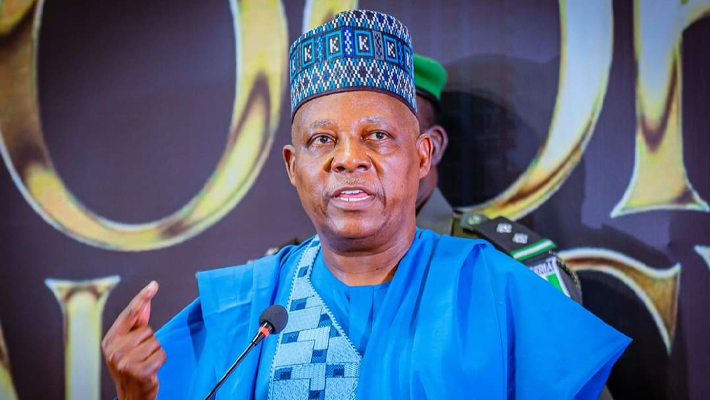
Vice President Kashim Shettima, alongside senior officials of the Federal Government of Nigeria and Director-General (DG) of the World Intellectual Property Organization (WIPO), Daren Tang, recently agreed in Abuja to deepen cooperation aimed at commercialising intellectual property, strengthening innovation ecosystems and expanding Nigeria’s creative economy. The engagement follows Federal Executive Council (FEC) approval of the National Intellectual Property Policy and Strategy (NIPPS) in November 2025 and coincides with WIPO’s decision to establish its first Sub-Saharan African office in Abuja. The partnership seeks to transform intellectual assets into commercial value through stronger legal frameworks, institutional support, technology transfer and capacity development.
DECISION HIGHLIGHT
Nigeria is repositioning intellectual property from a legal protection framework into an economic development instrument designed to attract investment, commercialise innovation and create jobs.
DECISION MEMO
The strategic significance of the partnership lies in the recognition that economic value creation is increasingly shifting from physical assets to intellectual assets. Nigeria’s policy direction suggests an attempt to integrate innovation, research, technology, culture and entrepreneurship into a single economic framework.
The opening of a WIPO office in Abuja carries symbolic and practical significance. Symbolically, it elevates Nigeria’s status within Africa’s intellectual property ecosystem. Practically, it provides closer access to technical expertise, institutional support and global intellectual property networks.
The NIPPS provides the policy architecture, but the larger challenge remains commercial execution. The emphasis on converting university research, creative output and technological innovation into investable assets indicates a deliberate effort to bridge the long-standing gap between innovation and market value.
The initiative also reflects a broader policy shift towards knowledge-based growth, where intellectual property is increasingly viewed as a driver of competitiveness, exports, investment attraction and industrial development.
Shettima said: “We are building an economy where investors will feel satisfied that innovation is protected, disputes are resolved with confidence, and intellectual assets can be converted into wealth. The countries that will lead this century are those able to create, protect, commercialise, and scale intellectual assets.”
Tang said: “Nigerian entrepreneurs, innovators, and creators are shaping the world and serving as role models in the IP revolution across the continent.”
Lateef Fagbemi, Attorney-General of the Federation, also said: “Stronger collaboration will enhance technology transfer and position Nigeria as a leading intellectual property hub in Africa.
DATA BOX
- National policy framework:
- National Intellectual Property Policy and Strategy (NIPPS)
- Federal Executive Council approval:
- November 2025
- WIPO office status:
- First in Sub-Saharan Africa
- One of seven worldwide
- Nigerian startups highlighted:
- More than 3,000
- Nigerian unicorns highlighted:
- Seven
- Strategic focus areas:
- Intellectual property commercialisation
- Technology transfer
- Creative economy expansion
- Research commercialisation
- Innovation ecosystem development
WHO WINS / WHO LOSES
Winners: Startups, researchers, universities, creators, technology firms, investors, creative industries and innovation-driven businesses seeking stronger intellectual property protection and commercialisation pathways.
Losers: Informal operators dependent on weak intellectual property enforcement and businesses benefiting from unprotected innovation ecosystems.
POLICY SIGNALS
- Intellectual property is being integrated into national economic strategy.
- Innovation is increasingly viewed as an investment asset class.
- Government is strengthening institutional support for knowledge-based industries.
- Creative economy development is becoming a formal growth policy priority.
- Nigeria seeks greater influence within Africa’s innovation ecosystem.
INVESTOR SIGNAL
The initiative strengthens the long-term investment case for technology, research commercialisation, creative industries, digital innovation and intellectual-property-backed enterprises. Stronger protection frameworks could improve investor confidence, facilitate technology transfer and support the emergence of intellectual property as a bankable asset category.
RISK RADAR
- Slow implementation of intellectual property reforms
- Weak enforcement capacity
- Commercialisation gaps between research and industry
- Limited intellectual property awareness among SMEs
- Regulatory coordination challenges
- Talent migration risks
- Insufficient private-sector investment in innovation ecosystems
- Difficulty converting intellectual assets into scalable commercial value
Discover more from StakeBridge Media
Subscribe to get the latest posts sent to your email.