

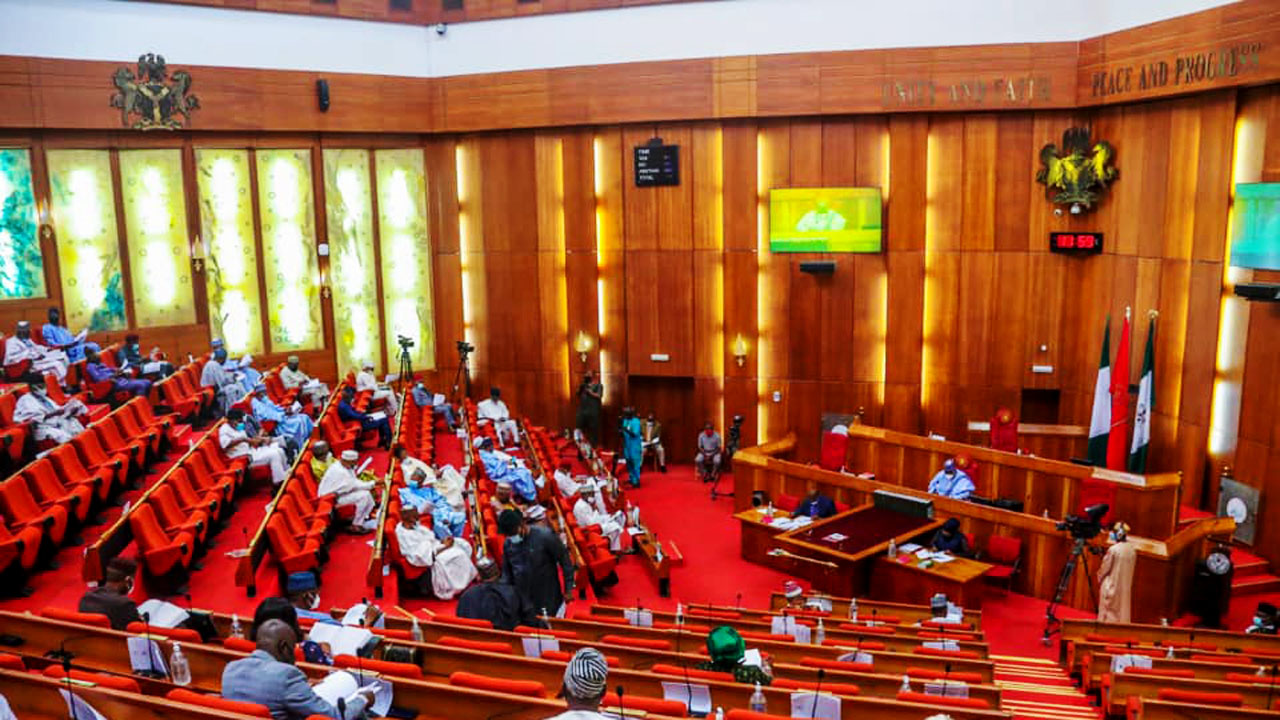
The President of the Senate, Godswill Akpabio, and the Speaker of the House of Representatives, Tajudeen Abbas, recently opened National Assembly Open Week 2026 in Abuja under the theme, “Three Years of the 10th Assembly: Advancing Transparency, Inclusion and Reform.” Beyond commemorating the legislature’s third anniversary, the event presented Parliament’s contribution to Nigeria’s economic transformation through transparent lawmaking, inclusive governance and reform-oriented legislation. Enam Obiosio writes.
The Open week, which showcased the National Assembly’s record legislative output, engagement with citizens, development partners and the private sector, and its role in providing the legal framework for tax reforms, budget approvals, student financing, revenue administration and other economic measures, highlighted something beyond legislative symbolism. It actually reflected an emerging recognition that the success of Nigeria’s economic reforms will depend as much on the strength of its institutions as on the quality of Executive policy.
DECISION HIGHLIGHT
The National Assembly is positioning transparency, inclusion and reform not simply as democratic values but as institutional drivers of economic confidence, policy credibility and long-term investment.
DECISION MEMO
With the theme of National Assembly Open Week 2026, it is understandable that economic reforms become sustainable only when they are anchored in transparent legislation, inclusive policymaking and credible institutions capable of translating government priorities into enforceable laws. In that respect, Parliament is increasingly becoming part of Nigeria’s economic infrastructure.
Opening the event, Akpabio reminded Nigerians that Parliament derives its legitimacy from the people, declaring: “We are assembled today for something far greater than either Chamber. Parliament belongs not to those elected to sit within it, but to the millions whose hopes and votes brought it into existence.”
He argued that legislative openness is indispensable to national progress, stating: “Parliament was never built to keep the people out. It was built to bring them in, for democracy flourishes only in the confidence of an informed and engaged citizenry.” Inviting Nigerians to appreciate Parliament beyond political headlines, he added: “This ‘Open Week’ invites Nigerians to look beyond the headlines and the sound bites to see parliament as the meeting point between the aspirations of the people and the responsibilities of government.”
Akpabio further situated transparency within national development, observing that “History teaches us that great nations are sustained not merely by strong executives or independent judiciaries, but by parliaments where differing opinions are heard, competing interests are reconciled, and every citizen ultimately finds constitutional expression.” He emphasised that “Openness means more than allowing citizens to observe proceedings. It means assuring every Nigerian that no community is too remote, no voice too quiet, and no corner of this Republic too insignificant to deserve representation.” Concluding his appeal, he declared: “A parliament willing to listen will become more responsive, while a listening democracy will continue to grow stronger… We invite Nigerians not merely to observe us, but to engage with us… A parliament that listens becomes wiser. A democracy that listens becomes stronger.”
For the economy, those statements amount to more than democratic rhetoric. Transparent institutions reduce policy uncertainty, strengthen regulatory credibility and improve investor confidence by making lawmaking more predictable and accountable.
That institutional proposition was reinforced by Abbas, who described Open Week as “a platform for public accountability rather than institutional celebration.” Stressing that “This House belongs to the Nigerian people,” he argued that openness “is not a privilege extended by the legislature but a constitutional responsibility owed to citizens.” He said the initiative was designed to strengthen the relationship between Parliament and citizens through public scrutiny and meaningful engagement.
The Speaker’s Third-Year Legislative Scorecard demonstrated how the legislature is increasingly shaping Nigeria’s economic architecture. The House has received 2,747 bills, passed 363, while 72 have received Presidential assent, producing legislation spanning economic reform, education, governance and national development. Among the landmark measures are reforms to revenue administration, the interest-free student loan scheme and development commissions addressing regional growth. The House has also processed more than 800 public petitions, reinforcing Parliament’s accountability function.
Looking ahead, Abbas announced that Open Week would facilitate national conversations involving civil society, development partners, the private sector and citizens. Particularly significant from an economic perspective are structured engagements on economic reforms and investment, signalling that stakeholder consultation is becoming an integral part of economic lawmaking.
He further underscored Parliament’s role in national economic management, stating that the legislature has provided “the legal framework necessary for key economic reforms through tax legislation, budget approvals, student financing reforms, and other measures aimed at strengthening Nigeria’s economy.” While recognising the Executive’s responsibility for policy direction, Abbas maintained that “it is the responsibility of Parliament to translate those policies into enforceable laws through robust legislative scrutiny.”
Beyond legislation, the Speaker highlighted constitutional reforms on State Police, efforts to expand women’s representation through the Special Seats Bill, and a renewed commitment to reducing the cost of governance by strengthening existing institutions instead of proliferating new government agencies. He also rejected claims that Parliament merely endorses Executive proposals, explaining that laws receiving Presidential assent are typically the outcome of extensive committee work, consultations and legislative scrutiny. Urging greater public participation, Abbas concluded: “A democracy is strengthened not by citizens who observe from a distance, but by those who participate.”
DATA BOX
Theme
- Three Years of the 10th Assembly: Advancing Transparency, Inclusion and Reform
Legislative Performance
- Bills received: 2,747
- Bills passed: 363
- Presidential assent: 72
- Public petitions: 800+
Economic Reform Legislation
- Tax reforms
- Budget approvals
- Revenue administration reforms
- Interest-free student loan scheme
- Regional development legislation
- Cost-of-governance reforms
Strategic Engagement
- Private sector dialogue on investment
- Civil society participation
- Development partner collaboration
- Citizen engagement
- Youth participation in governance
WHO WINS / WHO LOSES
Wins
- The Nigerian economy through stronger institutional credibility.
- Domestic and foreign investors seeking policy certainty.
- Businesses requiring predictable legislation.
- Citizens through increased accountability and participation.
- Development partners supporting governance reforms.
Loses
- Opaque legislative processes.
- Weak institutional accountability.
- Policy uncertainty arising from limited stakeholder consultation.
POLICY SIGNALS
The National Assembly is broadening its role from lawmaking to institution-building by embedding transparency, inclusion and legislative scrutiny into Nigeria’s economic reform framework. This signals a stronger governance foundation for fiscal, tax and investment reforms.
INVESTOR SIGNAL
Nigeria’s investment attractiveness will increasingly depend not only on macroeconomic reforms but also on the credibility of the institutions that enact and oversee them. A transparent, consultative and reform-oriented Parliament strengthens confidence in the durability and predictability of the country’s economic policy direction.
RISK RADAR
The institutional gains highlighted during Open Week must translate into measurable legislative outcomes. Delays in reform bills, weak implementation, inconsistent Executive-Legislature coordination or reduced stakeholder engagement could undermine the credibility that transparency and inclusion are intended to build.
Discover more from StakeBridge Media
Subscribe to get the latest posts sent to your email.