

By Olumide Johnson
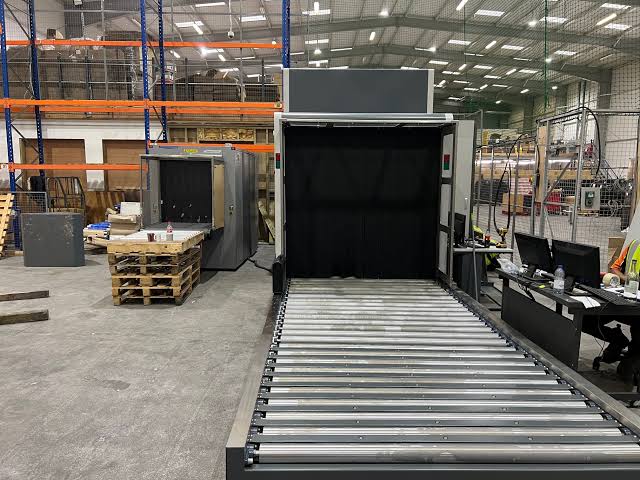
The Nigeria Customs Service (NCS) has completed operational readiness for the deployment of non-intrusive cargo scanners at the Nnamdi Azikiwe International Airport, Abuja, with final regulatory approval pending before commercial operations commence. Deputy Comptroller of Customs, Umar Madugu, Acting Comptroller, Non-Intrusive Inspection, disclosed the development on July 15, 2026, following an inspection of newly installed CX180 180DH pallet cargo scanners at the Skyway Aviation Handling Company and Nigerian Aviation Handling Company warehouses. The deployment follows specialised image analysis training for Customs officers and forms part of the Service’s technology-driven border management strategy to accelerate cargo clearance, strengthen enforcement and facilitate trade.
DECISION HIGHLIGHT
The NCS is shifting airport cargo inspection from manual examination to technology-enabled risk management, signalling a structural modernisation of Nigeria’s trade facilitation system.
DECISION MEMO
The introduction of cargo scanners represents more than an equipment upgrade. It reflects the Nigeria Customs Service’s transition towards intelligence-led border management, where technology improves both trade efficiency and regulatory enforcement.
Describing the project’s status, Madugu, Acting Comptroller, Non-Intrusive Inspection, said: “The Nigeria Customs Service is on the verge of deploying non-intrusive inspection technology (cargo scanners) at the Nnamdi Azikiwe International Airport, with the project awaiting final regulatory approval for full takeoff.”
The emphasis on scanner image interpretation rather than routine physical inspection suggests that Customs is seeking to reduce clearance times without weakening compliance controls. If effectively implemented, the technology could address one of Nigeria’s longstanding logistics constraints, particularly at airports where multiple inspections have historically increased costs and delayed cargo movement.
Operational success, however, will depend not only on the scanners themselves but on supporting infrastructure and coordinated traffic management. Reflecting that broader operational approach, Madugu stated: “Traffic assessment officers will be positioned strategically and CCTV cameras in place to coordinate the movement of inbound and outbound cargo within the scanning area, to ensure seamless operations, and improve efficiency.”
The initiative therefore signals that Customs increasingly views digital infrastructure, operational coordination and risk-based inspection as complementary elements of trade competitiveness rather than isolated reforms.
DATA BOX
- Deployment status: Awaiting final regulatory approval
- Location: Nnamdi Azikiwe International Airport, Abuja
- Technology: CX180 180DH pallet cargo scanners
- Inspection model: Non-intrusive cargo screening
- Customs officers: Specialised image analysis training completed
- Nigeria Customs Service revenue, 2025: N7.281 trillion
- Revenue, January to May 2026: N3.35 trillion
- Import declarations processed: Nearly 700,000
- Pre-Arrival Assessment Reports issued: More than 112,000
- Export value facilitated: $1.218 billion
- Export containers processed: 21,376
- Import Duty Exemption Certificate approvals, 2025: N34 trillion
- Military procurement share of waivers: About 60 percent
- Estimated Nigerian air freight logistics market: Above $8 billion
WHO WINS / WHO LOSES
Wins
- Importers and exporters through faster cargo clearance.
- Freight forwarders and logistics operators through shorter processing cycles.
- Nigeria Customs Service through stronger compliance, revenue assurance and operational efficiency.
Loses
- Smuggling networks relying on manual inspection gaps.
- Inefficient clearance practices that prolong cargo dwell time.
POLICY SIGNALS
The Nigeria Customs Service is embedding technology into border administration, indicating that future customs reforms will increasingly prioritise automation, risk-based inspections and trade facilitation alongside revenue collection.
INVESTOR SIGNAL
More efficient airport cargo processing could reduce logistics costs, improve supply chain reliability and strengthen Nigeria’s attractiveness as an aviation logistics and regional trade hub, particularly if similar technology is deployed across major cargo airports.
RISK RADAR
The benefits remain contingent on timely regulatory approval, sustained equipment maintenance, inter-agency coordination, uninterrupted power supply, cybersecurity resilience and continuous personnel capacity development. Failure in any of these areas could dilute the efficiency gains expected from the technology.
Discover more from StakeBridge Media
Subscribe to get the latest posts sent to your email.